Soup plates and bowls: how to choose sizes for restaurants and home
By FITTO Trade Desk · Last updated 29 October 2026
For most restaurants and homes, an 8–9 inch soup plate about 4 cm deep handles a standard serving. Use 7 inch plates or deep 6 inch bowls for starters and iftar lentil soup, and 10 inch plates for noodles and pasta. Choose melamine for speed and few breakages, opal glass for a bright finish, steel for durability.
Key takeaways
- Rimmed soup plates suit plated service; deep bowls without a rim hold heat longer.
- 8–9 inch (about 21–24 cm) is the all-round size; 7 inch suits starters, 10 inch suits main-course soups.
- Melamine is light and hard to break but must never go in the microwave.
- For Ramadan, plan extra deep bowls: lentil soup and harira are served every night for 30 nights.
Buying soup bowls wholesale looks simple until service starts. Bowls that are too shallow spill on the way from the pass, and bowls that are too big make a fair portion look mean. Wrong sizes also waste shelf space and slow the dish pit.
This guide is for restaurants, cafeterias and households choosing soup plates (صحن شوربة) and bowls. At FITTO Tableware, a wholesale tableware supplier in the UAE, we stock soup plates from 6 to 11 inches in melamine, opal glass and stainless steel. Below, we settle sizes, depth, handles and materials.
What is the difference between a soup plate and a soup bowl?
A soup plate is wide and shallow with a rim; a soup bowl is deep and narrow, usually without a rim. Each suits different soups and service styles.
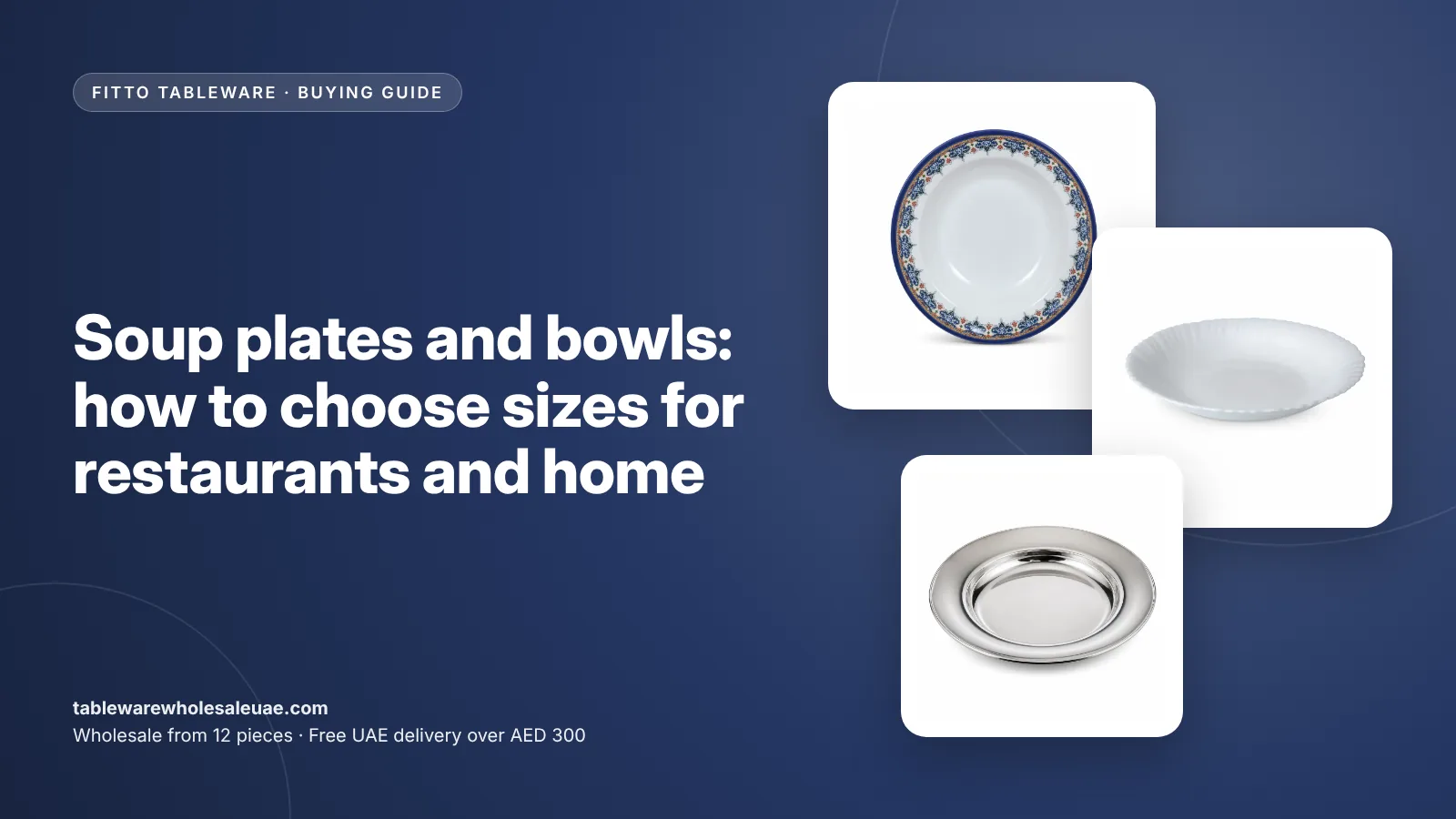
Soup plates are typically 3–4 cm deep. The wide rim gives staff somewhere to hold the plate and frames the food, which suits plated restaurant service and thick, creamy soups. Our white 8 inch soup plate (about 21 cm across, 4 cm deep) is a typical example.
Deep bowls are typically 7–8 cm deep. Less surface is exposed to the air, so soup stays hot for longer, and they are harder to spill. Our 6 inch opal glass bowl (16 cm across, 8 cm deep) and 5 inch melamine rice bowl (14 x 14 x 7 cm) both work as soup bowls for lentil soup, harira or shorbat shofan.
Which soup bowl size should you choose?
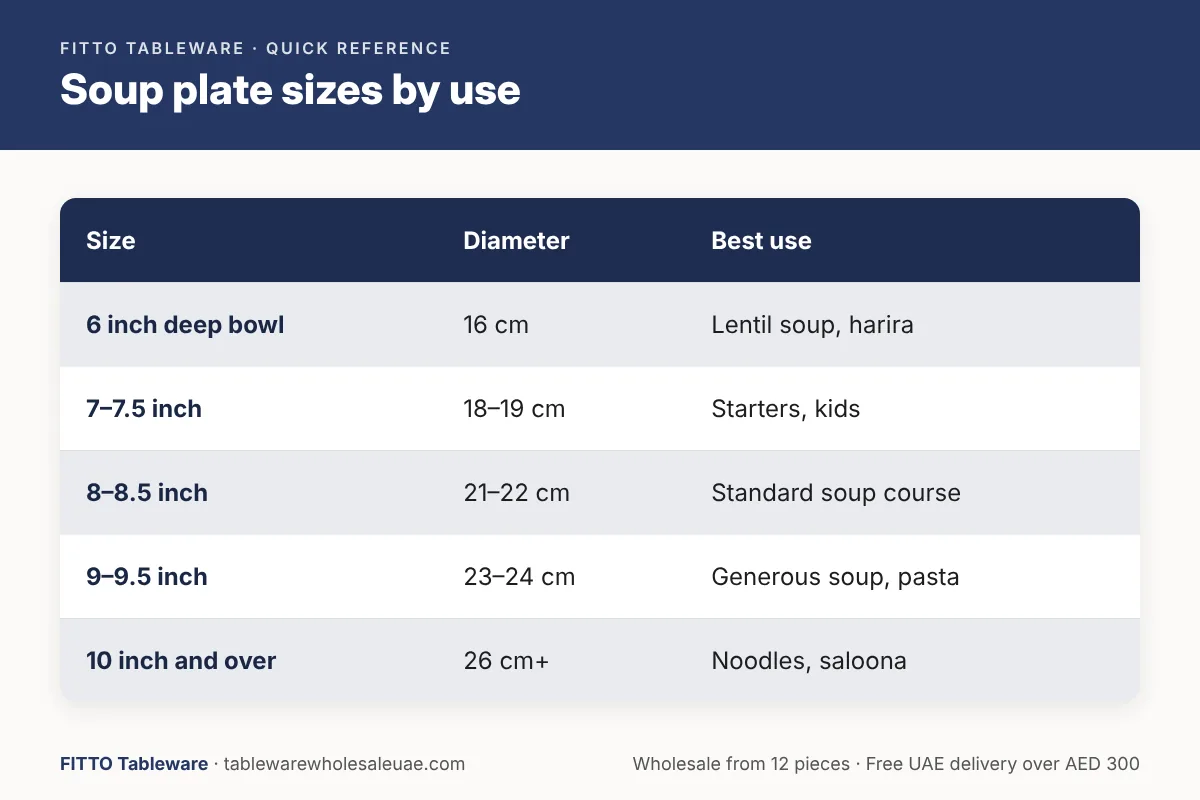
Choose 8–9 inch for standard servings, 7 inch for starters and 10 inch for main-course soups and pasta. Measure your pass shelves and dishwasher racks before ordering large plates.
| Size | Approx. diameter | Best use | FITTO examples |
|---|---|---|---|
| 6 inch deep bowl | 16 cm | Iftar lentil soup, harira | Opal glass bowl, 8 cm deep |
| 7–7.5 inch | 18–19 cm | Starters, kids, side soup | Melamine 7 inch, opal 7.5 inch |
| 8–8.5 inch | 21–22 cm | Standard soup course | White 8 inch, opal 8.5 inch, steel 22 cm |
| 9–9.5 inch | 23–24 cm | Generous soup, pasta | Melamine 9 inch, opal 9.5 inch |
| 10 inch and over | 26 cm+ | Noodles, saloona, pasta | Melamine 10 inch, steel 26 cm |
As a rule of thumb, a starter portion of soup is about 200–250 ml and a main course about 300–400 ml. Leave 1–2 cm below the rim so staff can carry a full plate without spilling. For a wider view of plate sizes, see our plates and bowls buyer's guide.
Does depth or a handle matter?
Depth decides spill risk and heat; handles help when bowls are very hot or carried by children.
A depth of about 4 cm, like the melamine 10 inch soup plate and the stainless steel 22 cm soup plate, suits plated soups and pasta. Go deeper for broth-heavy soups that travel far from kitchen to table, such as room service or outdoor tents.
A side handle, as on the white round soup bowl with handle (4 inch), gives a grip away from hot sides. It suits kids' menus, soup-and-sandwich cafés and porridge or oats soup at breakfast. Handles take more rack space, so keep them for one or two menu items.
Which material is best for soup plates?
Melamine wins on weight and breakage, opal glass on looks, stainless steel on durability. Many restaurants use two: one for the dining room and one for staff meals or outdoor service.
| Material | Strengths | Trade-offs | Good for |
|---|---|---|---|
| Melamine | Light, hard to break, colourful patterns | Never microwave; can stain from turmeric | Cafeterias, kids, buffets, outdoor tents |
| Opal glass | Bright white, light for glass, non-porous | Can break if dropped on tiles | Restaurants, homes, iftar tables |
| Stainless steel | Practically unbreakable, easy to sanitise | Heats up and cools faster, looks industrial | Staff canteens, staff housing, thali meals |
Melamine is designed for serving hot soup, not for heating it, so it must never go in the microwave. Our melamine vs opal glass plates comparison covers the trade-offs in more detail.
For a bright, classic table, the opal glass soup plate in 7.5, 8.5 or 9.5 inch sizes cover starters to mains. For bulk canteen service, the stainless steel 26 cm soup plate has a 4 cm depth and a raised rim.
How should you plan soup bowls for Ramadan and daily service?
Plan more deep bowls than usual for Ramadan, because soup is served every night straight after dates. Shorbat adas, harira and oats soup are iftar staples across the UAE.
For daily service, a common rule of thumb is two to three soup plates per seat when soup is on the menu. Our guide to hotel tableware par levels explains how to set stock levels for busy outlets. For family iftars at home, a 10 inch lidded melamine serving bowl keeps soup covered on the table, while guests ladle into individual bowls. Our Ramadan iftar table guide lists the rest of the table.
Match spoons to the bowl. A round soup spoon suits rimmed plates, while a 15 cm melamine Chinese soup spoon suits deep bowls of noodles or ramen.
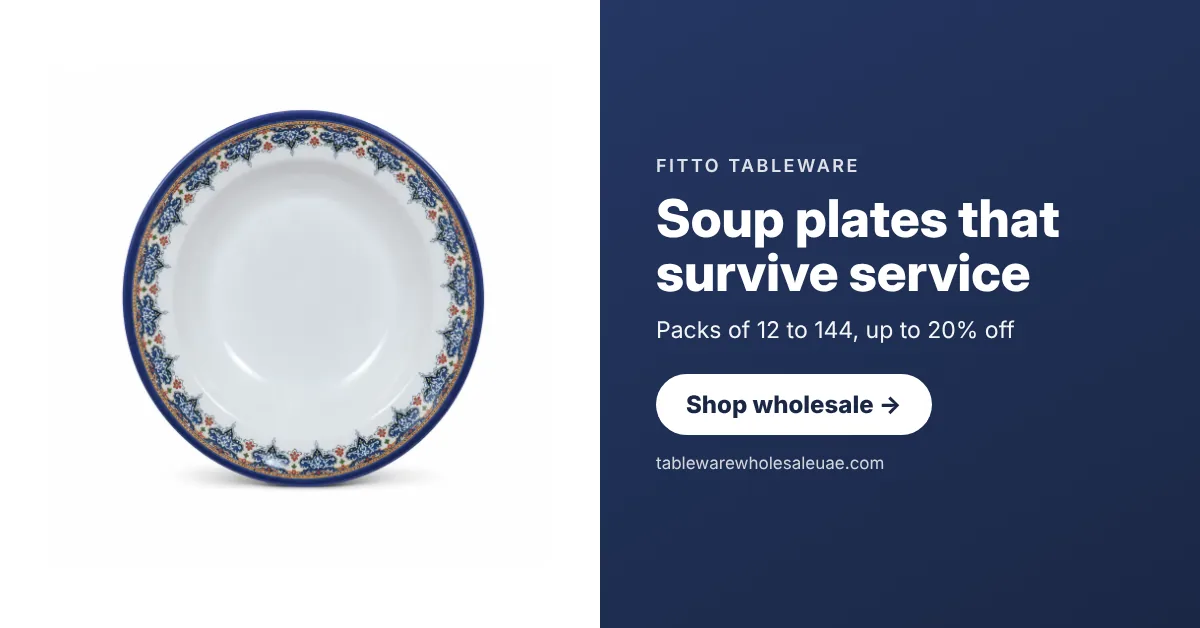
FITTO Trade Pick: A soup range from starter to main Pair the melamine 7 inch soup plate for starters with the melamine 9 inch soup plate for generous servings, or choose opal glass 8.5 inch soup plates for a classic white table. Packs run from 12 to 144 pieces, with up to 20% off per piece at 144.
The bottom line
Pick soup plates by service: 8–9 inch rimmed plates for standard servings, deep 6 inch bowls for iftar soups and 10 inch plates for noodles and pasta. Then choose the material that suits your breakage risk and look.
Browse our plates and bowls, request a quote for a mixed order of sizes or order samples to test depth and stacking first. Delivery is free across the UAE over AED 300, and the trade desk is on WhatsApp +971 55 672 6947. FITTO Tableware: fit for the way you serve.
FAQ
What size is a standard soup plate?+
A standard soup plate is 8–9 inches, about 21–24 cm across, with a depth of around 3–4 cm. That holds a normal restaurant serving with room below the rim. Starters and kids' portions suit 7 inch plates, while noodles, pasta and main-course soups suit 10 inch plates.
Which keeps soup hotter, a soup plate or a deep bowl?+
A deep bowl keeps soup hot for longer. A smaller surface area loses less heat, and deep sides protect the soup from air-conditioning draughts. Use deep bowls for broths, lentil soup and harira, and rimmed soup plates for thick, creamy soups or plated courses.
Is melamine safe for hot soup?+
Yes, melamine is designed for serving hot food, including soup straight from the pot. It is not designed for heating, so never put melamine in the microwave or oven, or use it for cooking. Avoid scouring pads, which scratch the surface, and wash turmeric-rich dishes promptly to limit staining.
What spoon should I use with soup bowls?+
Use a round-bowled soup spoon for rimmed soup plates and Western soups. For deep bowls of noodles, ramen or wonton soup, a Chinese soup spoon of about 14–15 cm works better. Its deep, flat-bottomed bowl holds broth and rests neatly in the bowl.
Are stainless steel soup plates good for restaurants?+
They are ideal where breakage is the main concern, such as staff canteens, staff accommodation and busy cafeterias. Steel is practically unbreakable and easy to sanitise. The trade-offs are that it heats up and cools quickly and looks more industrial than opal glass or melamine in a dining room.