Melamine vs opal glass plates: which suits a busy restaurant or café better?
By FITTO Trade Desk · Last updated 29 October 2026
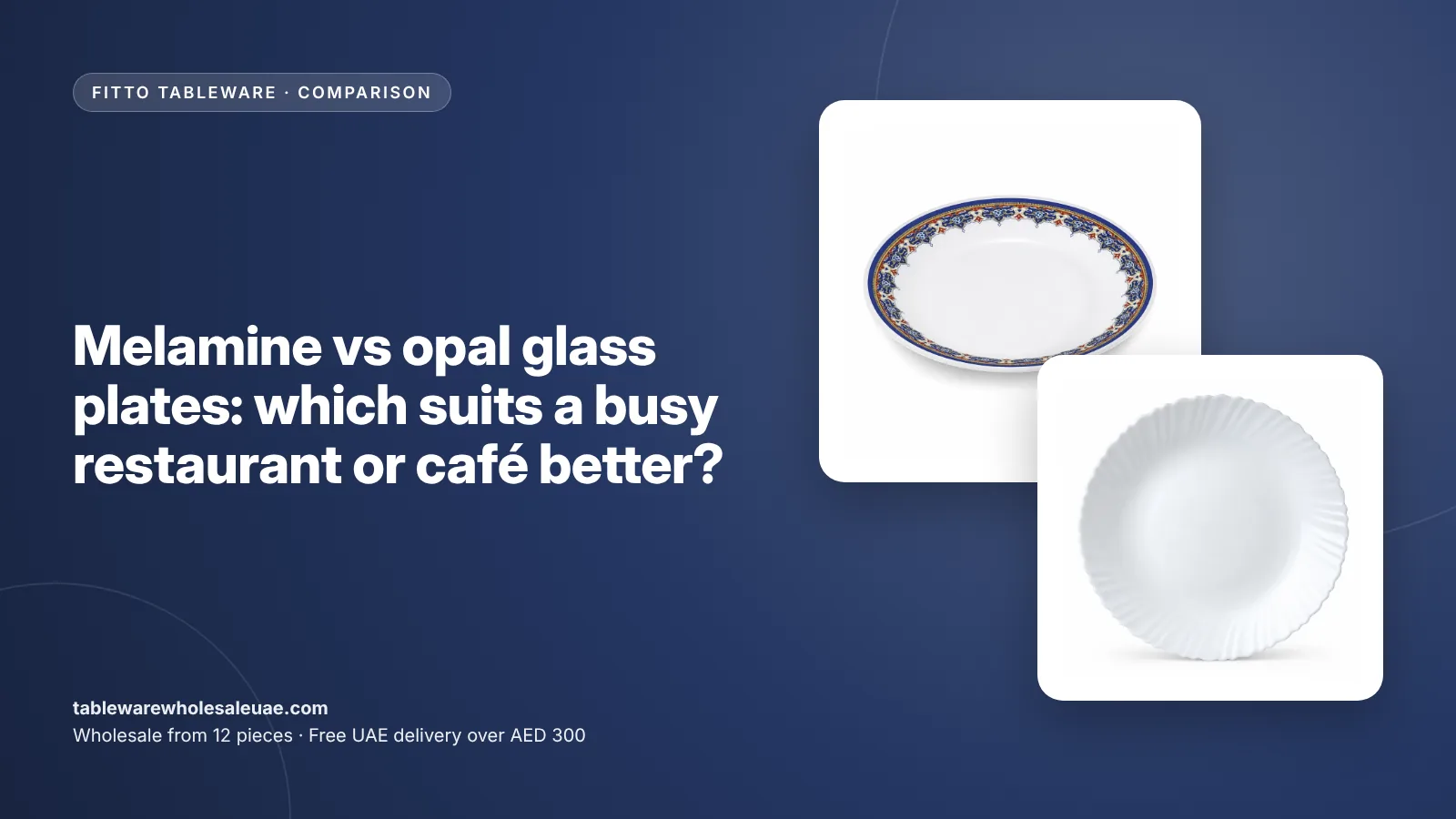
In the melamine vs opal glass plates choice, melamine wins on breakage, weight and noise, while opal glass wins on heat, scratch resistance and a finer look. Choose melamine for terraces, buffets, food courts and kids' menus. Choose opal glass for indoor cafés and restaurants where food is plated hot and presentation matters.
Key takeaways
- Melamine rarely breaks, is light to carry and suits outdoor, poolside and high-traffic service.
- Opal glass handles heat better, resists scratches and stains, and looks closer to porcelain.
- Melamine is not for the microwave or oven; tempered opal glass is generally microwave-safe, but check each label.
- Judge cost by cost per year in service, not by the price of one plate.
Pick the wrong plate and you pay twice. Melamine in a hot-plating kitchen ends up scratched and stained. Opal glass on a busy terrace ends up in the bin after a few drops. This comparison settles which material fits your service, row by row, so you buy once and replace less.
It is for restaurant and café owners choosing their daily-service crockery (صحون). At FITTO Tableware, a wholesale plates and bowls supplier in the UAE, we stock both melamine and opal glass plates and bowls, so neither material has to win every row.
What is the difference between melamine and opal glass?
Melamine is a hard, lightweight plastic resin moulded into plates; opal glass is a white, glass-based material that looks like porcelain. They solve different problems, which is why many venues use both.
Melamine takes printed patterns well, from floral and geometric borders to plain white. Opal glass (often called opalware) has a smooth, non-porous, bright white surface, and many lines are tempered for extra strength. Both come in the sizes a restaurant needs: FITTO melamine dinner plates run from 6 to 11 inch, and opal glass dinner plates from 9.5 to 11.5 inch.
How do melamine vs opal glass plates compare side by side?
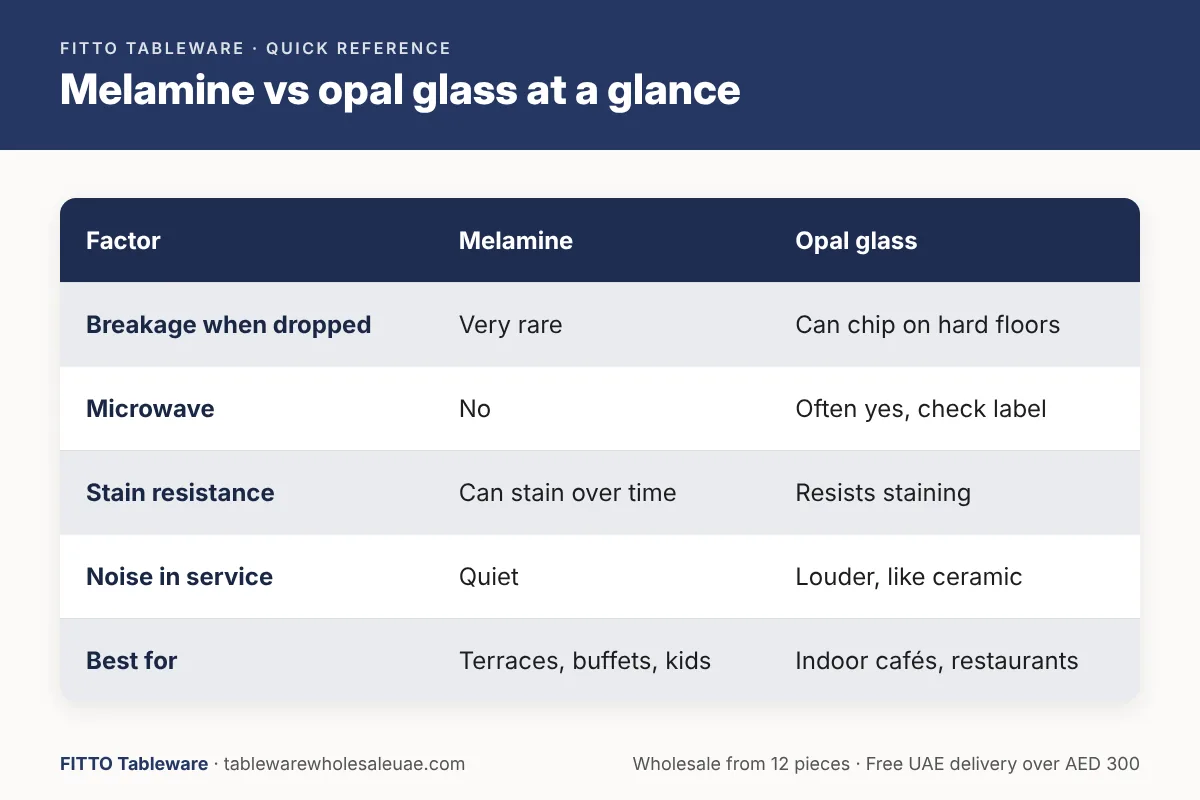
Melamine leads on durability, weight and noise; opal glass leads on heat, hygiene over time and presentation. The table below compares them on the points that matter in daily service.
| Factor | Melamine | Opal glass |
|---|---|---|
| Breakage when dropped | Very rare | Can break or chip on hard floors |
| Weight | Lighter | Heavier than melamine |
| Microwave | No | Often yes (check label) |
| Hot plating and heat lamps | Avoid direct heat | Handles heat well |
| Scratch resistance | Can mark with serrated knives | Hard surface resists scratches |
| Stain resistance | Can stain over time with turmeric and sauces | Non-porous, resists staining |
| Noise in service | Quiet | Louder, like ceramic |
| Look on the table | Casual, wide choice of patterns | Clean, porcelain-like white |
| Best for | Terraces, buffets, food courts, kids | Indoor cafés and restaurants |
Performance varies between makers and lines, so always read the care guidance on each product before you rely on a feature such as microwave use.
Which is more durable in a busy kitchen?
Melamine is more durable against drops; opal glass is more durable against wear. That difference decides which one lasts longer in your kitchen.
A melamine plate dropped on tile usually bounces. An opal glass plate may survive a short drop, but it can chip or shatter on stone or tile. Where staff carry stacks across a terrace, or children handle plates, melamine outlasts opal glass.
Wear is a different story. Over months of steak knives, scouring pads and turmeric-heavy dishes, melamine surfaces can dull, mark and stain. Opal glass keeps its bright white surface much longer. In a careful indoor dining room, opal glass often looks newer for longer.
Which handles heat better?
Opal glass handles heat better and tempered lines are generally microwave-safe; melamine should never be used to heat food. Melamine is fine for serving hot food, but not for the microwave, oven or under heat lamps.
If your kitchen warms plates before service, reheats dishes on the plate, or holds plated food under a heat lamp, choose opal glass. If plates go straight from the pass to the table, melamine works.
In a UAE summer, store both materials in air-conditioned rooms rather than hot outdoor stores. Let opal glass cool before stacking, and keep melamine away from hot plate warmers.
Which costs less per year?
Cost per year depends on how long each plate lasts in your service, not on the shelf price. A cheaper plate that breaks or stains quickly can cost more over a year than a dearer one that lasts.
Use this simple method to compare with your own prices:
- Note the price per piece for each material at the pack size you would order.
- Estimate how many plates you lose per month to breakage, chips or staining.
- Add the replacement cost for 12 months to your opening order.
- Divide by the number of plates in service to get cost per plate per year.
- Compare both materials, then decide.
As a rule of thumb, melamine tends to win on cost per year where drops are common, and opal glass where plates are handled carefully but used hard for hot food. A simple breakage log for the first three months gives you real numbers instead of guesses.
Which should you choose for your venue?
Choose by where the plate is used and how food is served. Here is a clear verdict for common UAE venue types.
| Venue type | Better choice | Why |
|---|---|---|
| Café, indoor seating | Opal glass | Presentation, stain resistance, hot plating |
| Café or restaurant terrace | Melamine | Drops, wind, distance from the kitchen |
| Hotel breakfast buffet | Melamine or both | Self-service drops; opal glass for plated hot items |
| Family restaurant, indoor | Opal glass | Looks, hygiene over time, heat |
| Food court, quick service | Melamine | Speed, light weight, low breakage |
| Kids' menus, play cafés | Melamine | Durability around children |
| Catering off-site | Melamine | Transport and handling |
Many venues end up with both: opal glass for the dining room and melamine for the terrace and buffet. Our plates and bowls wholesale guide shows how to size a full range, and the restaurant tableware checklist helps you plan the full order. The same trade-offs apply to trays, covered in melamine vs stainless steel serving trays.
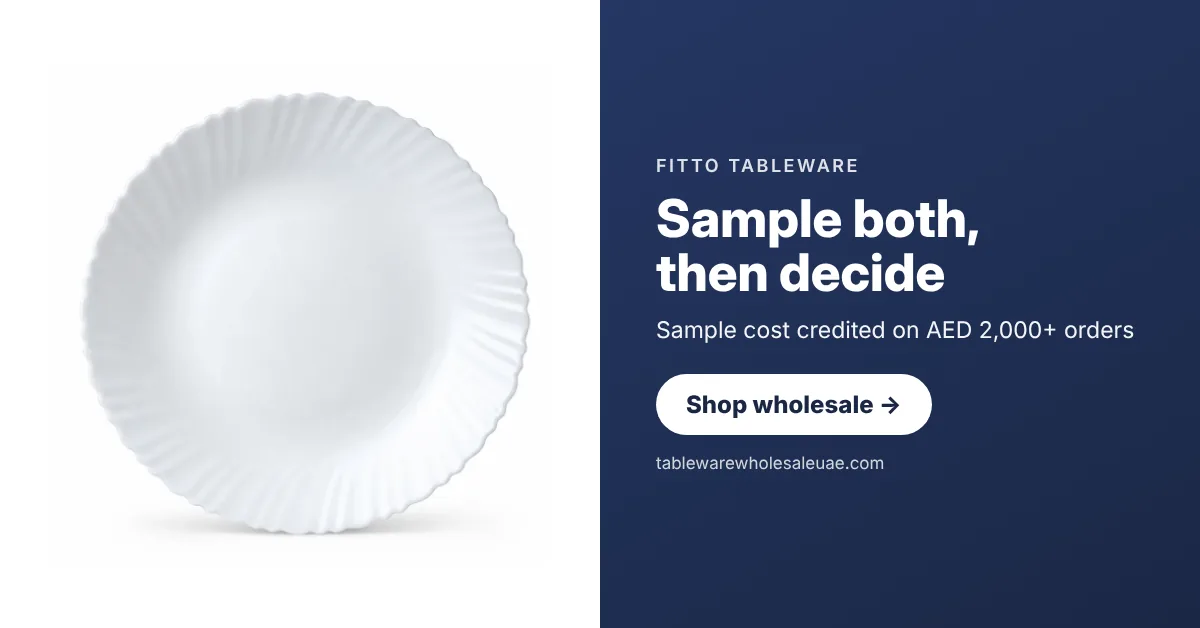
FITTO Trade Pick: Test both before you commit Compare the melamine dinner plate, 10 inch white with the opal glass dinner plate, 10.5 inch fluted edge, and the melamine soup plate, 9 inch with the opal glass soup plate, 8.5 inch. Order one sample of each at the single-piece price, and the cost is credited on a bulk order of AED 2,000+ within 30 days.
The bottom line
Melamine is the tough, light, quiet choice for outdoor and high-traffic service. Opal glass is the heat-friendly, stain-resistant choice for indoor dining where presentation counts. Most busy venues do best with both.
Browse our wholesale plates and bowls, request a quote for a mixed carton of both materials, or order a sample of each. Every plate comes in packs of 12 to 144 pieces, with up to 20% less per piece on the largest pack, and UAE delivery is free on orders over AED 300. Questions? WhatsApp +971 55 672 6947. FITTO Tableware: fit for the way you serve.
FAQ
Is melamine or opal glass better for restaurants?+
Neither wins everywhere. Melamine is better for terraces, buffets, food courts and kids' menus because it rarely breaks and is light to carry. Opal glass is better for indoor dining where food is plated hot and presentation matters, because it handles heat and resists stains. Many restaurants use opal glass inside and melamine outside.
Can melamine plates go in the microwave?+
No. Melamine plates should not be used in the microwave or oven, or held under heat lamps. They are fine for serving hot food straight from the kitchen. If your service involves reheating food on the plate, choose opal glass or ceramic instead, and check the care label on each product.
Does opal glass break easily?+
Opal glass is stronger than many people expect, and tempered lines resist knocks better than standard glass. It can still chip or break if dropped on tile or stone. For careful indoor service it lasts well; for terraces, buffets and children's menus, melamine is the safer choice.
Which plate material stains less?+
Opal glass stains less. Its smooth, non-porous surface resists marks from turmeric, saffron, tomato and coffee. Melamine can pick up stains and fine scratches over time, especially with strongly coloured curries and serrated knives. Prompt washing and avoiding abrasive scourers helps both materials stay presentable.
Is melamine safe for serving food?+
Melamine tableware is widely used for serving food in restaurants, hotels and homes. General food-safety advice is to use it for serving rather than heating, because high heat can break down the surface over time. Do not microwave or bake in melamine, and retire plates that are cracked, deeply scratched or heavily worn.