Melamine vs stainless steel serving trays: which lasts longer in daily service?
By FITTO Trade Desk · Last updated 29 October 2026
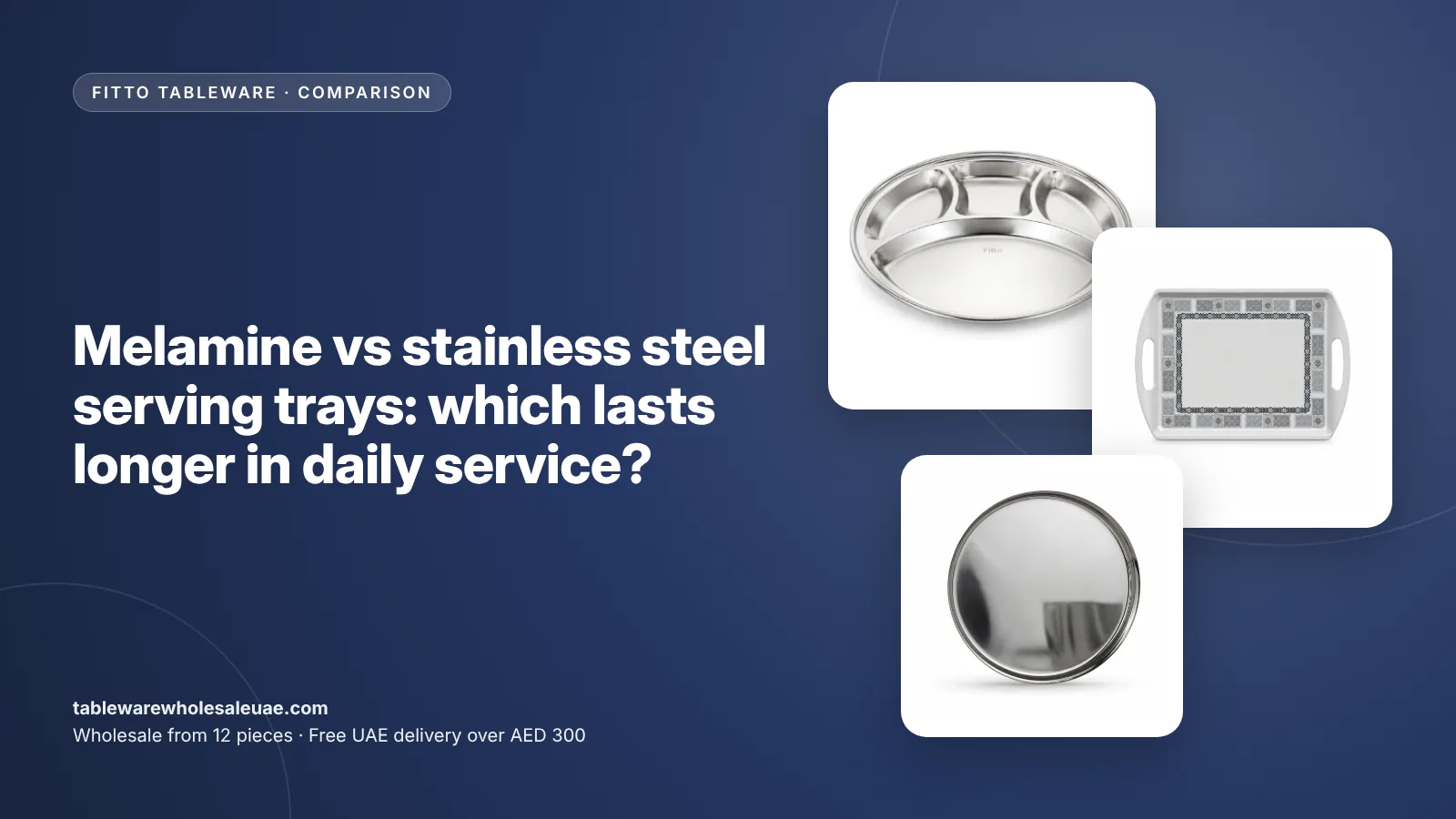
For melamine vs stainless steel trays, stainless steel lasts longer in heavy daily service: it does not chip, stain or crack, and it handles hot plates and hard washing. Melamine is quieter, stays comfortable to hold, costs less to replace and looks better front of house. Many cafeterias use steel on the line and melamine for table service.
Key takeaways
- Stainless steel trays win on lifespan, heat tolerance and hygiene; melamine trays win on noise, comfort and presentation.
- Size for size, the two weigh about the same, so choose on how each tray fails, not on weight.
- Keep melamine out of the microwave and oven; keep steel wool away from both.
- Judge a tray by its cost per year of service, not its price per piece.
A chipped or stained tray goes back to a customer with every order, and replacing trays every few months quietly eats into margin. This guide settles which material lasts longer in your service, and where each earns its place.
It is written for cafeteria, canteen, pantry and café managers across the UAE. At FITTO Tableware, a wholesale tableware supplier in the UAE, we stock both melamine and stainless steel trays, so we have no reason to favour either.
What is the real difference between melamine and stainless steel trays?
Melamine is a hard, moulded plastic with a glazed printed surface; stainless steel is pressed metal sheet. That one difference drives noise, heat tolerance, how each tray fails and how long it lasts.
Melamine trays (صينية ميلامين) come in more shapes and prints: our range runs from 15-inch (about 38 x 28 cm) rectangles with double handles up to 24-inch rectangles, plus round wavy-edge trays from 30 to 60 cm. Stainless steel trays are plainer: round dinner trays of 26, 28 and 30 cm, round compartment "mess" trays and a 6-section divided platter of 36 x 28 cm. For the full size and shape guide, see our serving trays and platters buyer's guide.
Which lasts longer: melamine or stainless steel trays?
Stainless steel lasts longer in almost every daily-service setting. A steel tray dropped on a tiled floor dents at worst. A melamine tray can chip at a corner or crack along a stress line, and a chipped tray has to be retired.
Kept away from high heat and abrasive pads, melamine gives years of service. Its usual end of life is surface wear, not breakage: knife scratches, a dull glaze and stains from turmeric, saffron, karak and tomato sauce. On a biryani or curry counter, that staining shows sooner.
Stainless steel ages cosmetically: fine scratches dull the finish without affecting hygiene or use.
How do melamine and stainless steel trays compare side by side?
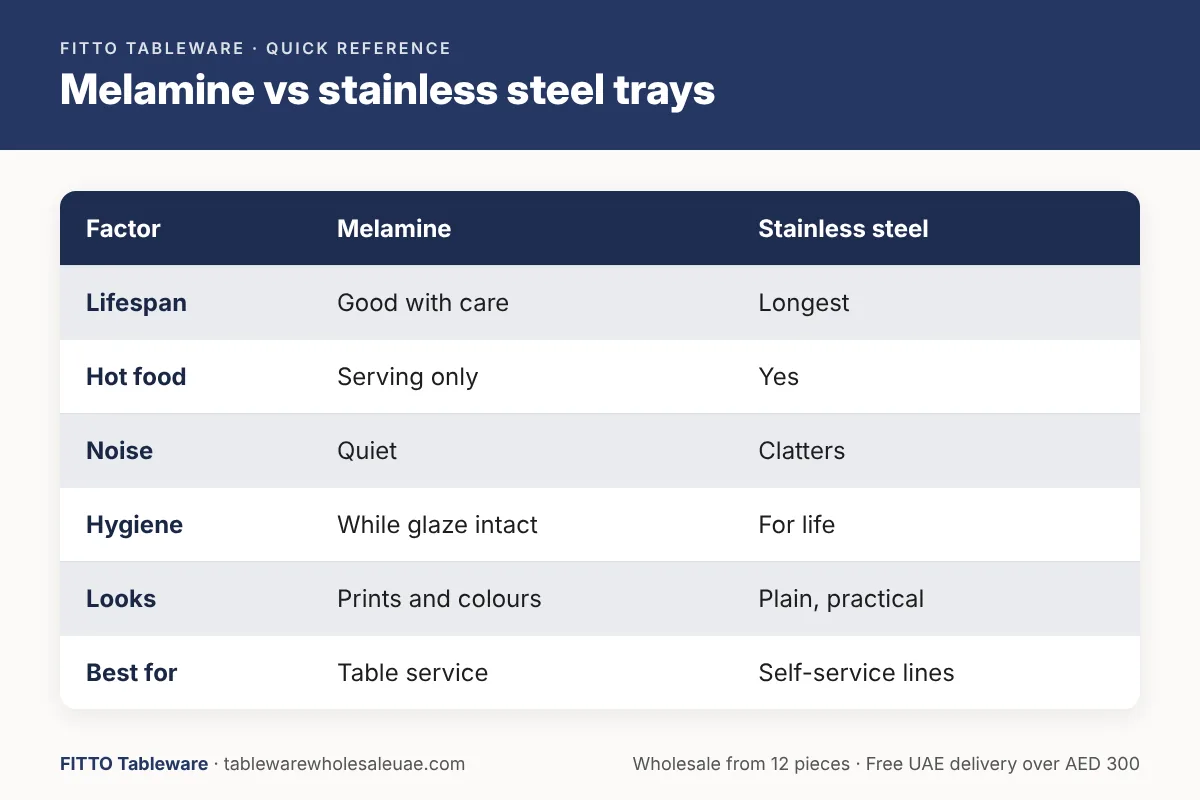
Steel wins on durability and heat; melamine wins on noise, comfort and looks. Weight is closer than most buyers expect.
| Factor | Melamine tray | Stainless steel tray |
|---|---|---|
| How it fails | Chips, cracks, stains | Dents, fine scratches |
| Hot food | Serving only; no microwave or oven | Takes hot plates and small pots |
| Washing | Moderate washes keep the glaze | Copes with hot, hard washing |
| Noise | Quiet on tables and counters | Clatters when stacked or dropped |
| Weight (FITTO listings) | 15-inch, 38 x 28 cm: 450 g | 30 cm round: 320 g |
| Hygiene | Non-porous while glaze is intact | Non-porous for its whole life |
| Presentation | Prints, colours, wavy edges | Plain, practical look |
| FITTO sizes | 15-24 inch rectangles, 30-60 cm rounds | 26-30 cm rounds, compartment trays |
| Best for | Café table service, buffets, majlis | Canteens, cafeterias, staff meals |
Which tray is better for hot food and UAE heat?
Stainless steel is better for hot food. A steel tray can carry a sizzling plate or a small pot straight from the pass. Melamine is designed for serving, not cooking: keep it out of microwaves and ovens, and do not rest very hot pans directly on it.
Outdoors it flips: a steel tray left on a terrace table in a Dubai August gets too hot to hold, while melamine stays comfortable to touch, so melamine suits beach events and outdoor seating. The same heat rules apply to plates; our melamine vs opal glass plates comparison covers them.
Which tray is quieter and easier for staff to carry?
Melamine is quieter, and handled melamine trays are easier to carry loaded. Steel trays clatter on counters and ring when cutlery lands on them, and that noise carries across an open café.
Handles matter more than material. FITTO's melamine rectangles have double handles in 15, 18, 20, 22 and 24-inch sizes, so a server can carry a loaded 20-inch (53 x 38 cm) tray with both hands. Round steel trays have a rim but no handles, so they suit one meal per person at a self-service counter.
Which tray is more hygienic?
Both are hygienic while they are intact. Stainless steel stays non-porous for life and tolerates hot washes and sanitiser; our 304-grade mess tray is listed as dishwasher safe. Melamine is non-porous while its glaze is smooth. Once it is deeply scratched, stains and residue cling to the grooves, and that tray should be replaced.
Use this routine for both materials:
- Rinse trays straight after service so sauces do not dry on.
- Wash with a soft sponge and mild detergent, never steel wool.
- Dry fully, then stack flat, one size per stack.
- Inspect weekly and retire any melamine tray with chips or deep scratches.
How do you work out a tray's cost per year of service?
Divide the price per tray by the months it stays in service, then multiply by 12.
A worked example: tray A costs half as much as tray B but is retired after 12 months, while tray B lasts 36 months. Per year, tray A costs 50% more than tray B. Log every retired tray and its reason (chip, stain, dent, loss) for one quarter to get your own lifespan figures.
Which serving tray should your counter choose?
Choose by the job, not by material loyalty. This split works for most UAE venues:
- Staff canteens and school cafeterias: stainless steel compartment trays. Built for hot food and heavy washing.
- Cafés and restaurants with table service: melamine trays with handles, 15 to 20 inches. Quiet, comfortable and on-brand.
- Buffets, majlis and events: large round melamine trays of 45 to 60 cm for display.
Add trays to your restaurant tableware checklist, or see where trays sit among the 12 tableware essentials for a new Dubai café.
FITTO Trade Pick: Trays that cover the line and the floor For self-service lines, choose the 304-grade stainless steel 4-compartment mess tray or the 30 cm stainless steel round tray; for table service, the 20-inch (53 x 38 cm) melamine tray with double handles or the 15-inch grey melamine tray. Order a sample of each first: the sample cost is credited on a bulk order of AED 2,000+ within 30 days.
The bottom line
Stainless steel trays last longer and handle heat, drops and hard washing. Melamine trays are quieter, kinder to staff and better looking at the table. Match each tray to its job and judge it on cost per year, not price per piece.
Browse our wholesale serving trays and platters in melamine and stainless steel, request a quote for a mixed carton, or order a sample first. Delivery is free across all seven emirates on orders over AED 300; WhatsApp the trade desk on +971 55 672 6947. FITTO Tableware: fit for the way you serve.
FAQ
Can melamine trays go in the dishwasher?+
Many melamine trays can be machine washed, but very hot cycles and harsh detergents dull the glaze faster. Check the care note on each listing, use a moderate programme and avoid abrasive powders. In a high-temperature commercial dishwasher, stainless steel keeps its looks longer.
Do stainless steel trays rust?+
Good stainless steel resists rust in normal use. Brown spots usually come from salty or acidic food left for hours, or from particles shed by steel-wool pads, so wash promptly and dry before stacking. Our mess tray is listed as 304 food-grade steel, a grade widely used in commercial kitchens.
What size tray suits a cafeteria self-service line?+
For one meal per person, a round steel tray of 26 to 30 cm or a compartment mess tray works well, because it holds rice, curry and sides without a separate plate. Where customers carry a plate, a drink and dessert, a 15 to 18-inch handled tray gives enough room. Measure your counter rail and wash racks before you choose.
How do I remove turmeric and tea stains from melamine trays?+
Make a paste of baking soda and water, spread it over the stain, leave it for 10 to 15 minutes, then wipe with a soft cloth and rinse. Avoid scouring pads and strong bleach, which scratch or dull the glaze and make future stains cling harder. Rinse trays soon after service to stop stains setting.