Serving trays and platters: how to choose sizes, materials and styles that suit your service
By FITTO Trade Desk · Last updated 29 October 2026
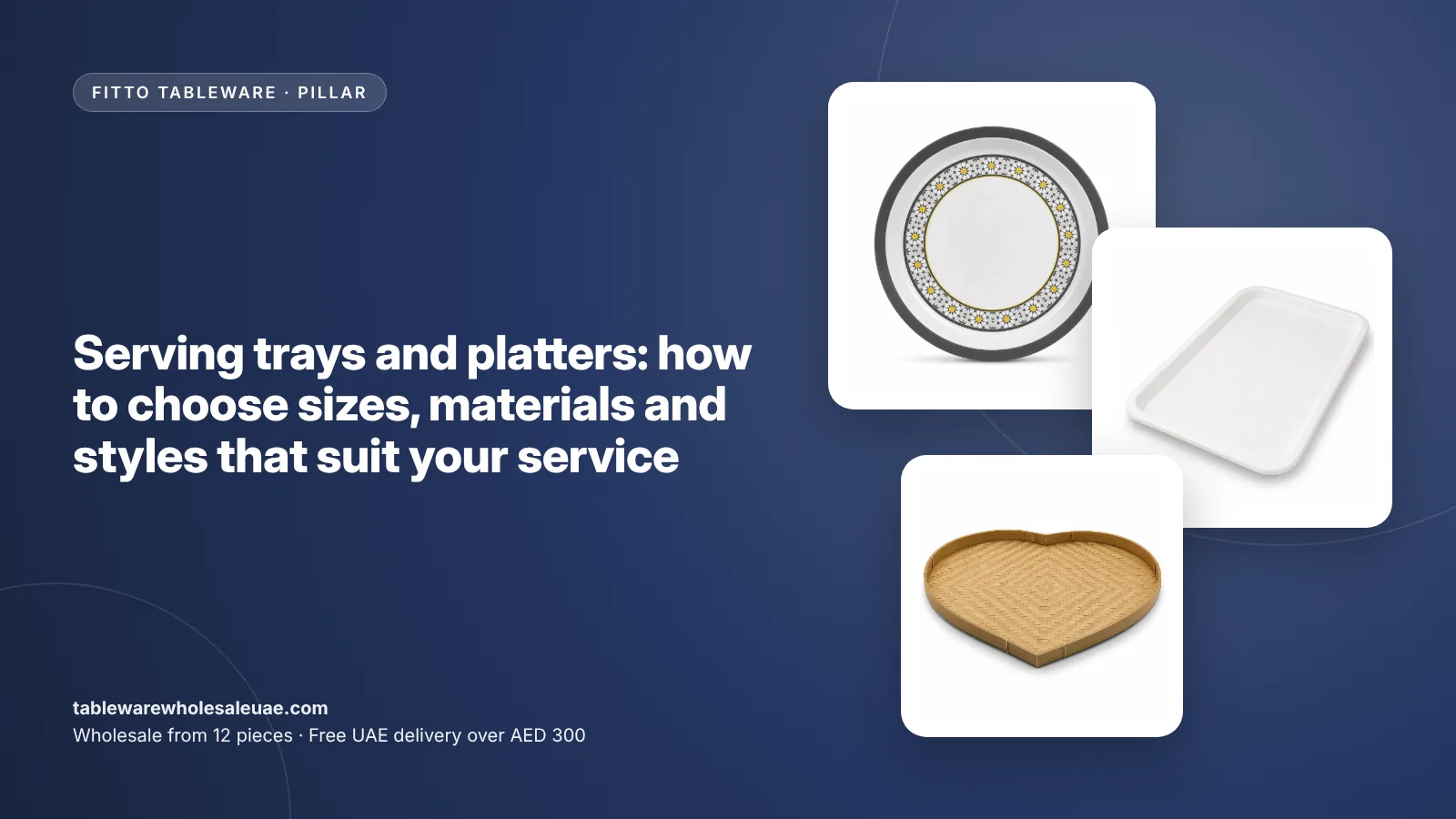
To buy serving trays wholesale in the UAE, first separate carrying trays from display trays, then pick the size and material for each job. Carrying trays of 38–51 cm in melamine, plastic or stainless steel suit cafés and canteens. Display trays of 35–60 cm in woven-look melamine, wood or bamboo suit majlis service, buffets and gifting.
Key takeaways
- Decide the job first: carrying (counter to table) or display (on the table, buffet or majlis floor). The two need different trays.
- Common carrying sizes are 15–20 inch (38–51 cm); common display sizes are 35–60 cm round.
- Melamine is the all-rounder; stainless steel lasts longest in canteens; wood, bamboo and woven styles suit gifting and majlis use.
- Measure your counter, dishwasher rack and storage shelf before you choose the main size.
A tray that is too small means double trips. One that is too big will not fit the counter, the dishwasher or the shelf. And a tray that warps or cracks in a hot UAE storeroom within a season costs you the reorder plus the staff time. This guide settles which sizes and materials to buy, so every tray (صينية) earns its shelf space.
It is for café and restaurant managers, caterers, majlis hosts and gift-shop buyers across the emirates. At FITTO Tableware, a wholesale serving trays and platters supplier in the UAE, we stock trays from small 15 × 10 cm wood-grain trays to 74 × 50 cm carrying trays, so the advice below covers the full size range.
What is the difference between a carrying tray and a display tray?
A carrying tray moves food and drinks from counter to table; a display tray presents food on the table, buffet or majlis floor. Carrying trays need grip, a raised rim and low weight. Display trays need looks, a stable base and the right diameter for the dish.
Most venues need both. A café runs on rectangular carrying trays for orders, plus a few round or oval display trays for cakes and pastries. A majlis host needs large round display trays for dates, fruit and Arabic coffee service, plus a sturdy carrying tray for the kitchen run.
| Feature | Carrying tray | Display tray |
|---|---|---|
| Main job | Moving orders, clearing tables | Presenting food and drinks |
| Typical shape | Rectangular, with handles or cut-outs | Round, oval, heart or tiered |
| Typical size | 38–51 cm (15–20 inch) | 30–60 cm round |
| Key feature | Raised rim, grip, low weight | Pattern, finish, stable base |
| Best materials | Melamine, plastic, stainless steel | Woven-look melamine, wood, bamboo, glass |
What size serving tray should you buy?
For carrying, a 38–46 cm (15–18 inch) rectangular tray suits one to four covers; a 51–61 cm (20–24 inch) tray suits large orders and clearing. For display, a 35–45 cm round tray fits a table of four, and a 55–60 cm round tray serves a full majlis spread.
Tray sizes are often listed in inches on rectangular trays and in centimetres on round ones. A 15-inch tray is about 38 cm, 18 inches is about 46 cm, 20 inches is about 51 cm, 22 inches is about 56 cm and 24 inches is about 61 cm. Inch labels are a size class rather than an exact measurement, so read the centimetre dimensions too. FITTO's 20-inch melamine tray with double handles, for example, measures 53 × 38 cm.
| Size | Shape | Holds roughly | Good for |
|---|---|---|---|
| 15 × 10 cm to 22 × 15 cm | Rectangular | 1–2 cups or a small snack | Coffee service, hotel rooms, gift sets |
| 30 × 20 to 30 × 22 cm | Rectangular | 2 cups plus a pastry | Café counters, room service |
| 38–46 cm (15–18 inch) | Rectangular with handles | 2–4 covers | Café and restaurant carrying |
| 51–61 cm (20–24 inch) | Rectangular with handles | 4–6 covers or clearing | Busy restaurants, catering, banqueting |
| 30–40 cm | Round | Dates, sweets, a cake | Coffee tables, gifting, majlis sides |
| 45–60 cm | Round | A full shared spread | Majlis service, buffets, family meals |
| 63–74 cm | Large rectangular | Bulk carrying | Kitchens, catering prep, events |
A quick test before you order: measure the counter where trays are loaded, the dishwasher rack and the shelf where trays are stored. A 61 cm tray that does not fit your dishwasher will be washed by hand every time.
Which serving tray material lasts longest?
Stainless steel lasts longest in heavy daily use, melamine offers the best balance of weight, looks and durability, and wood, bamboo and woven trays are best kept for display and gifting. Each material has a clear place.
Melamine trays are light, hard-wearing and come in printed patterns, including the woven-look and floral designs popular in UAE homes. They suit cafés, buffets and family service. Keep them away from ovens and direct heat.
Plastic trays are the lightest option. Stackable plastic trays work well for staff canteens, school events and outdoor service, where trays may be lost or dropped.
Stainless steel trays are nearly indestructible, easy to sanitise and suited to canteens, cafeterias and thali-style meals. They are noisier than melamine and show fingerprints on mirror finishes. For a head-to-head, see our guide to melamine vs stainless steel serving trays.
Wood and bamboo trays add warmth for coffee service, bread and gifting. They need hand washing and should be dried fully, especially in humid coastal weather.
Woven palm and rattan-style trays carry a traditional look that suits majlis service, Ramadan tables and gift hampers. They are display pieces, not carrying trays for hot drinks.
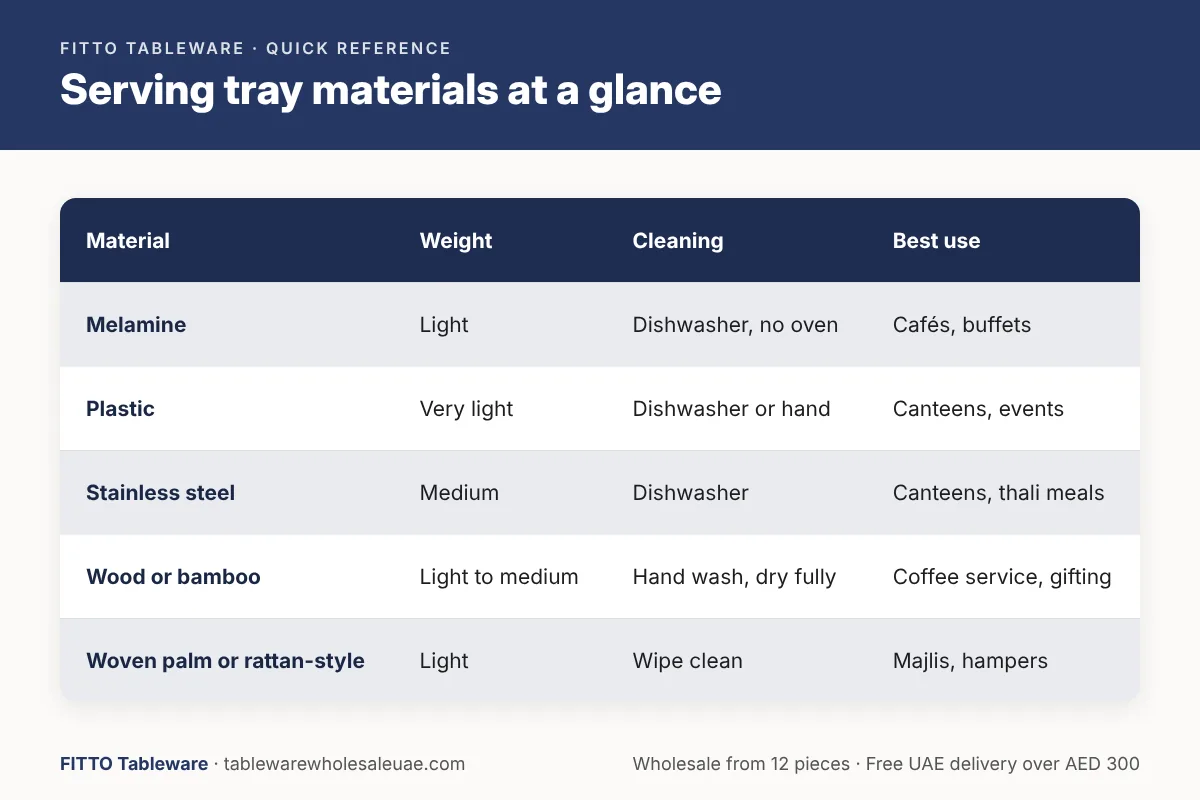
| Material | Weight | Durability | Cleaning | Best use |
|---|---|---|---|---|
| Melamine | Light | High | Usually dishwasher-safe, no oven | Cafés, buffets, family service |
| Plastic | Very light | Medium | Dishwasher or hand | Canteens, events, schools |
| Stainless steel | Medium | Very high | Dishwasher | Canteens, cafeterias, thali meals |
| Wood or bamboo | Light to medium | Medium | Hand wash, dry fully | Coffee service, gifting |
| Woven palm or rattan-style | Light | Medium | Wipe clean | Majlis, Ramadan tables, hampers |
Always follow the care instructions on each product, as finishes vary between lines.
Which serving tray shapes suit UAE shops and resellers?
Round patterned trays in 35–50 cm and rectangular trays with handles in 15–20 inch sizes are the safest core range for a shop. Gift-led shapes such as heart-shaped, tiered and lidded trays suit the weeks before Ramadan, Eid, National Day and the wedding season.
- Round woven-look melamine trays suit both everyday meals and guests, so they work all year.
- Rectangular trays with handles appeal to households and small cafés alike, so they sell on two fronts.
- Tiered stands and lidded dry-fruit trays are bought as gifts and for hosting, especially before Eid.
- Small wood-grain and bamboo trays suit add-on sales at the till and gift hampers.
Stock a size ladder rather than one size. FITTO's round melamine trays run from 30 to 60 cm in the same patterns, so a customer who buys a 45 cm tray can come back for the 35 cm and 55 cm to complete a set.
How do caterers and majlis hosts choose platters?
Caterers should prioritise stackable, lightweight trays and covered platters; majlis hosts should prioritise large round trays and coordinated sets for dates, fruit and coffee. Both benefit from buying one pattern in several sizes.
For catering, think about the van as much as the table. Rectangular trays stack better in transport, and trays with food covers keep dust and flies off at outdoor events. Woven food-cover tray sets with mesh domes, in 35, 30 and 25 cm, are a practical choice for garden and desert gatherings.
For majlis service, a 55–60 cm round tray carries a full spread of dates, fruit and sweets. Pair it with smaller 30–35 cm trays for Arabic coffee and karak cups. Stainless steel dates dishes with lids and tiered stands round out the set.
- Count your typical guest numbers for a regular gathering.
- Choose one large round tray per 8–10 guests for shared food.
- Add one smaller tray per coffee or tea service point.
- Pick one pattern and buy it in two or three sizes for a matching look.
- Check colour and finish on a single piece first if matching matters for an event.
How many serving trays does a café or restaurant need?
Plan on roughly one carrying tray per two to three tables in service, plus a reserve of 25–50% for washing and breakage. A display tray count depends on your menu and buffet layout.
A 40-seat café with 10 tables might run 4–5 carrying trays on the floor at peak, with another 2–3 in the wash and 2 in reserve. That is about 10 trays in total. A hotel breakfast buffet will need far more display trays, platters and tiered stands, usually planned per buffet station.
| Venue | Carrying trays | Display trays or platters |
|---|---|---|
| Small café, 20 seats | 6–8 | 3–4 for cakes and pastries |
| Café, 40 seats | 10–12 | 4–6 |
| Restaurant, 80 seats | 20–24 | 8–12 for sharing and buffets |
| Caterer, per 100 guests | 15–20 | 10–15 platters plus covers |
These are planning figures based on typical service patterns, not fixed rules. Watch your peak hour for a week and adjust. Trays sit alongside your crockery: our plates and bowls wholesale guide covers sizes per course, and the café tableware essentials list shows how trays fit a full café opening order.
How do you check a serving tray before buying in bulk?
Load one tray the way your staff will use it, then wash it the way your kitchen will clean it. Five checks catch most problems before they reach the floor.
- Rim height: as a rule of thumb, a rim of 1.5–2 cm stops glasses sliding off when a waiter turns. Flat display trays do not need one.
- Handles: cut-out or side handles should take a full grip without pinching fingers when the tray is loaded.
- Flatness: set the tray on a flat counter and press each corner. A tray that rocks will spill drinks.
- Loaded weight: put four full glasses and two plates on it and carry it across the room. If it flexes or feels heavy, staff will avoid it.
- Surface: a matte or textured surface holds cups better than a glossy one. A non-slip tray mat helps on smooth finishes.
How should serving trays be cleaned and stored in UAE conditions?
Wash melamine, plastic and steel trays as normal, hand wash wood, bamboo and woven trays, and store everything flat and dry. Heat and humidity cause most early failures.
- Do not leave melamine or plastic trays in a parked car or sun-baked storeroom in summer.
- Dry wooden and bamboo trays upright before storing, so moisture does not sit underneath.
- Store large round trays flat or upright in a rack, never leaning against a wall where they can bow.
- Wipe woven trays with a damp cloth; do not soak them.
- Check handles and rims monthly and retire cracked pieces.
For lidded dishes, stands and dispensers to go with your trays, browse our serveware sets and dispensers.
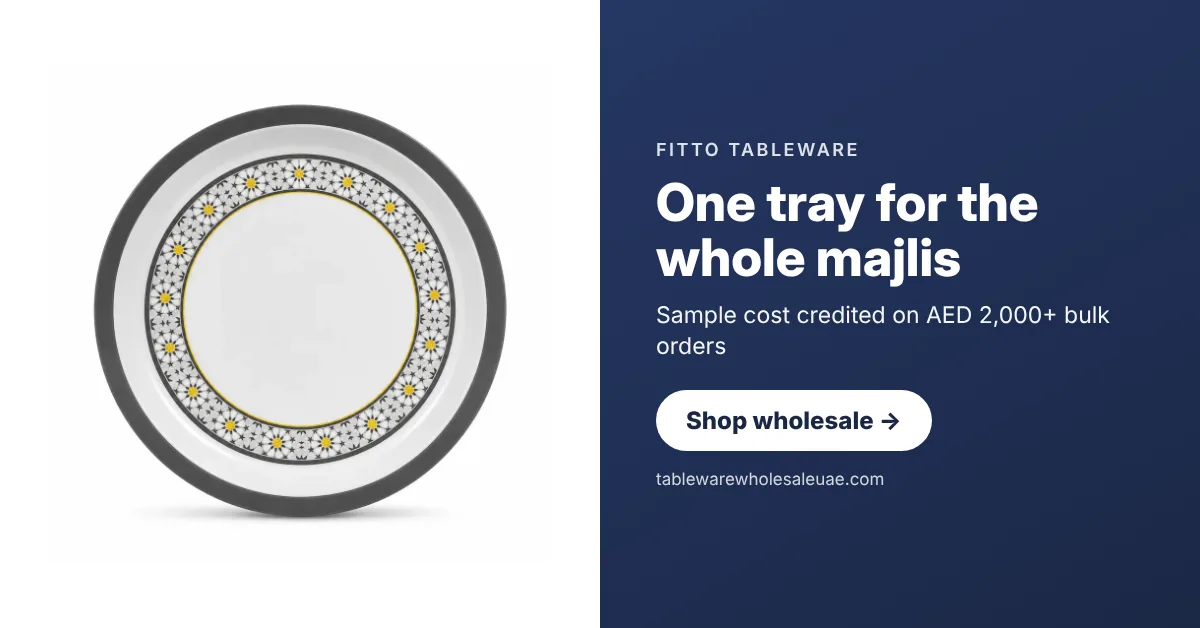
FITTO Trade Pick: Cover carrying and display in one order The round melamine woven serving tray, 55 cm handles majlis spreads, the white rectangular serving tray, 68 × 51 cm moves bulk orders, the stainless steel 6-section compartment tray suits canteens, and the heart-shaped bamboo serving tray, 40 cm sells as a gift. Order a single tray as a sample to check colour and finish, and its cost is credited on a bulk order of AED 2,000+ within 30 days.
The bottom line
Buy carrying trays for the job of moving food and display trays for the job of presenting it. Choose 38–51 cm for carrying, 35–60 cm round for display, and match the material to how hard the tray will work.
Browse our wholesale serving trays and platters, request a quote for mixed cartons or regular supply, or order a sample to check the finish. Every tray comes in packs of 12 to 144 pieces, with up to 20% less per piece on the largest pack, and delivery is free across the UAE on orders over AED 300. Questions? WhatsApp the Trade Desk on +971 55 672 6947. FITTO Tableware: fit for the way you serve.
FAQ
What is the most popular serving tray size for cafés?+
Most cafés use a rectangular carrying tray of 38–46 cm (15–18 inch) for one to four covers, plus a few smaller 30 × 22 cm trays for single coffees and pastries. Larger 51–61 cm trays are useful for clearing and big orders. Measure your counter, dishwasher rack and storage shelf before choosing the main size.
Are melamine serving trays dishwasher safe?+
Melamine serving trays are generally suitable for commercial and home dishwashers and are popular because they resist chipping and are light to carry. They are not suitable for ovens, microwaves or direct heat. Check the care guidance on each product listing, as patterns and finishes can vary between lines.
Which serving trays are best for majlis service?+
Large round trays of 55–60 cm carry a full spread of dates, fruit and sweets for a majlis. Woven-look melamine and decorative patterned trays suit the setting and are easy to clean. Add smaller 30–35 cm trays for Arabic coffee and karak cups, and lidded dishes or tiered stands for sweets.
Do wooden serving trays survive the UAE climate?+
Wooden and bamboo serving trays work well in the UAE if they are hand washed, dried fully and stored away from direct sun and damp. Humidity in coastal cities can cause swelling if trays are left wet. Avoid soaking them or putting them in a dishwasher, and wipe them with a little food-safe oil now and then.
How do I stop glasses sliding on a serving tray?+
Choose a carrying tray with a raised rim and a matte or textured surface, and keep the heaviest items near the centre. A rubber or cork non-slip tray mat helps on glossy melamine and steel. Carry the tray at waist height with one hand under the centre, not by the edge.
What size tray fits a coffee table or ottoman?+
For most living-room coffee tables, a 35–45 cm round tray or a 30 × 22 cm rectangular tray leaves space around the edge for cups and remotes. Large ottomans in majlis seating can take a 50–55 cm round tray. Measure the table top and leave at least 5 cm clear on each side.