What is opal glass and why do restaurants use it?
By FITTO Trade Desk · Last updated 29 October 2026
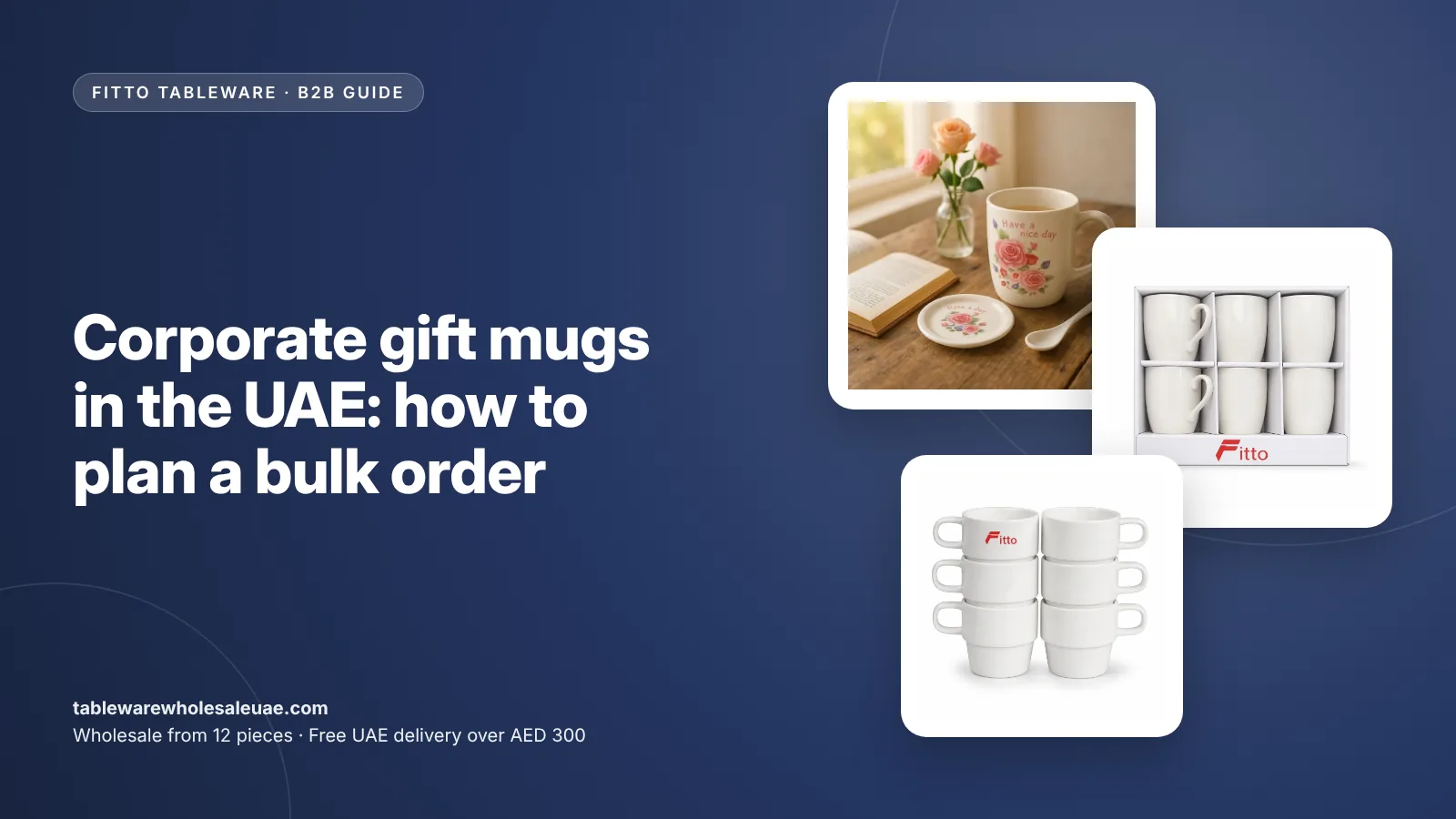
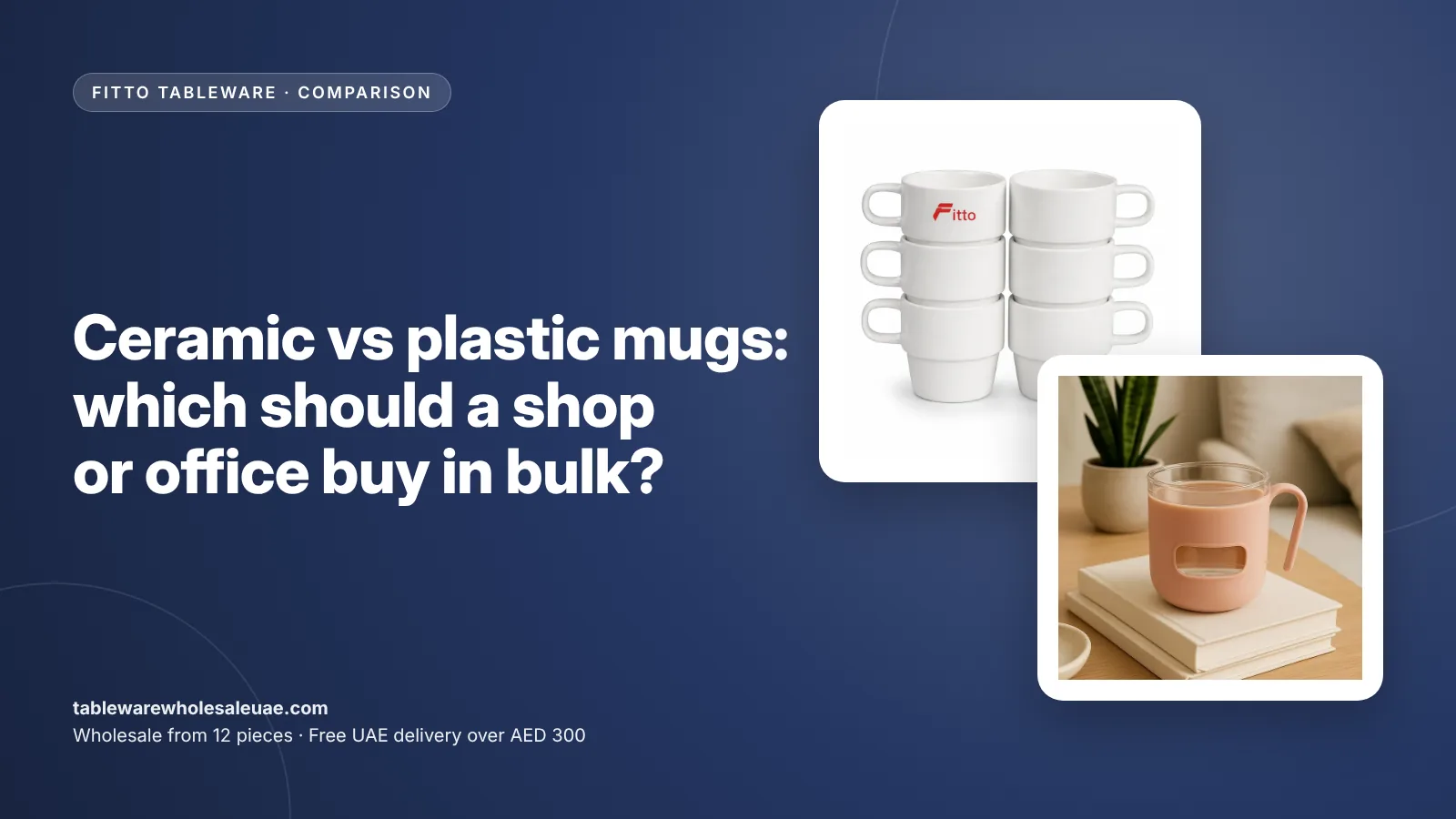
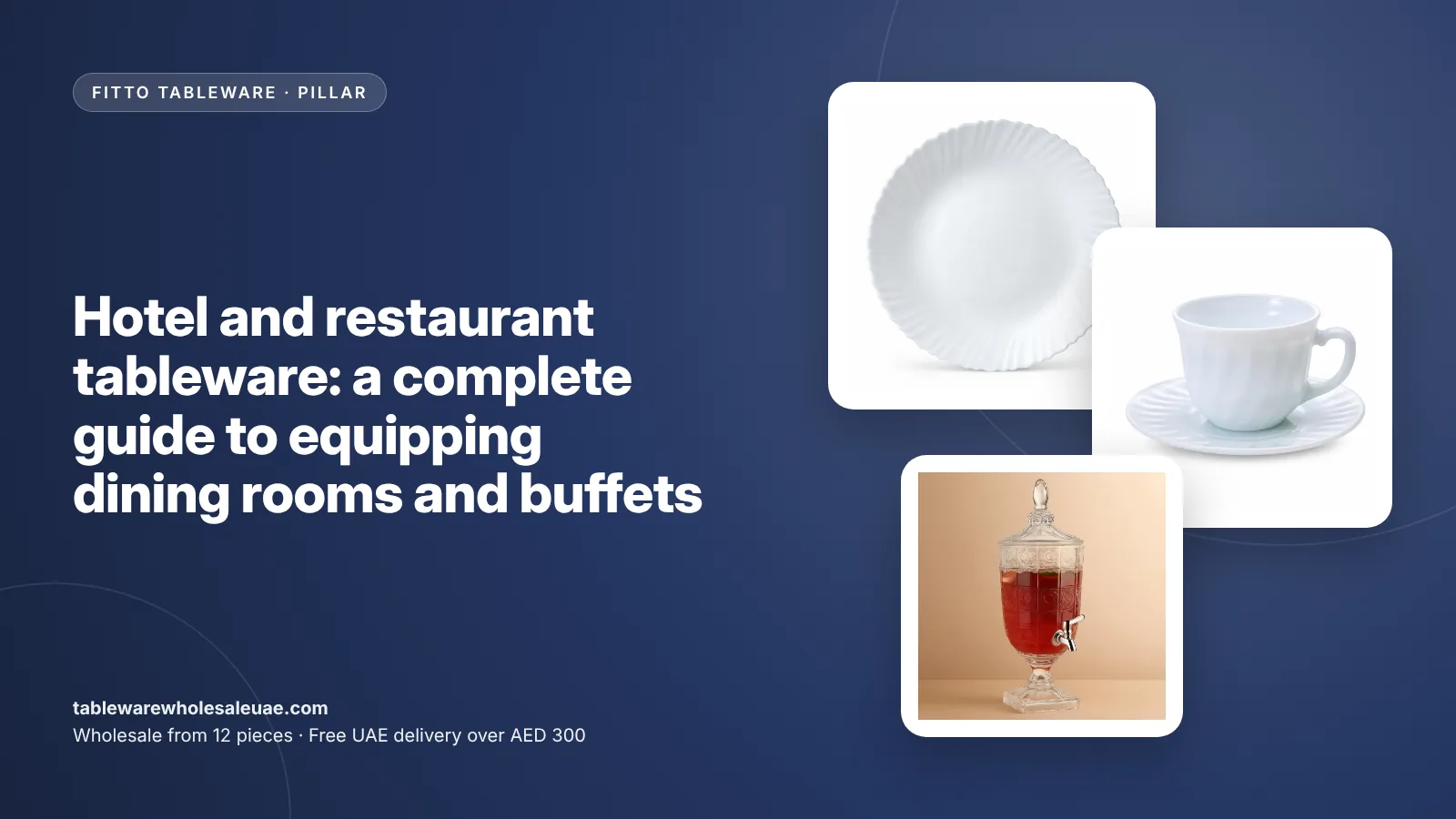
Opal glass is glass made milky white and opaque by adding opacifying minerals to the melt. Restaurants use it because it is lighter than porcelain, white all the way through and non-porous, so it resists stains and smells. It gives a clean, porcelain-like look for daily service at a lower weight to carry and stack.
Key takeaways
- Opal glass (also called opalware) is glass, not clay; the white colour runs all the way through.
- Its smooth, non-porous surface does not absorb sauces, oils or smells.
- Some opal ranges are tempered for extra toughness, but no opal glass is unbreakable.
- Restaurants choose it for daily service where porcelain looks right but feels heavy.
Choosing plates for a new restaurant often stalls on one question: what is opal glass, and is it as good as it looks? Pick the wrong material and you pay twice. This short explainer settles what opal glass is, how it is made and where it fits.
At FITTO Tableware, a wholesale tableware supplier in the UAE, we stock opal glass plates, bowls, saucers and cups for cafés, canteens and restaurants.
What is opal glass?
Opal glass is a type of glass made opaque and milky white, rather than clear. It is also sold as opalware or opal tableware, and UAE buyers often search for صحون أوبال (opal plates). It looks like porcelain on the table, but it is glass.
How is opal glass made?
Opal glass is made by adding opacifying minerals to molten glass, so tiny particles scatter light and turn the glass white. The glass is then pressed or moulded into plates, bowls and cups.
Some manufacturers also temper the pieces. Tempering heats the glass and cools it quickly, which strengthens the surface against knocks and temperature changes. It is a separate step, so treat a plate as standard opal glass unless its specification says tempered.
Is opal glass strong enough for restaurant use?
Opal glass is strong enough for most café, canteen and casual restaurant service, but it is not unbreakable. A plate dropped on stone or tile can still break.
Its real strength is the surface. Turmeric, tomato and coffee rinse off the non-porous glass rather than soaking in, and a small rim chip shows white rather than a brown clay body.
How does opal glass compare with porcelain and melamine?
Opal glass sits between melamine and porcelain: more refined than melamine, lighter than porcelain.
| Factor | Opal glass | Porcelain | Melamine |
|---|---|---|---|
| Material | Opaque white glass | Fired clay with glaze | Hard plastic resin |
| Weight | Light | Heavy | Lightest |
| Stain resistance | High, non-porous | High while glaze is intact | Can stain over time |
| Breakage | Can break if dropped | Can chip or break | Very hard to break |
| Microwave | Generally yes if undecorated | Generally yes if undecorated | No |
| Best for | Cafés, canteens, homes | Fine dining, hotels | Pool, kids, outdoor service |
For a detailed head-to-head, read our melamine vs opal glass plates comparison and our opal glass vs ceramic plates guide.
Why do restaurants use opal glass?
Restaurants use opal glass because it looks clean and white, weighs less, resists stains and keeps matching easy. In practice, that means:
- Lighter trays. Staff carry plate stacks all shift, so lighter plates mean less strain.
- Fewer stained rejects. Curries and sauces rinse off the non-porous surface.
- Easy replacement. Plain white opal plates match across reorders, so a broken plate does not spoil a set.
- Neutral presentation. White plates make food colours stand out on the pass and in photos for delivery menus.
Opal glass fits less well poolside, in children's areas and at outdoor events, where melamine's resistance to breaking matters more.
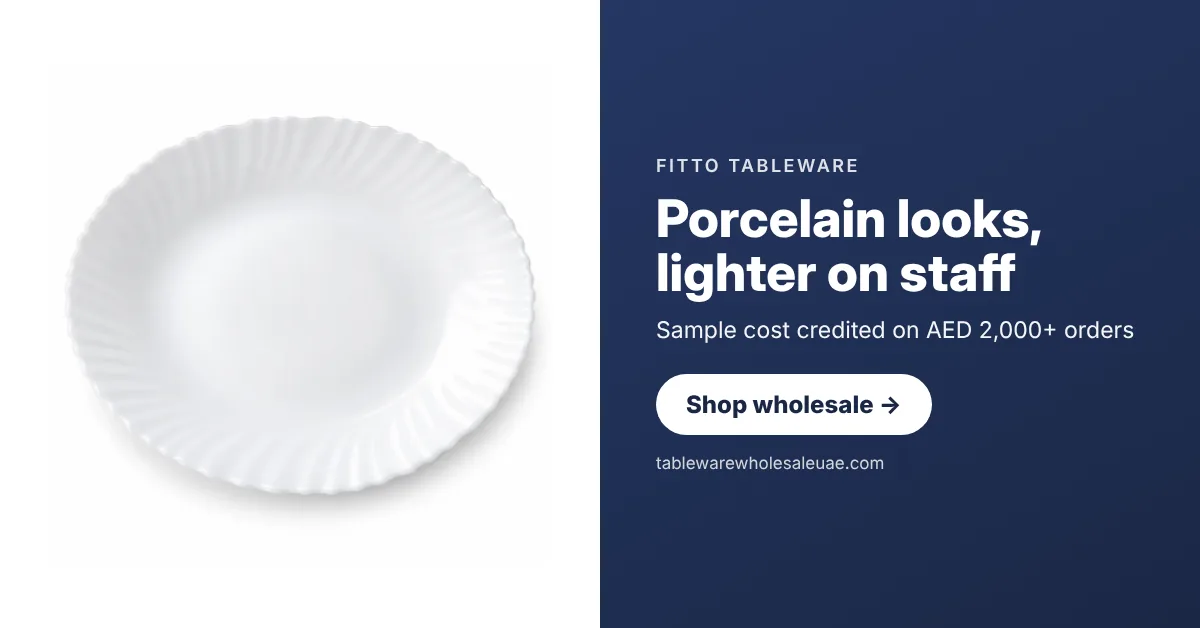
FITTO Trade Pick: Porcelain looks, lighter on your staff Try our 9.5 inch opal glass dinner plate, 9.5 inch opal glass soup plate and 190 ml opal glass coffee cups with saucers. Order one sample to feel the weight; we credit its cost on a bulk order of AED 2,000+ within 30 days.
The bottom line
Opal glass is white, non-porous glass that gives a porcelain-like look at a lower weight. It suits cafés, canteens and homes with daily, high-turnover service.
Browse our wholesale plates and bowls, with packs from 12 to 144 pieces, or see how to build a set in our opal glass dinnerware guide. Request a quote, order a sample or WhatsApp +971 55 672 6947. FITTO Tableware: fit for the way you serve.
FAQ
Is opal glass the same as porcelain?+
No. Opal glass is glass made opaque white, while porcelain is clay fired at high temperature and glazed. Opal glass is lighter and white all the way through. Porcelain is heavier and often preferred for fine dining.
Is opal glass safe to eat from?+
Opal glass is widely used for everyday plates, bowls and cups. Its non-porous surface does not absorb food or smells, which makes it easy to keep clean. As with any tableware, retire chipped or cracked pieces so no glass fragments reach food.
Is opal glass microwave and dishwasher safe?+
As a general rule, plain white opal glass handles microwave reheating and dishwasher cleaning. Pieces with gold rims or metallic decoration must stay out of the microwave and last longer washed by hand. Avoid sudden temperature changes.
What does tempered opal glass mean?+
Tempered opal glass has been heated and quickly cooled after shaping to strengthen its surface. It handles knocks and temperature changes better than untempered glass, and if it does break it usually breaks into small pieces. It is still glass, so avoid drops onto hard floors.