Opal glass vs ceramic plates: which gives better value for everyday use?
By FITTO Trade Desk · Last updated 29 October 2026
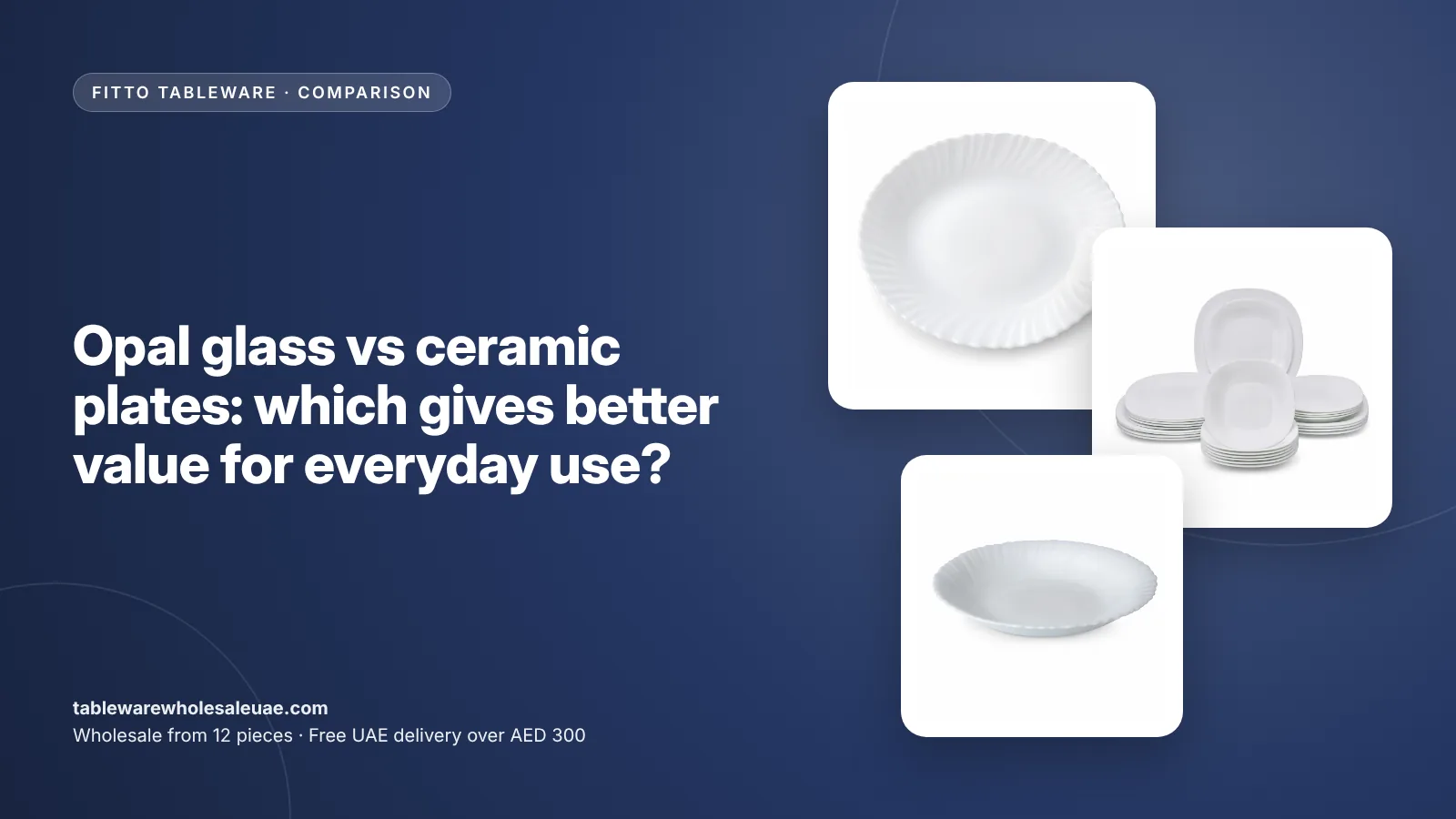
In the opal glass vs ceramic plates choice, opal glass gives better everyday value for most homes and busy cafés: it is lighter, non-porous and usually cheaper per plate. Ceramic wins on heft in the hand, heat retention and oven-to-table use. Choose opal glass for daily volume and ceramic for presentation-led tables.
Key takeaways
- Opal glass is non-porous all the way through, light and thin, so it stacks high and resists stains.
- Ceramic feels heavier and more premium and keeps food warm for longer.
- A chipped ceramic rim can expose a porous body; opal glass has no such layer.
- Neither is unbreakable, and neither should go in a microwave with a metallic rim.
- For families and high-turnover cafés, opal glass usually costs less per year of use.
Plates (صحون) are the item you replace most, so the wrong material costs you twice: once at purchase and again every month in chipped and stained stock. Opal glass and ceramic look alike on a shelf but behave very differently in a sink and a dishwasher. This comparison settles which suits your table.
It is for households choosing an everyday set and café owners deciding what to put on the pass. At FITTO Tableware, a wholesale tableware supplier in the UAE, we stock both materials, so we can be fair about where each one wins.
What is the difference between opal glass and ceramic plates?
Opal glass is a white, opaque glass, and much opal dinnerware is tempered for strength. Ceramic is fired clay with a glaze, and the term covers earthenware, stoneware and porcelain.
Glass is non-porous all the way through. Ceramic relies on its glaze for a sealed surface, and the body underneath can be more or less porous depending on the clay and firing.
Our own plate range reflects how UAE buyers use them: opal glass, melamine and stainless steel for daily plates, with ceramic mainly in cup sets and boxed dinner sets.
Which is lighter and easier to handle?
Opal glass plates are lighter and thinner than stoneware and most ceramic plates of the same diameter. A stack of 12 opal dinner plates is easier to lift, carry and shelve.
For a café, lighter plates mean faster clearing and less strain on staff. Ceramic's extra weight has one upside: a heavy plate feels substantial in the hand.
Which resists chipping and breakage better?
Tempered opal glass generally resists everyday knocks and edge chips better than standard ceramic. When it does fail after a hard drop, it breaks into many small pieces, so sweep carefully.
Ceramic tends to chip at the rim first, where plates are stacked or knocked. A chip is more than cosmetic: on stoneware and earthenware it can expose the porous body, which absorbs water and stains. Retire any chipped plate from service.
Which stains less: opal glass or ceramic?
Opal glass stains less because the whole plate is non-porous. Turmeric, saffron and tomato sauces sit on the surface instead of soaking in.
Ceramic glazes are sealed too, but fine crazing (hairline cracks in the glaze) or worn patches can trap colour over time. In UAE kitchens that cook biryani, machboos and curries every day, the difference shows within months.
Can both go in the microwave, oven and dishwasher?
Plain opal glass and most glazed ceramic handle the dishwasher and microwave reheating well, but the marking on each item is what counts. Never microwave a plate with a gold or silver rim.
Stoneware is more often rated oven-safe, which suits baked dishes served at the table. Opal glass is generally not meant for the oven or grill unless the maker says so. If a plate carries no marking, reheat in a dish that is clearly labelled. Our guide to whether melamine is microwave safe covers the third common plate material.
How do opal glass and ceramic plates compare side by side?
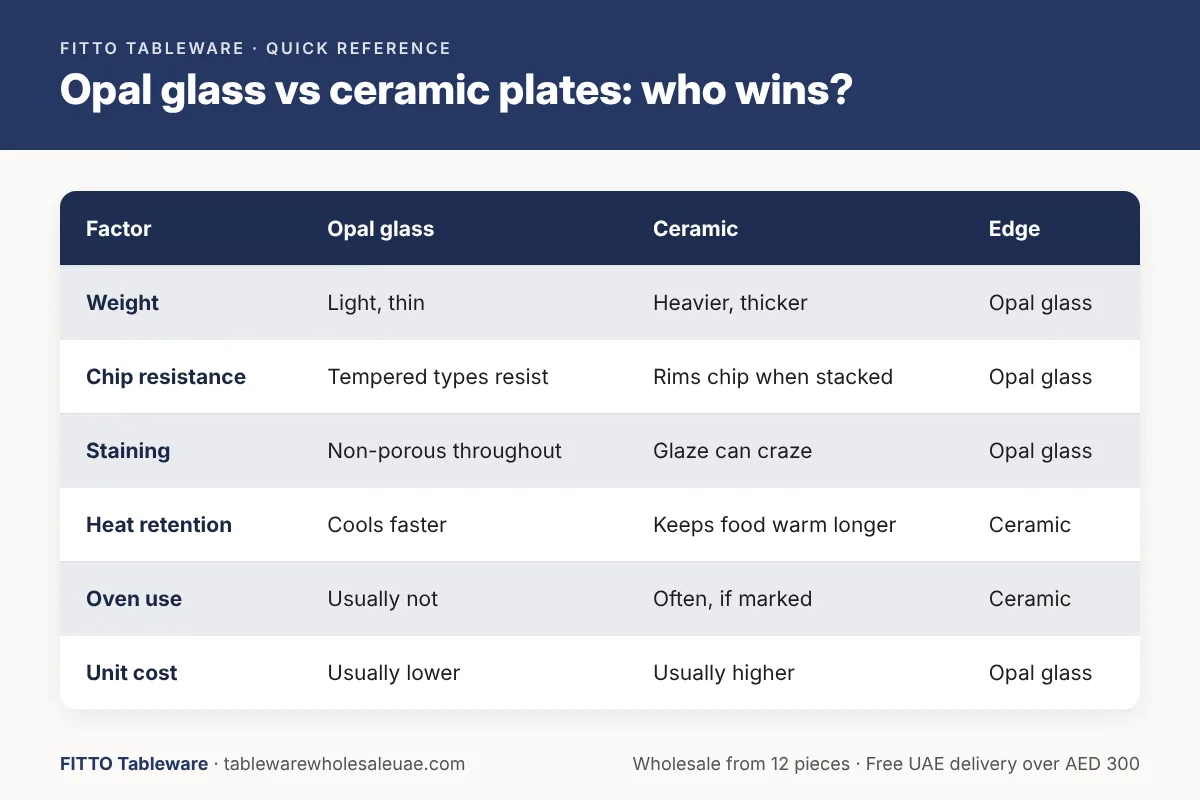
Opal glass wins on weight, stains and cost; ceramic wins on feel, heat retention and oven use.
| Factor | Opal glass | Ceramic (stoneware or porcelain) | Edge |
|---|---|---|---|
| Weight | Light, thin profile | Heavier, thicker | Opal glass |
| Chip resistance | Tempered types resist edge chips | Rims chip with stacking and knocks | Opal glass |
| Staining | Non-porous throughout | Glaze can craze and hold colour | Opal glass |
| Heat retention | Cools faster | Keeps food warm longer | Ceramic |
| Oven use | Usually not | Often, if marked oven-safe | Ceramic |
| Look and feel | Clean, bright white | Premium weight, wider glaze choice | Ceramic |
| Stacking and storage | Thin plates stack high | Taller stacks, heavier shelves | Opal glass |
| Typical unit cost | Usually lower | Usually higher | Opal glass |
Which gives better value over a year?
For daily use, opal glass usually gives better value over a year, because each plate costs less and fewer are lost to chips and stains. Ceramic pays back only where its look and warmth earn their keep.
Work it out as unit price × plates replaced per year. A café with 40 dinner plates that retires 3 a month replaces 36 plates a year; halve the chip rate and you buy 18 fewer. As a rule of thumb, keep 10–20% spare stock so one broken plate never breaks a set.
Which opal glass sizes make up an everyday set?
A practical everyday set uses a 9.5–10.5 inch dinner plate, an 8.5 inch soup plate and a 7.5 inch dessert plate.
| Piece | Opal glass sizes in our range | Use |
|---|---|---|
| Dinner plate | 9.5, 10, 10.5 and 11.5 inch | Mains, rice dishes |
| Soup plate | 7.5, 8.5, 9, 9.5 and 10 inch | Soups, harees, saucy sides |
| Dessert plate | 7.5 and 8.5 inch | Desserts, bread, starters |
| Bowl | 4.5 to 6 inch | Yoghurt, dips, fruit |
For 6 people, start with 6 of each plate and 6 bowls, plus 2 spares of the dinner plate.
Which should you choose? Our verdict by buyer
Choose by how the plates are used, not by how they look on a shelf.
- Family homes with children: opal glass; light, stain-resistant and easy to replace singly.
- High-turnover cafés and canteens: opal glass; faster clearing and high stacks.
- Brunch cafés with plated presentation: ceramic for signature dishes, opal glass for sides and staff meals.
- Oven-to-table dishes: ceramic marked oven-safe.
- Gift sets for resale: either; boxed ceramic reads as premium, opal glass suits everyday gifts.
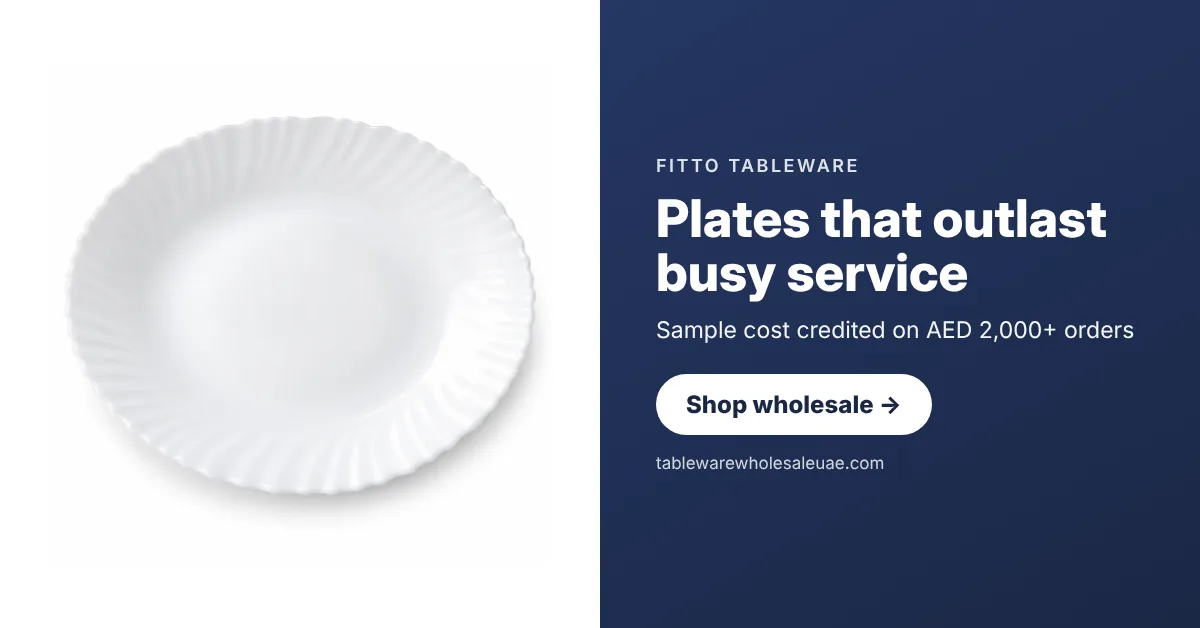
FITTO Trade Pick: Everyday plates that survive real life Our 9.5 inch opal glass dinner plate, 8.5 inch opal glass soup plate and 7.5 inch opal glass dessert plate build a full white set. Prefer ceramic? See the 18-piece white ceramic dinnerware serving set. Order one sample to test in your own dishwasher; its cost is credited on a bulk order of AED 2,000+ within 30 days.
The bottom line
Opal glass is the better-value everyday plate for most homes and cafés: lighter, harder to stain and usually cheaper to replace. Ceramic earns its place where weight, warmth and oven-to-table service matter more than cost, and many buyers mix both.
For the wider picture, read our plates and bowls buyer's guide or the melamine vs opal glass comparison. Compare our wholesale plates and bowls, request a quote, order a sample or WhatsApp +971 55 672 6947; delivery is free across the seven emirates on orders over AED 300. FITTO Tableware: fit for the way you serve.
FAQ
Is opal glass stronger than ceramic?+
Opal glass, especially tempered opal, generally resists everyday knocks and edge chips better than standard ceramic, which tends to chip at the rim. Neither material is unbreakable. A hard drop onto a tiled floor can break both, and tempered glass breaks into many small pieces. For daily family use and busy cafés, opal glass usually lasts longer between replacements.
Does opal glass feel cheap compared with ceramic?+
Opal glass is lighter and thinner, so some diners read it as less premium than a heavy stoneware plate. In return it stays bright white and resists stains. Many cafés use ceramic for signature dishes and opal glass for sides and high-volume service.
Can opal glass plates go in the microwave?+
Plain opal glass with no metallic decoration is generally suitable for reheating, but follow the marking on the base or packaging of each item. Never microwave plates with gold, silver or other metallic rims or prints. Avoid sudden temperature shocks, such as moving a cold plate straight into a hot oven or onto a hob, which stress any glass or ceramic.
Which plates are better for a new café?+
Most new cafés get better value from opal glass for daily plates and bowls: lower unit cost, lighter handling and fewer stains. Add a small run of ceramic for signature dishes if your menu relies on presentation. Before committing, run a few plates of each through your own dishwasher for a week and check them for chips, marks and dulling.