How to clean melamine plates without stains or scratches
By FITTO Trade Desk · Last updated 29 October 2026
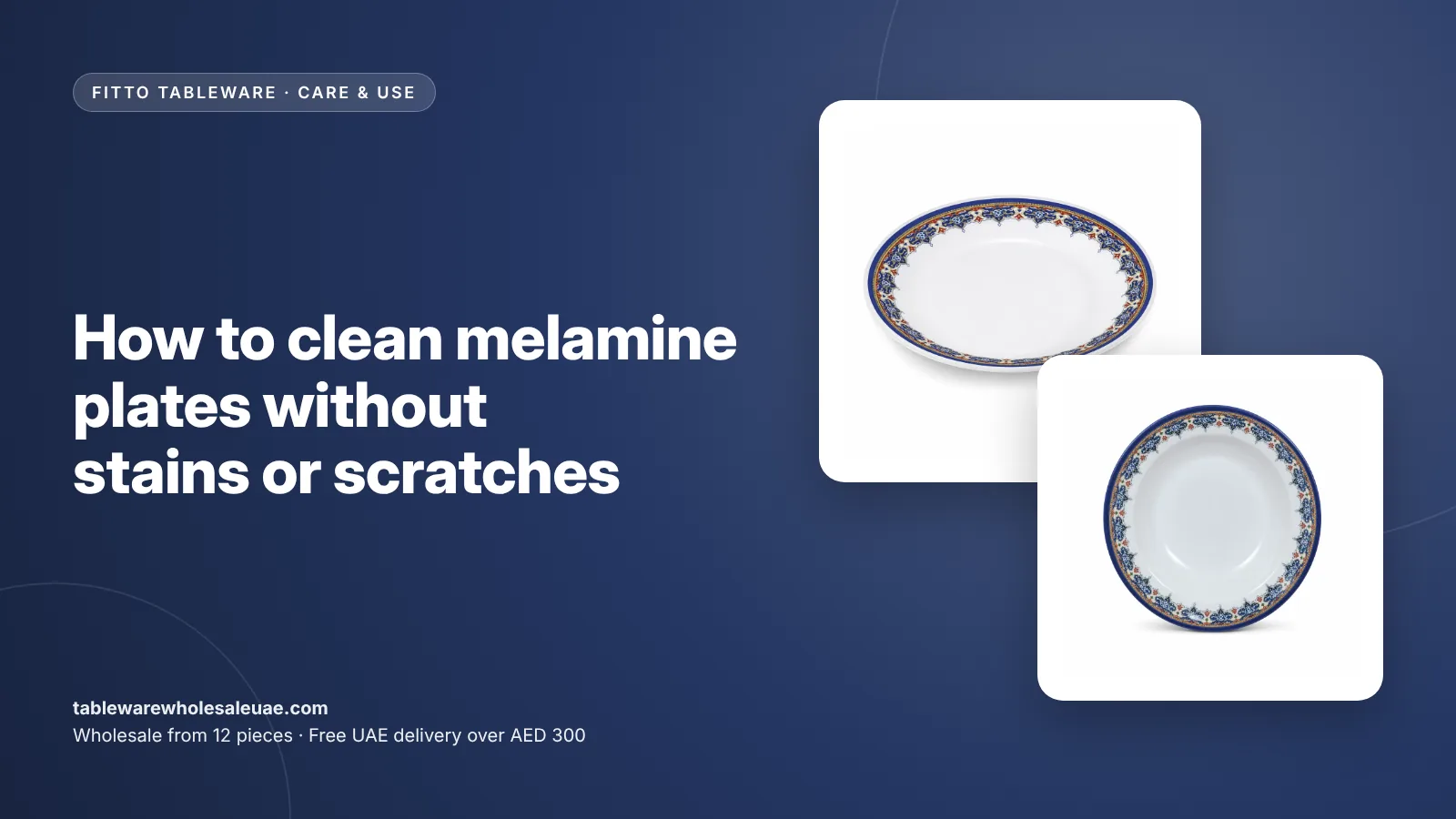
To clean melamine plates, wash them in warm soapy water with a soft sponge, or in the dishwasher if the care marking allows, and dry them before stacking. Lift tea and turmeric stains with a baking soda paste. Avoid scouring pads, abrasive powders and strong chlorine bleach, which scratch or dull the surface.
Key takeaways
- Daily routine: scrape, rinse soon, wash with a soft sponge and mild detergent, dry before stacking.
- A baking soda paste left for about 10 minutes lifts most tea, coffee and turmeric stains.
- Scratches cannot be polished out, so keep scouring pads and serrated knives away from melamine.
- Skip strong chlorine bleach; kitchens should use a destainer labelled safe for melamine.
- Retire plates that are cracked, chipped, burnt or too scratched to come clean.
Melamine plates (صحون ميلامين) are bought because they survive drops, yet they lose their looks fast when cleaned the wrong way. A grey, tea-stained plate looks worn long before it breaks, and gets replaced early. This guide settles a cleaning routine that keeps melamine white, smooth and in service.
It is for restaurant kitchen staff and households who use melamine every day. At FITTO Tableware, a wholesale tableware supplier in the UAE, melamine is one of our largest ranges, so we hear the cleaning questions first-hand.
How do you clean melamine plates every day?
Wash melamine in warm water with a mild detergent and a soft sponge, rinse, and dry it before stacking. These five steps work at home and in a commercial kitchen.
- Scrape food off with a rubber spatula or paper towel, never a knife.
- Rinse soon after the meal; turmeric, tomato and tea set if left for hours.
- Wash with a soft sponge, cloth or nylon brush and ordinary washing-up liquid.
- Dishwash only if the care marking allows, with plates spaced apart from pots and cutlery.
- Dry fully before stacking, so trapped water does not leave marks or odours.
How do you remove tea, coffee and turmeric stains?
Spread a paste of baking soda and a little water on the stain, leave it for about 10 minutes, then wipe it off with a soft cloth. Repeat once or twice for older stains.
Baking soda is mildly alkaline and fine-grained, so it lifts stains without scouring the surface. Karak, saffron rice and curries are the usual culprits in UAE kitchens. Light-coloured melamine shows them most, so rinse those plates first.
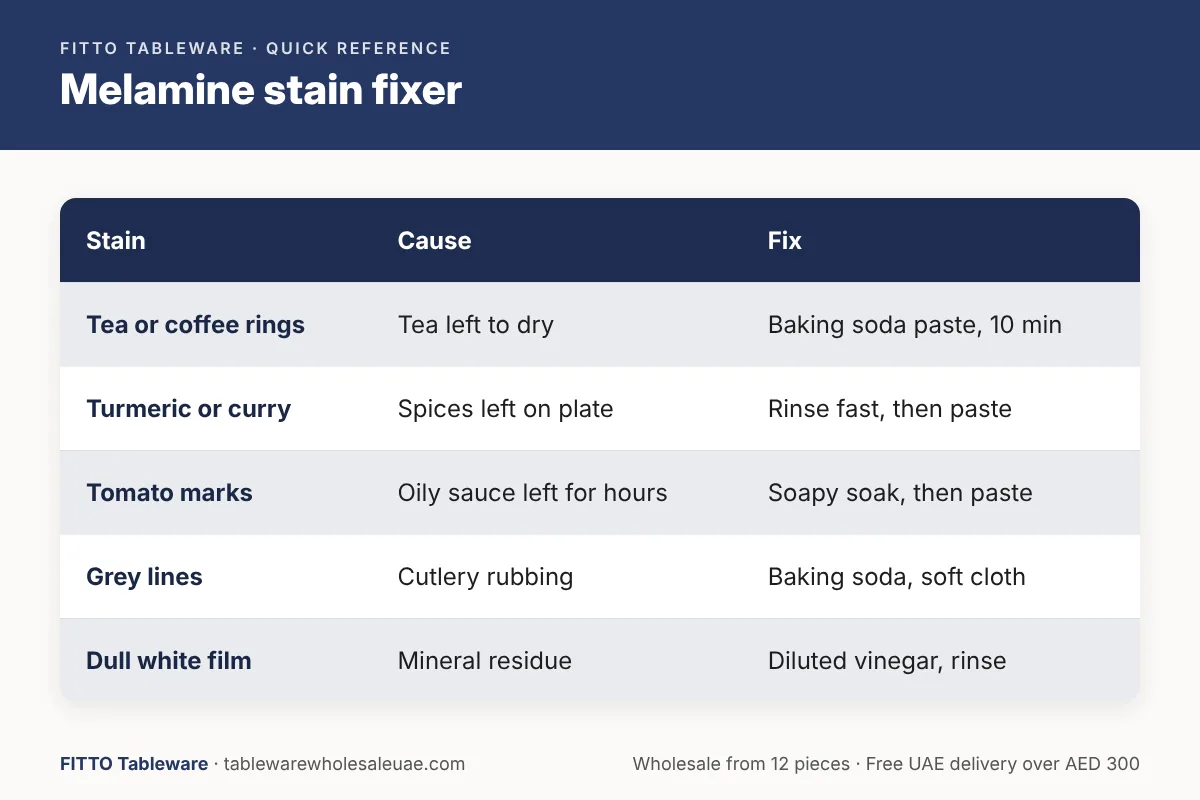
| Stain or problem | Likely cause | What to do | Avoid |
|---|---|---|---|
| Brown tea or coffee rings | Tea left to dry in the plate | Baking soda paste, 10 minutes | Scouring powder |
| Yellow turmeric or curry | Spices left on the surface | Rinse fast, then baking soda paste | Strong chlorine bleach |
| Orange tomato marks | Oily sauce left for hours | 15-minute warm soapy soak, then paste | Steel wool |
| Grey lines | Cutlery rubbing on the surface | Baking soda on a soft cloth | Abrasive cream |
| Dull white film | Mineral or detergent residue | Wipe with diluted white vinegar, rinse | Undiluted acids |
| Brown or rough patch | Contact with a hot pan or heat | Cannot be removed; retire the plate | Microwave or oven use |
What should you never use on melamine?
Never use steel wool, scouring powder, abrasive cream or strong chlorine bleach on melamine, and keep it out of the microwave and oven.
Abrasives cut fine scratches into the glossy surface, and scratches hold stains. Strong bleach can dull the finish and fade printed patterns over time. Heat is the other enemy: melamine is not made for microwave or oven use, as our guide to whether melamine is microwave safe explains.
How do you stop melamine from scratching?
Prevent scratches, because they cannot be polished out once they are there.
- Serve foods that need sawing, such as steak, on harder plates; our melamine vs opal glass comparison shows where each fits.
- Stack only clean, dry plates, because grit between plates acts like sandpaper.
- Lift plates instead of dragging them across steel counters and racks.
- Separate melamine from heavy pots in the sink and dishwasher.
The same rules apply to melamine trays; see our melamine vs stainless steel tray comparison.
When should you retire a melamine plate?
Retire a plate when it is cracked, chipped, burnt or so scratched that stains no longer lift.
A damaged surface is harder to clean properly and looks tired next to new stock. In a restaurant, check plates at the pass once a week and keep a box for retired pieces, so they do not drift back into service. Households can do the same check whenever the cupboard is reorganised.
FITTO Trade Pick: Refresh worn plates with a matching set Replace retired pieces with the 10 inch white melamine dinner plate, the 9 inch melamine soup plate with blue floral border, the 4.5 inch melamine rice bowl or the 30 cm white melamine serving plate. Order a sample to check the match with your current stock; its cost is credited on a bulk order of AED 2,000+ within 30 days.

The bottom line
Soft sponges, quick rinsing, dry stacking and a baking soda paste for stains keep melamine looking new for longer. Abrasives, strong bleach and heat are what age it early.
Browse our plates and bowls range, request a quote for replacement stock, order samples or WhatsApp +971 55 672 6947. Free delivery across the seven emirates on orders over AED 300. FITTO Tableware: fit for the way you serve.
FAQ
Can you use bleach on melamine plates?+
Avoid undiluted or strong chlorine bleach on melamine. Over time it can dull the glossy surface and fade printed patterns, which makes stains cling more easily. For home stains, baking soda paste does the job. Commercial kitchens that need a destainer should choose one labelled safe for melamine and keep strictly to the dilution and soaking time on the label.
Is melamine dishwasher safe?+
Most melamine tableware handles a normal dishwasher cycle, but check the marking on the base or packaging of each item. Load plates apart from heavy pots and cutlery baskets so they do not rub, use a standard detergent rather than a harsh powder, and let them dry fully before stacking. Hand washing with a soft sponge is always the gentlest option.
Why do melamine plates get grey marks?+
Grey lines on melamine are usually metal marks left by cutlery rubbing on the surface, not scratches. A baking soda paste on a soft cloth normally removes them. If the marks stay after two or three attempts, the surface itself is scratched. Plates in that state stain faster and are worth retiring from guest service.
How long do melamine plates last?+
There is no fixed lifespan: it depends on how plates are washed, stacked and used. Plates cleaned with soft sponges, dried before stacking and kept away from heat and serrated knives stay presentable far longer. Check them regularly and retire any piece that is cracked, chipped, burnt or so scratched that stains no longer lift.