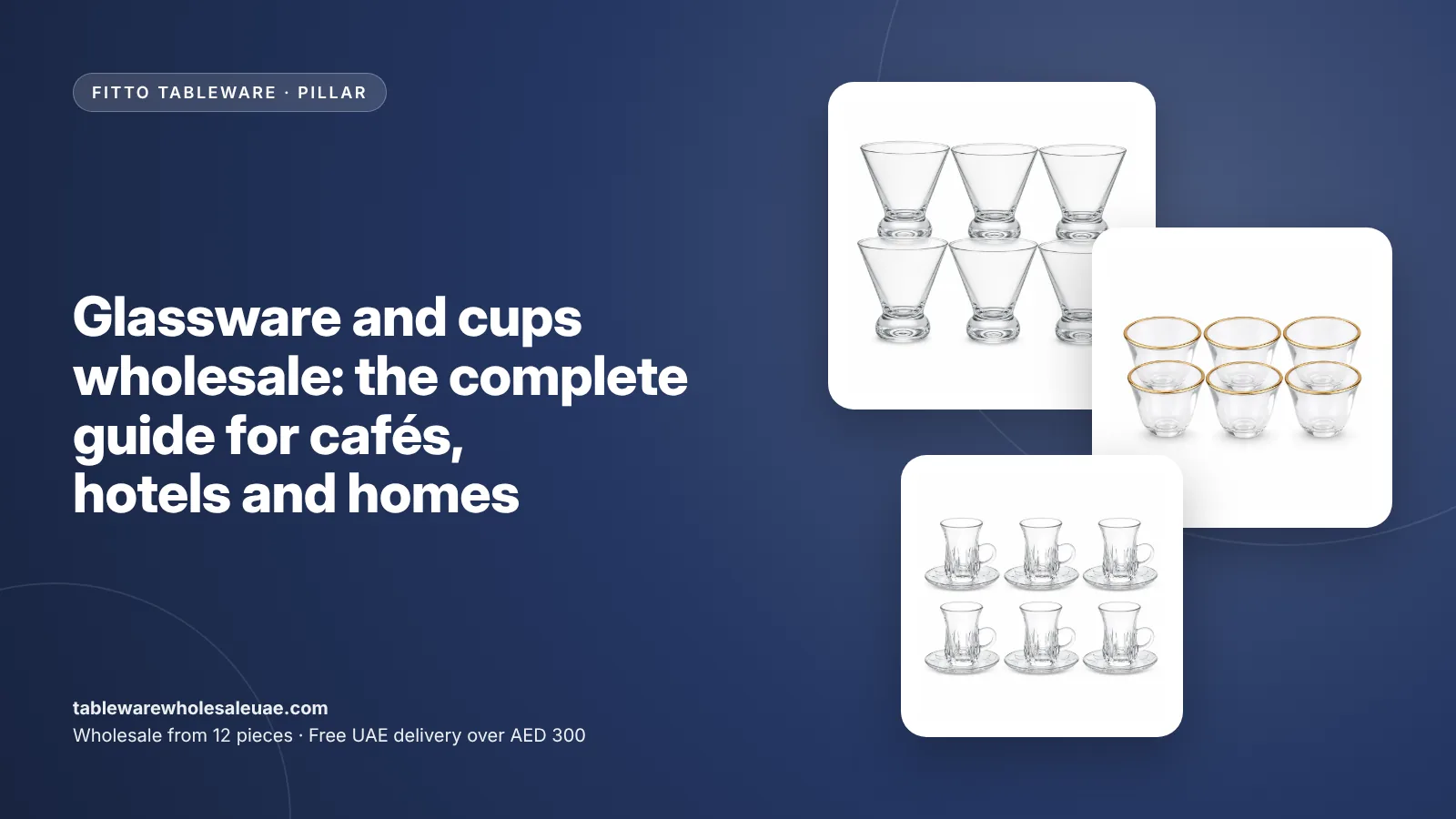
Glassware and cups wholesale: the complete guide for cafés, hotels and homes
By FITTO Trade Desk · Last updated 29 October 2026
Buying glassware wholesale in Dubai starts with matching each glass to a drink and a capacity. Most cafés and hotels need a 210–270 ml tumbler for water and juice, a 100–145 ml glass for tea and cawa, a cup-and-saucer set for hot drinks, and a reserve stock for breakage. Order by drink, not by look, and the list stays short.
Key takeaways
- Plan by drink: water and juice, tea and cawa, coffee, and desserts each need their own glass.
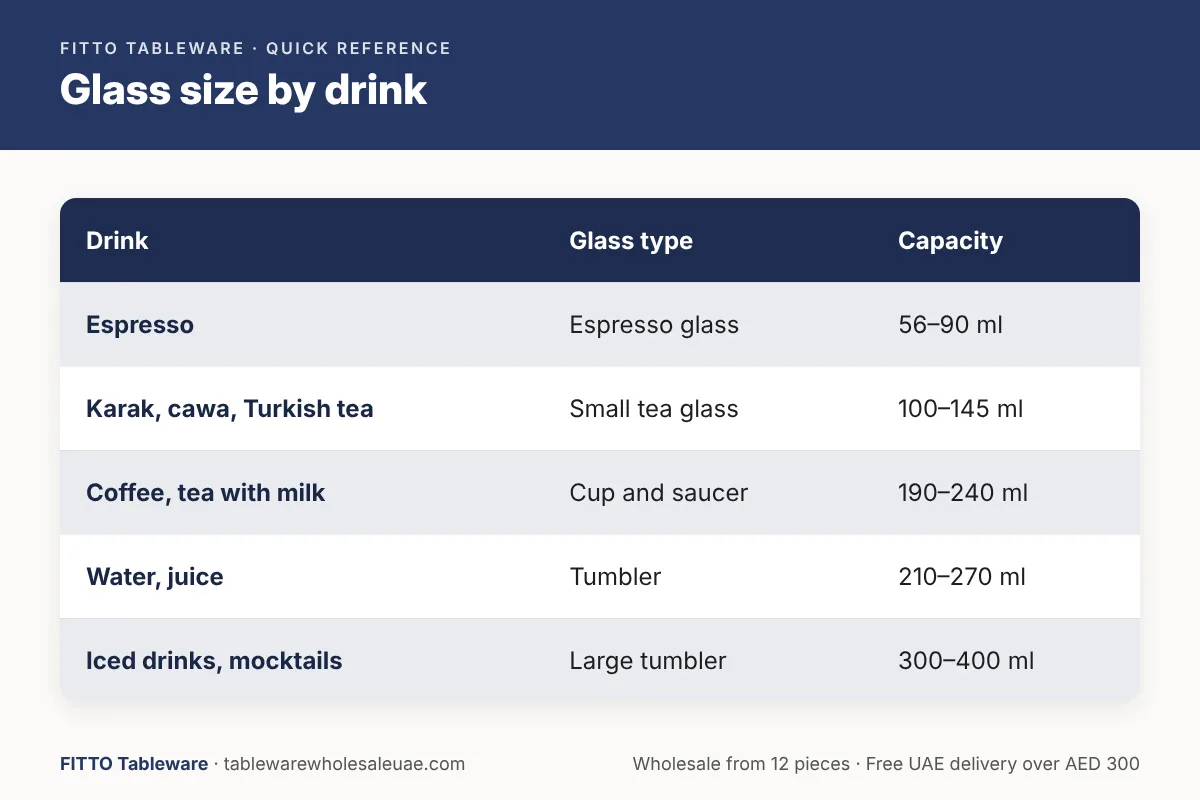
- Core capacities: 56 ml espresso, 100–145 ml tea, 190–240 ml coffee cups, 210–270 ml tumblers and up to 400 ml for iced drinks.
- Simple, sturdy shapes without thin stems or fragile decoration survive busy service and washing best.
- Most breakage happens in washing and storage, so racks, rim-up storage and steady temperatures save more money than any single glass.
Broken glasses are a quiet, steady cost. Every chipped rim is a glass you pay for twice, plus the risk of a guest complaint. Mismatched replacements make a table look careless. This guide sorts out which glasses (كاسات) to buy, in which sizes and how many, so your drinkware looks right and lasts.
It is for café owners, hotel F&B buyers, resellers and households furnishing a new home. At FITTO Tableware, a wholesale glassware and cups supplier in the UAE, we stock everything from 56 ml espresso glasses to 400 ml tumblers, so the guidance below covers the full size range.
Which glassware does a café or hotel actually need?
A café or hotel needs four glass types: a tumbler for water and juice, a small glass for tea and cawa, a cup with saucer for coffee, and a dessert or specialty glass. Everything else is a menu decision.
Start with the drinks you sell most, then pick one glass per drink. A karak café may need 100–145 ml tea glasses more than anything else. A specialty coffee shop needs espresso glasses, cups and saucers, and double-wall cups. A hotel breakfast buffet needs tumblers in volume.
| Drink | Glass type | Typical capacity | Notes |
|---|---|---|---|
| Water, juice, soft drinks | Tumbler | 210–270 ml | The volume item for every venue |
| Iced drinks, mocktails | Tall or large tumbler | 300–400 ml | Room for ice and garnish |
| Karak, Turkish and cawa tea | Small tea glass | 100–145 ml | Often served with a saucer |
| Espresso | Espresso glass or cup | 56–90 ml | Small, warmed before the shot |
| Coffee, cappuccino, tea with milk | Cup and saucer | 190–240 ml | Ceramic, opal glass or glass |
| Desserts, ice cream | Stemmed or footed dessert glass | Varies | Doubles as a display piece |
What glass sizes in ml should you stock?
The most useful capacities are 56 ml for espresso, 100–145 ml for tea, 190–240 ml for coffee cups, 210–270 ml for everyday tumblers and up to 400 ml for iced drinks. Stocking these five sizes covers almost any café or home menu.
Capacity drives portion cost as well as looks. A 245 ml tumbler poured to 200 ml leaves room to carry without spills. A 400 ml glass for iced coffee holds ice plus drink, so the guest does not feel short-changed.
- 56 ml: espresso shots and small servings of Arabic coffee in glass.
- 100–110 ml: small tea glasses, often on a saucer or in a metal rack.
- 140–145 ml: tea glasses for karak and cawa.
- 190–240 ml: cups for coffee and tea with milk, often sold with saucers.
- 210–270 ml: tumblers for water, juice and soft drinks.
- 400 ml: large tumblers for iced drinks and mocktails.
For a deeper look at the small glasses used for karak and cawa, see our karak tea glasses guide.
Is tempered glass worth it for commercial use?
Tempered glass is worth paying for in high-volume venues because it resists knocks and sudden temperature changes better than standard glass, and it breaks into small, blunter pieces rather than sharp shards. Standard soda-lime glass is fine for homes, gifting and low-volume service.
Temperature shock matters in the UAE. Pouring hot tea into a glass straight from a cold, air-conditioned storeroom, or rinsing a hot glass under cold water, can crack standard glass. Let glasses reach room temperature before hot drinks, and let them cool after the dishwasher before adding ice.
Not every glass is tempered, and a listing that does not say so should be treated as standard glass. Read the material line on each product page before you plan heavy commercial use.
| Feature | Standard glass | Tempered glass |
|---|---|---|
| Resistance to knocks | Moderate | Higher |
| Resistance to temperature shock | Lower | Higher |
| How it breaks | Sharp shards | Small, blunter pieces |
| Best for | Homes, gifting, low volume | Cafés, hotels, buffets |
What is the difference between tea glasses, cawa cups and cup-and-saucer sets?
Tea glasses are small clear glasses for karak and Turkish tea, cawa cups are small handle-free cups for Arabic coffee and cawa, and cup-and-saucer sets pair a cup with a saucer for coffee and tea with milk. Each suits a different serving ritual.
Tea glasses are usually 100–145 ml, tulip-shaped or straight, often with a ribbed or faceted finish. Sets with a gold-tone metal rack suit majlis and hotel lobby service.
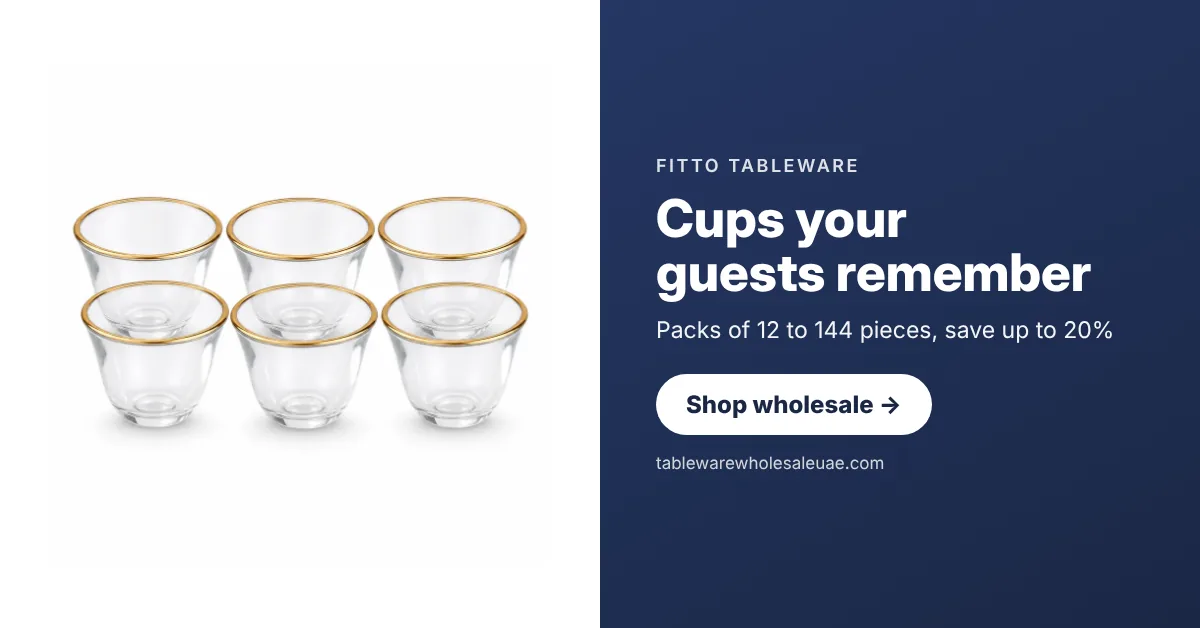
Cawa cups are small, handle-free and often finished with gold-tone rims or fluted patterns. They come in sets of six and are a popular gift around Ramadan and Eid.
Cup-and-saucer sets come in glass, opal glass and ceramic. Twelve-piece sets (six cups and six saucers) are the common retail unit, and 18-piece tea and coffee sets add a second cup style for mixed service.
Double-wall glass cups keep hot drinks warm and cold drinks cold for longer, and they stay comfortable to hold. They suit specialty coffee, desserts and premium hotel service.
How many glasses do you need per seat?
A common rule of thumb is three tumblers per seat and two cups or tea glasses per seat, plus a breakage reserve. Glasses turn over faster than plates because guests order several drinks.
A café with fast turnover and a dishwasher running constantly can run leaner. A hotel buffet or banqueting operation needs much more stock, because hundreds of glasses can be out at once.
| Seats | Tumblers (×3) | Tea glasses or cups (×2) | Espresso glasses (×1) | Reserve to store |
|---|---|---|---|---|
| 20 | 60 | 40 | 20 | 20–30 pieces |
| 40 | 120 | 80 | 40 | 40–50 pieces |
| 60 | 180 | 120 | 60 | 60–70 pieces |
| 100 | 300 | 200 | 100 | 100+ pieces |
These are starting figures, not fixed rules. Track how many glasses you replace each month for the first quarter, then set your reorder point.
Remember to convert glasses into sets when you order. Many glasses are sold in sets of 3 or 6, so 120 tumblers means 20 six-glass sets or 40 three-glass sets. The count per set is in every product title.
How do you reduce glass breakage in a busy venue?
Most breakage happens in washing, stacking and storage, not at the table. A few simple habits cut replacement orders noticeably.
- Use glass racks in the dishwasher rather than loading glasses loose.
- Avoid stacking glasses that are not designed to stack. Stackable glasses are worth choosing for tight bars and counters.
- Let glasses cool before refilling with ice, and reach room temperature before pouring hot tea.
- Store glasses rim-up on ribbed mats or in racks, not rim-down on flat shelves where moisture collects.
- Pull chipped glasses from service immediately and record the count.
- Keep one style per drink so replacements always match.
Which glassware lines suit resellers and online sellers?
Gift-ready sets suit resellers best: six-piece cawa cup sets, 12-piece tea cup and saucer sets and 18-piece tea and coffee sets. Plain tumbler sets in 3 or 6 pieces are the steady everyday line.
As a retail rule of thumb, gold-rimmed and decorative sets are worth building up before Ramadan, Eid and the wedding season. Plain tumblers, glass mugs and cups suit households and offices all year.
For online sellers, packaging is the deciding factor. Sets that arrive in a sturdy box travel well. Loose glasses need extra protection and raise the cost of each delivery.
Tell customers that gold-tone rims and painted decoration last longer with hand washing. Dishwasher detergent and heat can fade metallic finishes over time, and a clear care note on the shelf or listing cuts complaints.
What glassware works best for hotel buffets and events?
Hotel buffets and events need simple, stackable tumblers in volume, plus a dessert glass and a jug or dispenser at each drinks point. Uniform shapes are easier to rack, wash and count after service.
For a breakfast buffet, plan glasses per guest rather than per seat, because guests often take a fresh glass for juice, water and a second drink. Short, heavy-based tumblers of 210–245 ml are the safest choice for self-service, since they are harder to tip over. Stemmed dessert glasses and footed ice cream cups add height to a dessert station and double as display pieces for fruit salads and mousses.
For outdoor events in the cooler months, choose glasses with heavy bases and avoid tall, narrow shapes on uneven ground. Carry glasses in racks, not stacked, and keep a spare box at each bar point so service does not stop when a tray goes down.
How should households choose glassware for a new home?
A new household needs one set of everyday tumblers, one set of tea glasses or cups for guests, and a jug or dispenser for water and juice. Six or twelve of each covers a family plus visitors.
Start with a 6-piece tumbler set of 230–270 ml for daily use. Add a set of tea glasses or a cup-and-saucer set for guests, since hosting is central to UAE homes. A jug with matching glasses is a practical extra for family meals, and a dispenser helps for gatherings. Our beverage dispenser buying guide covers capacities for events.
Glassware works alongside your crockery and mugs. See our plates and bowls wholesale guide for the plate side of the table, and browse our wholesale mugs for larger hot drinks.
FITTO Trade Pick: Cover every drink with four proven lines The glass tumbler set, 270 ml, 6 pieces handles water and juice, the clear glass cawa cups with gold-tone rims, 6 pieces suit majlis and gifting, the clear glass tea cup and saucer set, 12 pieces covers tea service, and the double-wall glass cup set, 6 pieces suits specialty coffee. Want to feel the weight first? Order one set as a sample, and its cost is credited on a bulk order of AED 2,000+ within 30 days.
The bottom line
Choose glassware by drink and capacity, keep one style per drink, and plan for breakage from day one. Tempered glass earns its place in busy venues, while standard glass is fine for homes and gifting.
Browse our wholesale glassware and cups, request a quote for mixed cartons or regular supply, or order a sample to check the feel. Every line comes in packs of 12 to 144 pieces, with up to 20% less per piece on the largest pack, and UAE delivery is free on orders over AED 300. Questions? WhatsApp the Trade Desk on +971 55 672 6947. FITTO Tableware: fit for the way you serve.
FAQ
What size drinking glass is standard for cafés?+
Most cafés use a 210–270 ml tumbler for water, juice and soft drinks. Iced drinks and mocktails need a larger glass of around 300–400 ml to leave room for ice. Tea is usually served in 100–145 ml glasses, and espresso in 56–90 ml glasses or cups. Choose one size per drink to keep stock simple.
What is the difference between tempered and standard glass?+
Tempered glass is heat-treated so it resists knocks and sudden temperature changes better than standard glass. If it does break, it shatters into small, blunter pieces. Standard glass costs less and is fine for homes and gifting. For busy cafés and hotels, tempered lines usually last longer, so check each product's material details before ordering.
How many glasses should a 40-seat café order?+
A common rule of thumb is three tumblers and two tea glasses or cups per seat. For 40 seats, that means about 120 tumblers and 80 tea glasses or cups, plus 40 espresso glasses if you serve coffee. Keep a reserve of 40–50 pieces in storage and adjust after tracking monthly breakage.
Are cawa cups and tea glasses sold as sets?+
Yes. Cawa cups usually come in sets of six, and tea cup and saucer sets typically come as 12 pieces (six cups and six saucers). FITTO also stocks 18-piece tea and coffee sets and tea glass sets with gold-tone metal racks. The number of pieces in each set is shown in the product title.
Can glass tea cups take boiling tea?+
Most glass tea cups handle freshly poured tea, but sudden temperature jumps are what crack glass. Warm the glass with hot water first if it comes from a cold storeroom, pour steadily, and never put a hot glass under cold water. Double-wall cups are easier to hold with very hot drinks.
Can gold-rim glasses go in the dishwasher?+
Hand washing is the safer choice for gold-tone rims and painted decoration. Dishwasher detergent, high heat and long cycles can dull or wear metallic finishes over time. Wash gold-rim glasses in warm water with a mild detergent, dry them with a soft cloth and store them so the rims do not touch.