Karak tea glasses: how to choose cups that suit cafés, cafeterias and majlis
By FITTO Trade Desk · Last updated 29 October 2026
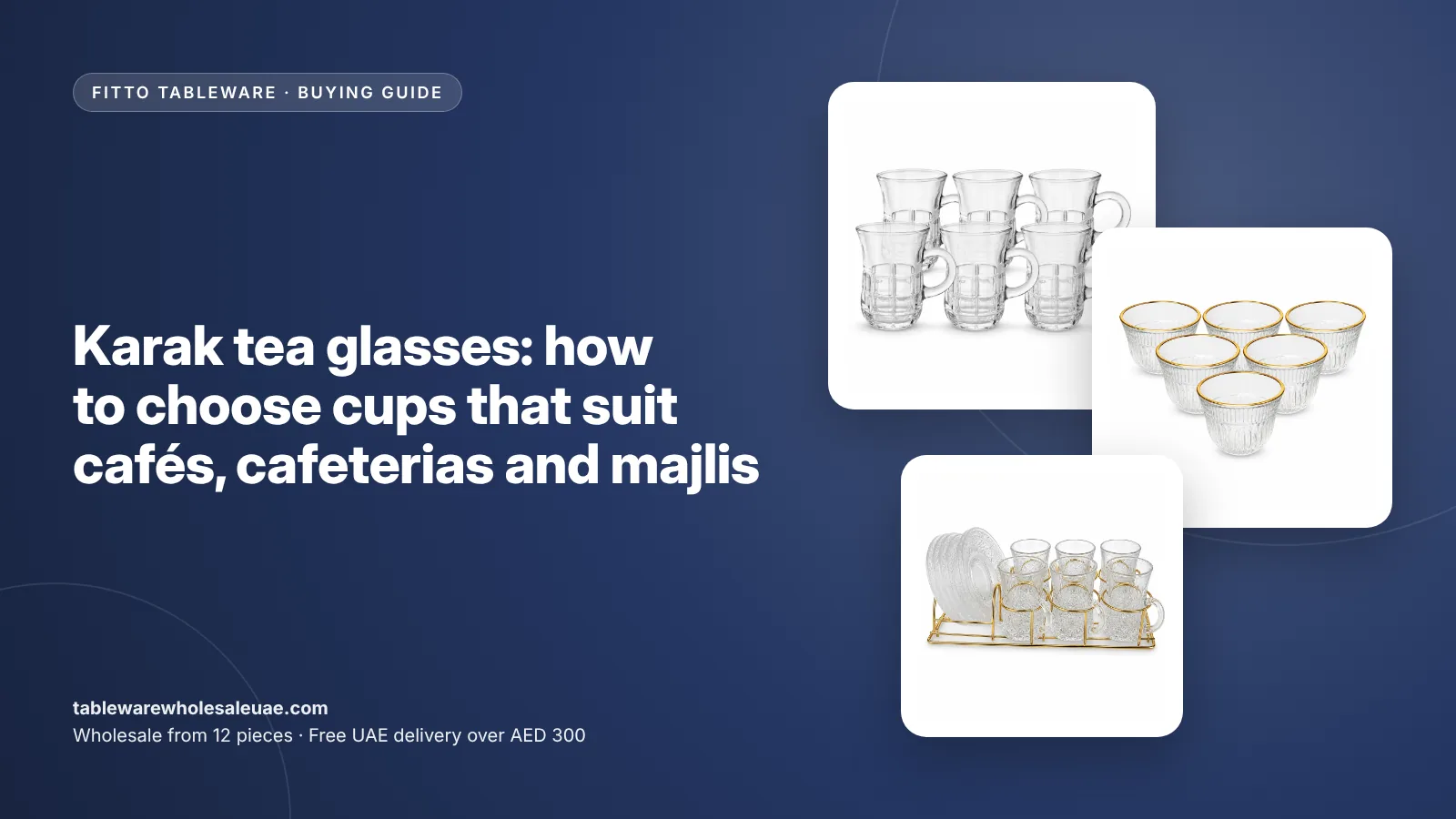
The best karak tea glasses hold 100–145 ml, have a smooth, rounded rim and a steady base, and sit on a tray or saucer without wobbling. Cafeterias need plain, sturdy cups with a handle that wash fast; majlis hosts and cafés can choose gold-rim, fluted or saucer sets. Warm glasses before pouring very hot tea.
Key takeaways
- Most karak is served in 100–145 ml glasses; a 180 ml clay cup suits a larger serving.
- A steady base and a rounded rim matter more than the pattern for daily cafeteria use.
- Handles or saucers keep fingers off hot glass; handleless cups stack and wash faster.
- Gold-rim and fluted sets suit majlis and gifting; hand washing keeps the rim bright.
A karak glass gets picked up, filled, washed and stacked many times a day. Choose the wrong one and you pay twice: in chipped rims and burnt fingers, and in replacements every few weeks.
This guide settles which size, shape and finish suits your counter or majlis. It is for karak cafeteria owners, café managers and majlis hosts across the UAE. At FITTO Tableware, a wholesale tableware supplier in the UAE, we stock glass tea cups (كاسات شاي), cawa cups, Turkish tea glasses and cup-and-saucer sets, so every capacity below comes from a real product listing.
What size should karak tea glasses be?
Karak tea glasses usually hold 100 to 145 ml. That is enough for one strong, sweet serving that is finished before it cools.
Smaller 100–110 ml glasses suit cafeterias that sell a quick cup at the window and want customers back for a second. Glasses of 120–145 ml suit cafés and majlis, where tea is sipped slowly. A 180 ml clay cup (kulhad) gives a larger, more traditional serve.
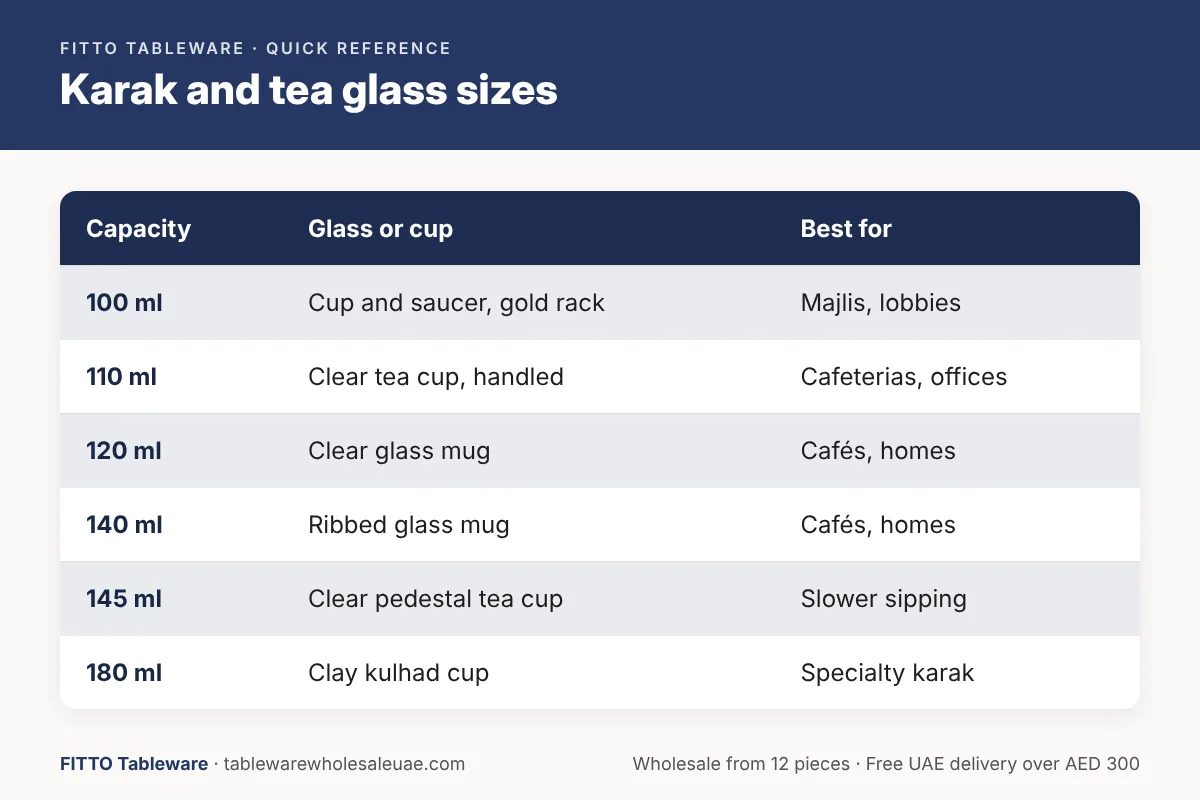
| Capacity | FITTO glass or cup | Best for | Handle or saucer |
|---|---|---|---|
| 100 ml | Textured glass tea cup and saucer set with gold rack | Majlis, hotel lobbies | Saucer and rack |
| 110 ml | Clear glass tea cups (6-piece set) | Cafeterias, offices | Handle |
| 120 ml | Clear glass mugs (6-piece set) | Cafés, homes | Handle |
| 140 ml | Ribbed glass mugs (6-piece set) | Cafés, homes | Handle |
| 145 ml | Clear pedestal tea cups (6-piece set) | Cafés, slower sipping | Neither, raised base |
| 180 ml | Decagon natural clay kulhad cup | Specialty karak and chai | Neither |
Always check the ml on the listing. FITTO's plain clear tea cups, for example, come in both 110 ml and 145 ml sets, and the difference shows on your cost per serving.
Which rim and base styles last longest?
A smooth, rounded rim and a thick, flat base last longest in daily service. Thin, sharp rims chip first, and a narrow base tips over on a busy tray.
For a cafeteria, choose plain or lightly ribbed glasses with an even wall. Deep fluting and embossed patterns look good but hold tea residue in the grooves, so they need more scrubbing.
For a majlis, presentation matters more. Gold-tone rims, faceted sides and tulip-shaped Turkish tea glasses look generous on a tray and suit gifting. Expect to hand wash gold rims to keep them bright.
Do karak glasses need handles or saucers?
Handles or saucers are worth it when tea is served very hot or carried to a table. Handleless glasses are faster to fill, wash and stack, which suits a high-volume window if customers drink on the spot.
Here is how to pick:
- Match your serving style. Window service suits small handled cups or plain glasses; table or majlis service suits saucers.
- Check your washing. Saucers double the pieces to wash, dry and store.
- Think about your guests. Older guests and children handle hot glass more safely with a handle or saucer.
- Test one sample with your hottest pour before you buy a pack.
A saucer also leaves room for a date or a biscuit, which majlis guests expect.
Can tea glasses take boiling karak?
Glass tea cups are made for hot drinks, but sudden temperature change is what cracks glass. Pouring boiling tea into a glass that has just come from a cold, air-conditioned store room adds stress.
Reduce the risk with three habits:
- Rinse glasses in warm water before a rush.
- Pour the tea in a steady stream rather than in one splash.
- Never put a hot glass straight onto a wet, cold steel counter.
If heat resistance is critical for your service, read each listing for a tempered or heat-resistant note, and test one sample at your real pouring temperature.
How many karak glasses should a cafeteria keep in rotation?
As a rule of thumb, keep about one and a half to two times your peak-hour cup count in rotation. A cafeteria that serves 60 cups in its busiest hour needs around 90 to 120 glasses, depending on how fast they come back from washing.
Keep a reserve set on the shelf rather than reordering after you run short, and retire any glass with a chipped rim at once. Match the reserve to your chosen capacity so every cup on the tray pours the same serving.
Which karak glasses suit gifting and majlis sets?
Gold-rim cawa cups, tulip Turkish tea sets and cup-and-saucer sets with a metal rack suit gifting best. They arrive as a complete set and look ready for guests.
Browse our glassware and cups range to compare finishes. Cup-and-saucer sets in smoke black, gold tint and clear ribbed glass give a shop several looks from one shelf. For the wider drinkware picture, read our glassware and cups wholesale guide, and if you are fitting out a new counter, see the café tableware essentials in Dubai.
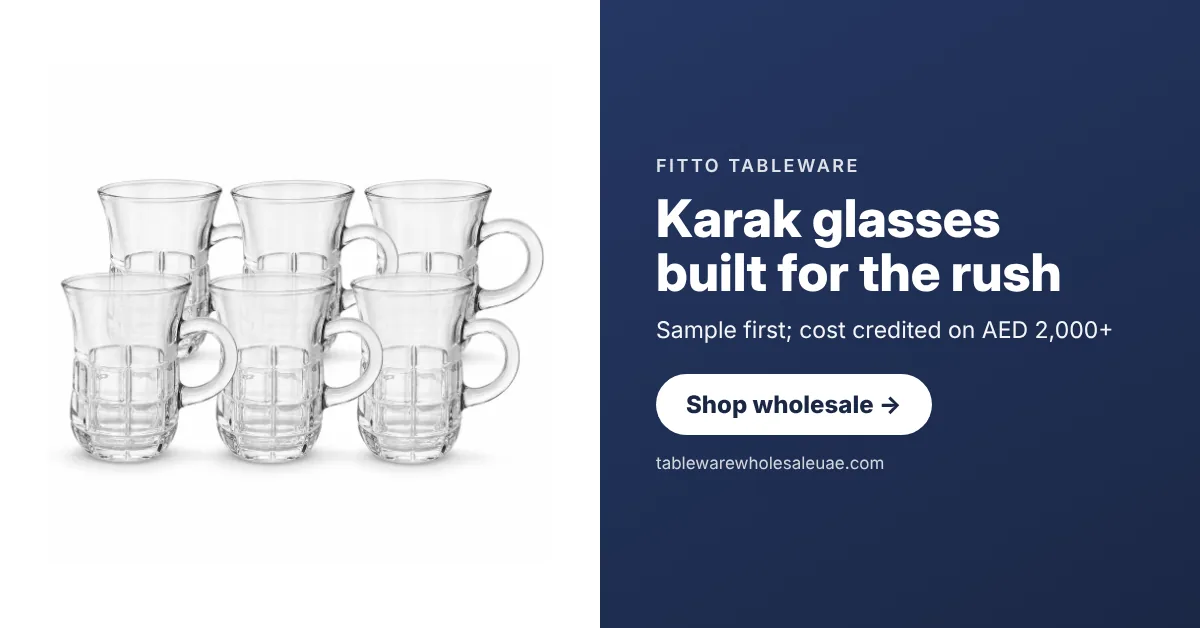
FITTO Trade Pick: Karak glasses that keep up with the rush For the counter, stock the 110 ml clear glass tea cup set. For the majlis, choose gold-rim fluted cawa cups or the 100 ml tea cup and saucer set with gold rack. Order one sample first: its cost is credited on a bulk order of AED 2,000+ within 30 days.
The bottom line
Choose karak tea glasses of 100–145 ml with a rounded rim and a steady base. Use plain, sturdy cups for speed at the cafeteria window, and saucer or gold-rim sets where guests sit and sip.
Browse our wholesale glassware and cups, order a sample to test your pour, or request a quote for bigger quantities. Packs run from 12 to 144 pieces, and sets count as one piece; WhatsApp the trade desk on +971 55 672 6947. FITTO Tableware: fit for the way you serve.
FAQ
What size is a karak tea glass?+
A karak tea glass usually holds between 100 and 145 ml. Cafeterias often use the smaller end for quick service, while cafés and majlis hosts choose 120–145 ml for slower sipping. A 180 ml clay kulhad cup suits a larger serving. Always check the capacity in ml on the product listing, as similar-looking glasses vary.
What is the difference between a cawa cup and a karak glass?+
Cawa cups are small, usually handleless cups for Arabic coffee (qahwa) in the majlis, and many come in decorative 6-piece sets with gold-tone rims. Karak glasses are slightly larger tea glasses or cups for strong milky tea. Many hosts use the same small glass cups for both drinks at home.
How do I stop tea glasses cracking?+
Avoid sudden temperature change. Rinse glasses in warm water before service, pour hot tea in a steady stream and do not place a hot glass on a cold, wet surface. Store glasses so they do not knock together, and retire any glass with a chipped rim before it fails in a customer's hand.
Can I wash gold-rim tea glasses in a dishwasher?+
Hand washing is the safer choice for gold-rim and gold-tone glassware, because strong detergents and high heat can dull decorative finishes over time. Use a soft sponge and mild washing-up liquid, then dry with a lint-free cloth. Keep plain glasses for the dishwasher in a busy cafeteria.
Are clay kulhad cups a good choice for karak?+
Clay cups give karak an earthy, traditional serve and suit specialty tea stalls and chai menus. Natural clay is porous unless glazed, so rinse cups straight after use and let them dry fully before stacking. They are heavier and less clear than glass, so most cafeterias keep them as a premium option.