Woven serving trays: how to choose sizes and patterns for majlis and events
By FITTO Trade Desk · Last updated 29 October 2026
Choose a woven serving tray by job first. Use 30–35 cm for dates or sweets, 40–45 cm for a coffee service for six, 50–55 cm for fruit and 60 cm as a centrepiece. Pick real palm or straw for dry foods and heritage décor, and woven-look melamine for washable everyday and event service.
Key takeaways
- Real woven trays in palm, straw or bamboo suit dry foods and décor; keep them away from water.
- Woven-look melamine gives the pattern with a surface you can wash after every event.
- A 40–45 cm tray is the most useful single size: it carries a coffee service for six.
- Depth matters: 2.5–3 cm suits cups, while 4–5 cm holds fruit and bread.
- Keep one pattern family per table and vary the sizes instead.
A woven tray is often the first thing guests see in a majlis. Real palm marks under oily food, and a bright printed tray can look out of place at a heritage evening. This guide settles size, material and pattern, so the tray works for the photos and for the washing-up.
It is for majlis hosts, event planners and gift shops. At FITTO Tableware, a wholesale serving tray supplier in the UAE, we stock woven trays from 30 to 60 cm in palm, straw, bamboo and woven-look melamine.
What is a woven serving tray?
A woven serving tray is either woven from natural fibres such as palm, straw or bamboo, or made from melamine with a woven pattern. The two look similar in photos but behave very differently in use.
Palm-frond weaving has deep roots in the UAE, where the craft is known as safeefah (السفيفة). Real woven trays include flat palm trays, coiled straw trays bound with palm fibre and bamboo trays with a woven base. A woven-look melamine tray reproduces the pattern on a smooth, rigid surface.
Some real examples from our range show the spread:
- A flat woven palm tray of about 30 x 30 x 4 cm in dyed yellow, purple and pink.
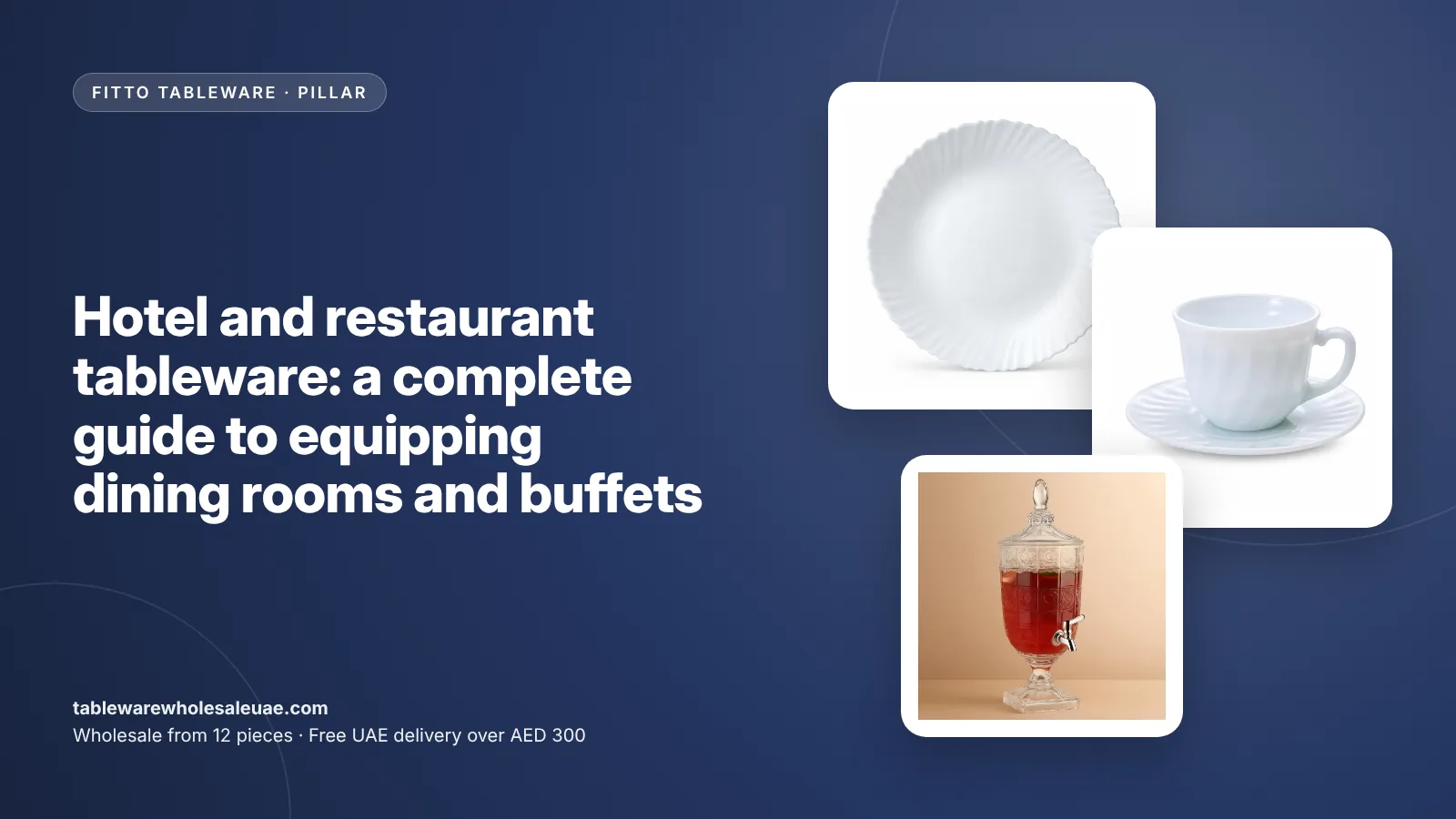
- A natural straw round tray of about 40 cm across and 5 cm high, made from coiled straw bound with palm fibre.
- A heart-shaped bamboo tray of 40 x 38 x 4 cm that weighs about 450 g.
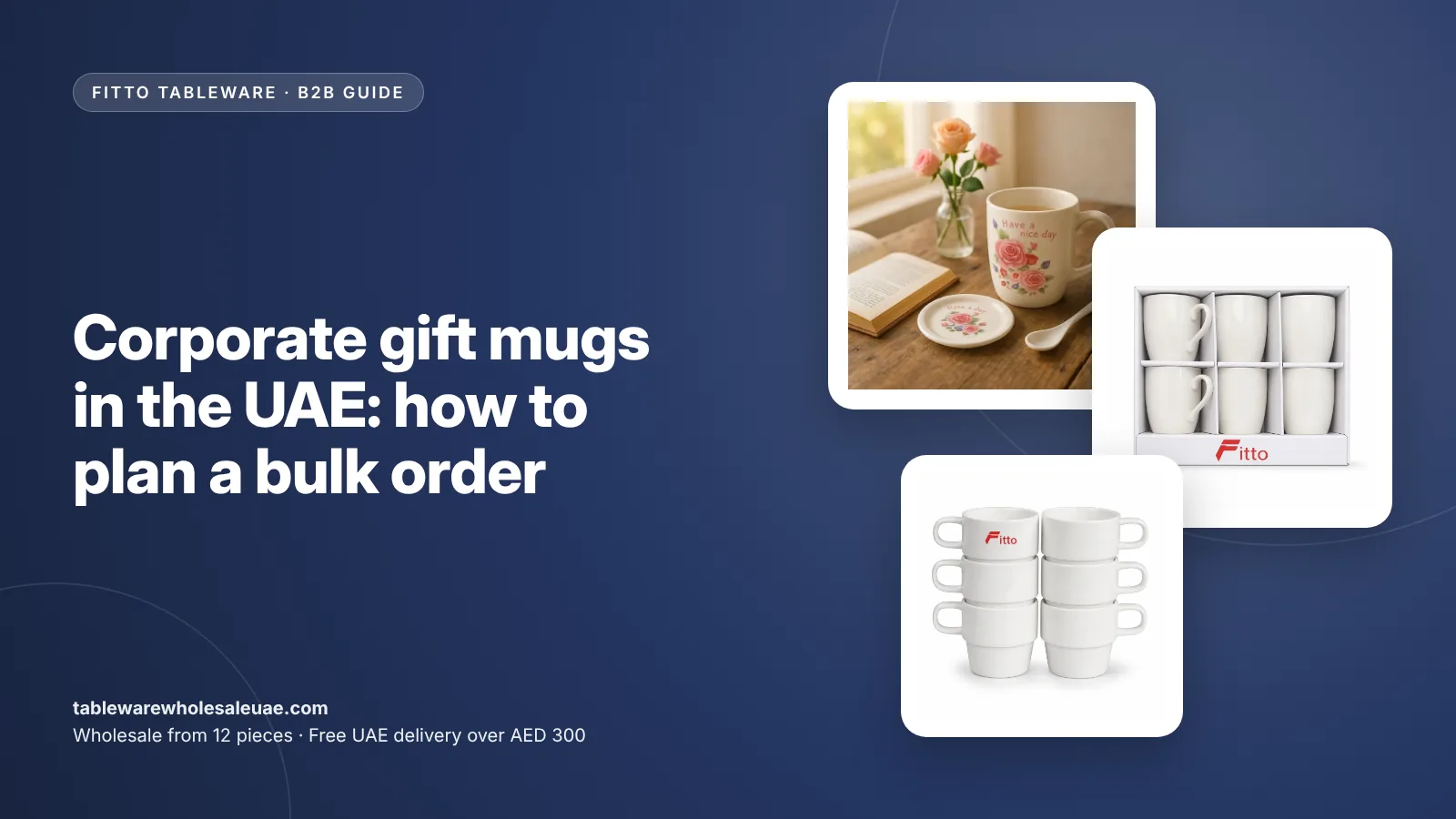
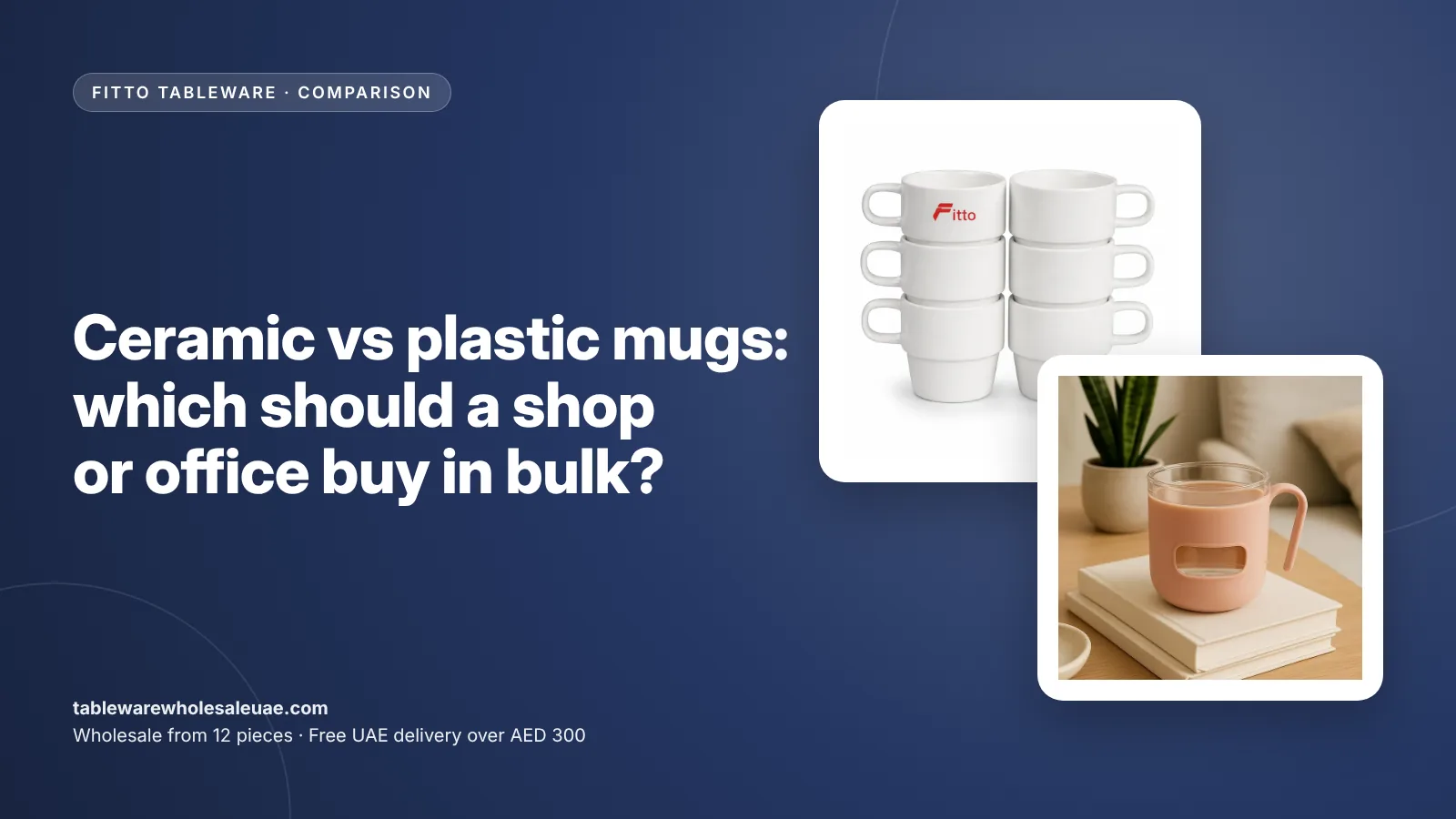
- Round melamine woven-look trays with a white floral border, from 35 to 55 cm.
Real woven or woven-look melamine: which should you buy?
Buy real woven for dry foods, décor and heritage events; buy woven-look melamine when the tray will be washed after every use.
| Feature | Real palm, straw or bamboo | Woven-look melamine |
|---|---|---|
| Look | Natural texture, handmade feel | Even, printed weave pattern |
| Best foods | Bread, dates, wrapped sweets | Dry and moist foods, plated items |
| Cleaning | Wipe with a dry cloth; keep from water | Warm soapy water and a soft sponge |
| Weight | Very light | Heavier and rigid |
| Best events | Heritage nights, National Day, décor | Weddings, buffets, repeated use |
| Watch out for | Oil marks and trapped moisture | Scratches from scourers; no microwave |
Most hosts end up with both: a natural tray for bread and dates, and melamine for anything wet, oily or served to a crowd.
What size woven tray do you need?
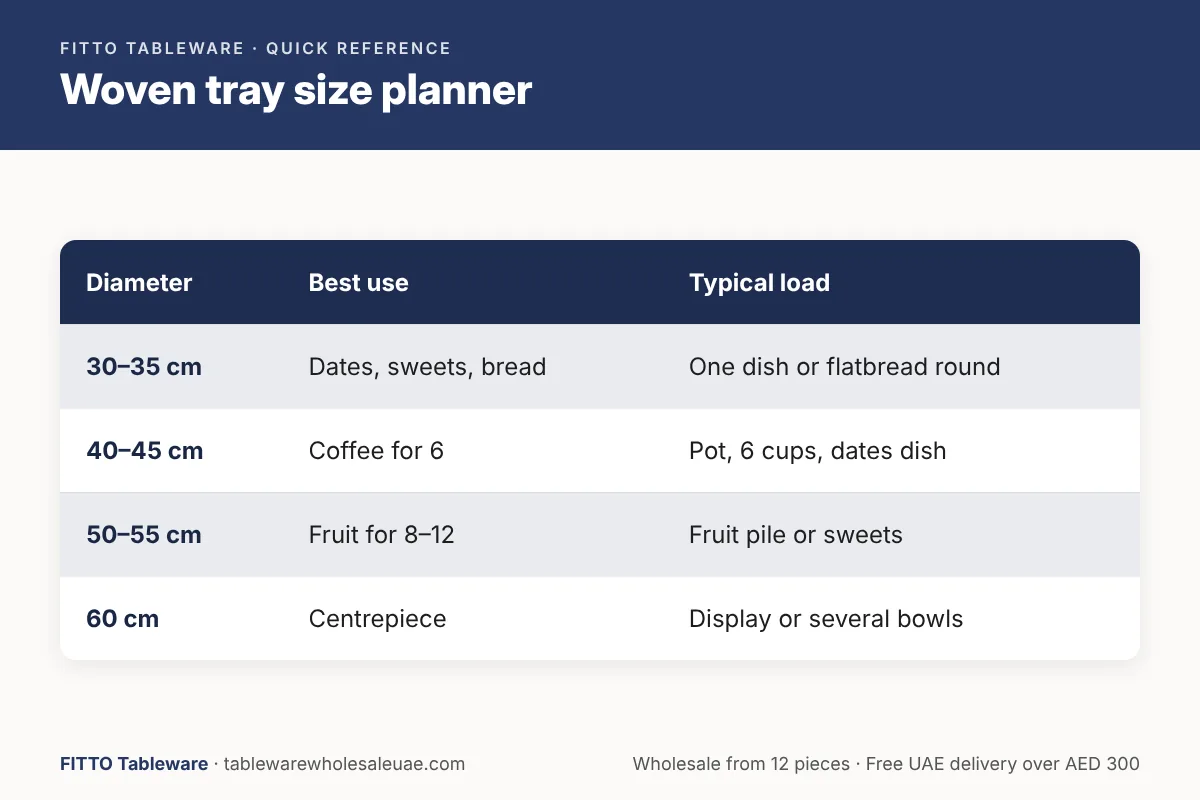
Pick the diameter by what goes on it, then check the depth. This planner uses real tray sizes.
| Diameter | Best use | Typical load | Example |
|---|---|---|---|
| 30–35 cm | Dates, sweets, bread for 2–4 | One dates dish or one round of flatbread | Flat palm tray, 30 x 30 cm |
| 40–45 cm | Coffee service for 6 | Coffee pot, 6 cups, dates dish | Round woven tray, 45 cm |
| 50–55 cm | Fruit or sweets for 8–12 | A full fruit pile or mixed sweets | Melamine woven-look tray, 55 cm |
| 60 cm | Centrepiece or event display | Large fruit display or several bowls | Round woven tray, 60 cm |
Depth changes what a tray can carry. Our shallower woven trays of 2.5–3 cm suit cups and plated items, because nothing tips on a flat base. Deeper trays of 4–5 cm, such as the 55 cm, 60 cm and 40 cm straw tray, keep loose fruit, bread and wrapped sweets from rolling off.
For a long row of seated guests, two 40–45 cm trays pass along more easily than one 60 cm tray. Our round vs rectangular serving trays comparison explains when a round tray is the right shape.
Which patterns suit which events?
Match the pattern to the mood of the occasion, and keep one pattern family per table.
- White with a floral border: weddings, Eid, baby showers and henna nights. It reads bright and formal and sits well with white and gold cups.
- Sage, pale green and grey weaves: garden evenings, winter tents, corporate events and modern villas.
- Natural straw, palm and beige with burgundy: National Day, Ramadan nights and heritage events.
- Dyed palm in yellow, purple and pink: children's events, Hag Al Laila and heritage festivals.
Three sizes in one pattern look planned; three patterns in one size look accidental. For layout ideas on any of these, see our serving tray styling ideas.
How should event planners and gift shops choose woven trays?
Event planners should prioritise washable melamine in repeat sizes; gift shops should balance natural pieces with practical ones.
For events, plan as a rule of thumb one 40–45 cm tray per six guests for coffee and one 50–55 cm tray per ten guests for fruit. Melamine can be washed and reused between sessions on the same day. Keep natural trays for the welcome table and display, where they will not meet water.
For gift shops, natural palm and straw trays suit heritage gifts, while woven-look melamine suits practical housewarming gifts. Display trays nested in two or three sizes, so customers see the full set at a glance.
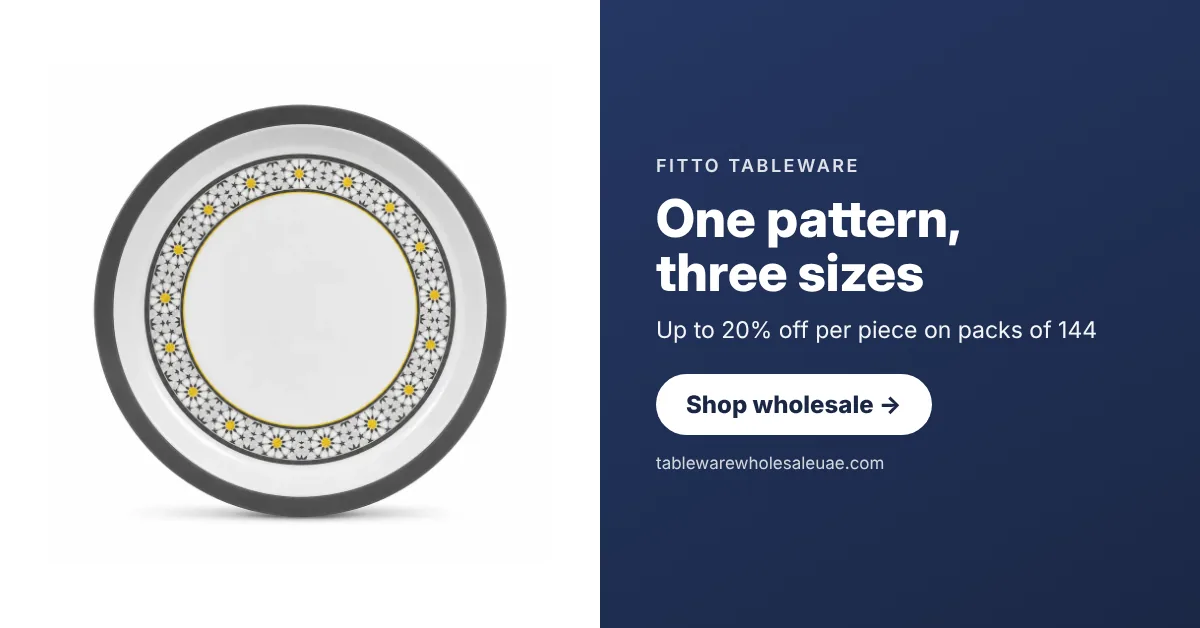
FITTO Trade Pick: One pattern, three sizes Build an event set around our 55 cm melamine woven-look tray and smaller sizes in the same white floral design. Add the 40 cm natural straw tray for bread and dates. For covered buffets, the woven palm leaf tray with 3 food covers keeps dishes neat. Packs run from 12 to 144 pieces, with up to 20% off per piece on the largest pack.
How do you care for woven trays in UAE humidity?
Keep real woven trays dry and airy; wash melamine gently and never microwave it.
- Wipe palm, straw and bamboo trays with a dry or barely damp cloth after use.
- Line natural trays with a paper doily or plate for anything oily or wet.
- Air-dry fully before storing, because trapped moisture can lead to mould in humid coastal summers.
- Store natural trays out of long direct sun, which can fade dyed palm.
- Wash melamine in warm soapy water with a soft sponge, and skip abrasive scourers.
Our guide on how to clean melamine plates applies to melamine trays too. For any other tray, follow the care notes on its product page.
The bottom line
Choose a woven tray by size first, then by material and pattern. Real palm and straw are for dry foods and heritage style, and woven-look melamine is for washable, repeat event service.
Browse our wholesale serving trays and platters, with free delivery across the seven emirates on orders over AED 300. Order a sample, request a quote or WhatsApp +971 55 672 6947. FITTO Tableware: fit for the way you serve.
FAQ
Can you put food directly on a palm-leaf tray?+
Yes, for dry foods such as bread, dates and wrapped sweets. Avoid putting oily, wet or saucy food straight onto palm or straw, because the fibres absorb it and can mark. Use a plate, a bowl or a paper doily on top, and let the woven tray frame the food instead.
Are woven-look melamine trays microwave safe?+
No. Melamine should not go in the microwave, because the heat can damage the surface. It is fine for serving warm food straight from the kitchen. Wash it in warm soapy water with a soft sponge, and check the product page for dishwasher guidance.
How do you stop a woven tray going mouldy?+
Keep it dry. Wipe natural trays with a dry cloth, let them air-dry fully after any spill and store them where air can circulate, not sealed in a bag or a damp cupboard. In humid summer months, check stored trays now and then and bring them into air-conditioned rooms.
Do woven trays suit National Day events?+
Yes. Natural palm and straw trays fit the heritage feel of National Day on 2 December, especially for dates, bread and sweets on a welcome table. Pair them with white cups and add the national colours through napkins, flowers or ribbons rather than through the tray itself.