How to remove tea and coffee stains from mugs
By FITTO Trade Desk · Last updated 29 October 2026

To remove tea stains from mugs, make a paste of baking soda and a little water. Rub it over the stain with a soft sponge, leave it for 10 minutes and rinse. For stubborn rings, soak the mug in hot water with white vinegar or an oxygen-based cleaner. Rinse mugs soon after use to stop stains returning.
Key takeaways
- Baking soda paste and a soft sponge remove most brown rings from glazed ceramic in minutes.
- A white vinegar soak or an oxygen-based cleaner shifts stubborn stains and mineral film.
- Never mix bleach with vinegar or other cleaners, and keep it off gold rims, prints and stainless steel.
- Rinsing straight after use and washing daily stops most stains from building up.
Brown-ringed mugs (أكواب) make an office pantry or café counter look neglected, and many are thrown away with years of use left. This guide gives step-by-step fixes with products you already have, plus a routine that stops stains coming back.
It is for office managers, café staff and households. At FITTO Tableware, a wholesale mug supplier in the UAE, we stock ceramic, glass, stainless steel, melamine and plastic mugs, so the advice below covers each material.
Why do tea and coffee stain mugs?
Tea and coffee contain tannins and other coloured compounds that cling to the inside of a mug, especially where the surface is worn. Minerals in tap water bind with them and build a brown film, layer by layer.
Smooth, intact glaze resists stains best. Worn glaze, fine surface cracks (crazing), scratched plastic and scuffed melamine give stains more to grip. Grey lines inside white mugs are often metal marks from spoons rather than tea; the baking soda method below removes those too.
How do you remove tea stains with baking soda?
Baking soda is a mild abrasive that lifts stains without scratching glaze, so try it first.
- Rinse the mug and leave it damp.
- Sprinkle about a teaspoon of baking soda inside and add a few drops of water to make a paste.
- Rub the stain in small circles with a soft sponge or cloth for 30–60 seconds.
- Leave the paste for 10 minutes on heavy rings.
- Rub again, rinse well and wash with dish soap.
If a ring remains after this, move to a soak.
What removes stubborn stains?
Soak first, then scrub lightly: vinegar for mineral film, an oxygen-based cleaner for deep brown stains.
- White vinegar: fill the mug with equal parts white vinegar and hot water and leave it for 15–30 minutes. Rinse, then finish with the baking soda paste. Use the two one after the other, not mixed, because they cancel each other out.
- Oxygen-based cleaner or a denture tablet: dissolve it in hot water in the mug and leave it for the time on the label. These release oxygen that breaks down tea stains without scrubbing.
- Lemon and salt: dip half a lemon in salt and rub the ring. Use this on plain glazed ceramic only.
- Chlorine bleach: a last resort for plain white ceramic. Dilute exactly as the label says, work in a ventilated space and rinse several times. Never mix bleach with vinegar, ammonia or other cleaners, because the mix releases harmful gas.
Which method suits which mug material?
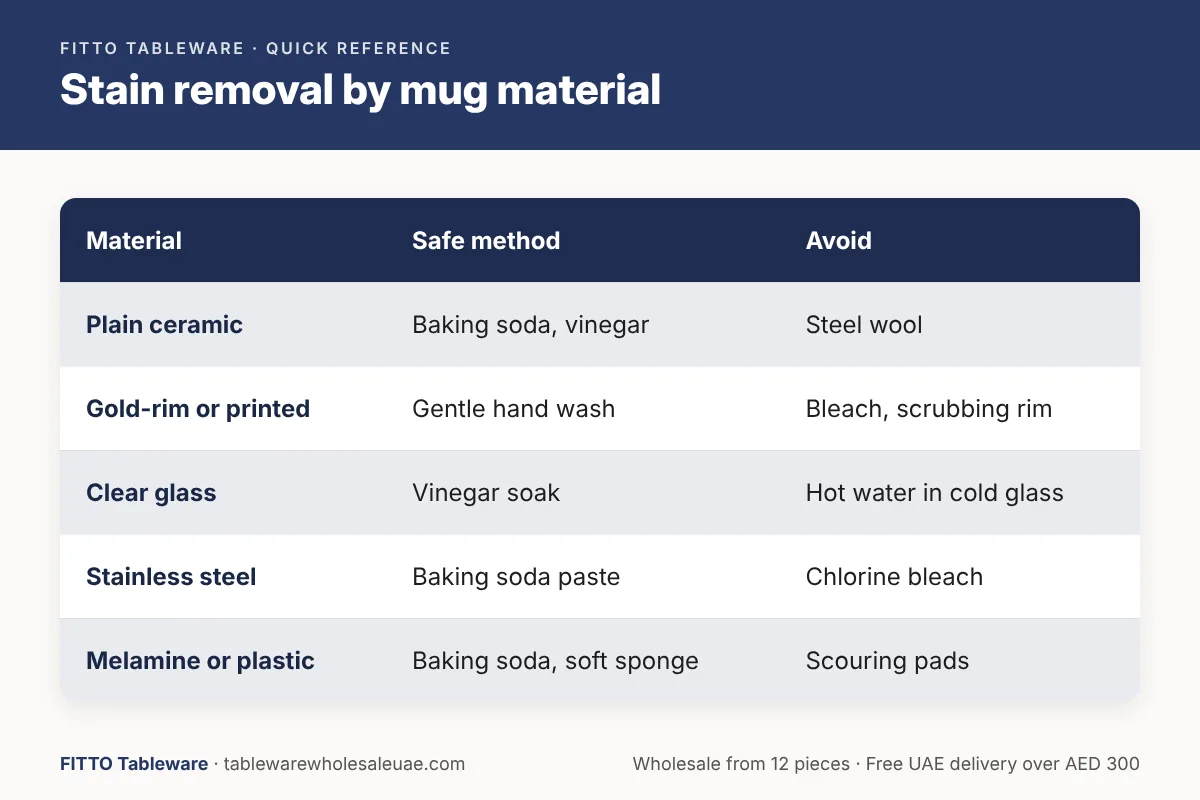
Match the method to the material: glaze takes most methods, while decorated, metal and plastic mugs need gentler care.
| Mug material | Safe methods | Avoid |
|---|---|---|
| Plain glazed ceramic | Baking soda, vinegar, oxygen cleaner | Steel wool and harsh scourers |
| Printed or gold-rim ceramic | Gentle hand wash; baking soda on stained areas only | Scrubbing the print or rim; bleach |
| Clear glass | Vinegar soak for cloudy film; baking soda | Pouring very hot water into a cold glass |
| Stainless steel | Baking soda paste; vinegar rinse | Chlorine bleach; steel wool |
| Melamine | Baking soda paste; soft sponge | Scouring pads; the microwave |
| Plastic | Baking soda paste; vinegar soak | Abrasive pads |
Plain white mugs such as a 6-piece white ceramic mug set show a stain early but release it easily. Clear glass mugs of 120 ml show cloudiness more than tea rings. A stainless steel mug hides colour but can hold a coffee film you feel rather than see. On a melamine mug or a plastic one, stains can settle into scratches, so some marks may never fully lift.
How do you prevent stains in an office or café?
Rinse mugs as soon as they are empty, wash them daily and give them a weekly deep clean.
- Rinse each mug with water straight after use, before the film dries.
- Wash daily in hot soapy water or a dishwasher, then dry upside down.
- Deep-clean all shared mugs once a week with baking soda, for example at the end of the working week.
- Never leave tea bags or coffee standing in mugs overnight.
- Set aside any mug with crazed glaze or chips, because it will stain again quickly.
In a shared pantry, a rota or a sign by the sink keeps the routine going. Mugs with a coloured interior hide light staining in heavy-use staff rooms. Our mugs wholesale guide compares materials for offices and cafés.
When should you replace a stained mug?
Replace a mug when the glaze is crazed, the rim is chipped or a stain survives every method above. At that point the surface itself is damaged, and the stain will return within days.
Retire chipped mugs straight away, because a chipped rim can cut a lip. Our ceramic mugs wholesale guide explains what to check in glaze and finish before you restock.
FITTO Trade Pick: Mugs that clean up easily Smooth white glaze shows stains but releases them easily, so our 6-piece white ceramic mug set suits offices that want a matching shelf. For staff rooms, a stainless steel mug will not break if dropped. Order a sample to check the finish; its cost is credited on a bulk order of AED 2,000+ within 30 days.

The bottom line
Baking soda handles most tea and coffee stains, and a vinegar or oxygen-cleaner soak handles the rest. A daily rinse and a weekly deep clean keep mugs looking new for longer.
Browse our wholesale mugs in ceramic, glass, steel and melamine, with free delivery across the seven emirates on orders over AED 300. Order a sample, request a quote or WhatsApp +971 55 672 6947. FITTO Tableware: fit for the way you serve.
FAQ
Can I use bleach to clean stained mugs?+
Only as a last resort, and only on plain white ceramic. Dilute it exactly as the label says, rinse several times and air the mug before use. Never mix bleach with vinegar, ammonia or other cleaners. Keep it away from gold rims, printed designs and stainless steel, which it can damage.
Does a dishwasher remove tea stains?+
A dishwasher removes fresh tea and coffee residue well, especially on a hot cycle. Built-up brown rings usually need a baking soda scrub or an oxygen-cleaner soak first. Check each mug's care guidance before you load it, because many printed and gold-rim mugs should be washed by hand.
Why do my glass mugs look cloudy?+
Cloudiness is usually a mineral film from tap water. Soak the mug in equal parts white vinegar and hot water for 15–30 minutes, then rinse. If the cloudiness disappears, it was minerals. If it stays, the glass surface may be etched, which is permanent.
How do I remove stains from a melamine mug?+
Use a baking soda paste and a soft sponge, then wash in warm soapy water. Avoid scouring pads, because scratches give stains more to grip. Our guide on how to clean melamine plates covers the same material in more detail.