Bamboo vs PVC placemats: which is easier to keep clean and looking good?
By FITTO Trade Desk · Last updated 29 October 2026
In the bamboo vs PVC placemats question, PVC is easier to keep clean: a soapy wipe takes seconds and moisture does no harm. Bamboo looks warmer and copes better with a warm teapot or serving dish, but it must never soak and needs drying. Choose PVC for busy dining tables and bamboo for tea service and serving dishes.
Key takeaways
- PVC wins on cleaning speed: wipe, dry and reuse between covers, with no risk from spills.
- Bamboo wins on warmth and look, and makes a better base for teapots, hotpots and serving bowls.
- Neither likes extremes: hot pans can mark PVC, and soaking or damp storage ruins bamboo.
- Size matters as much as material: a 38 × 38 cm mat frames a full place setting; 16–20 cm mats sit under a single dish.
- Many tables use both: PVC under each plate, bamboo under the shared dishes.
Placemats look like a small purchase until a restaurant replaces a full set every few months, or natural mats turn spotty after one humid summer.
This comparison settles which material is easier to live with for cleaning, heat, looks, lifespan and cost, with a verdict per setting. It is for restaurant and café managers choosing table mats (مفرش سفرة) for service, and for households setting a dining table or majlis.
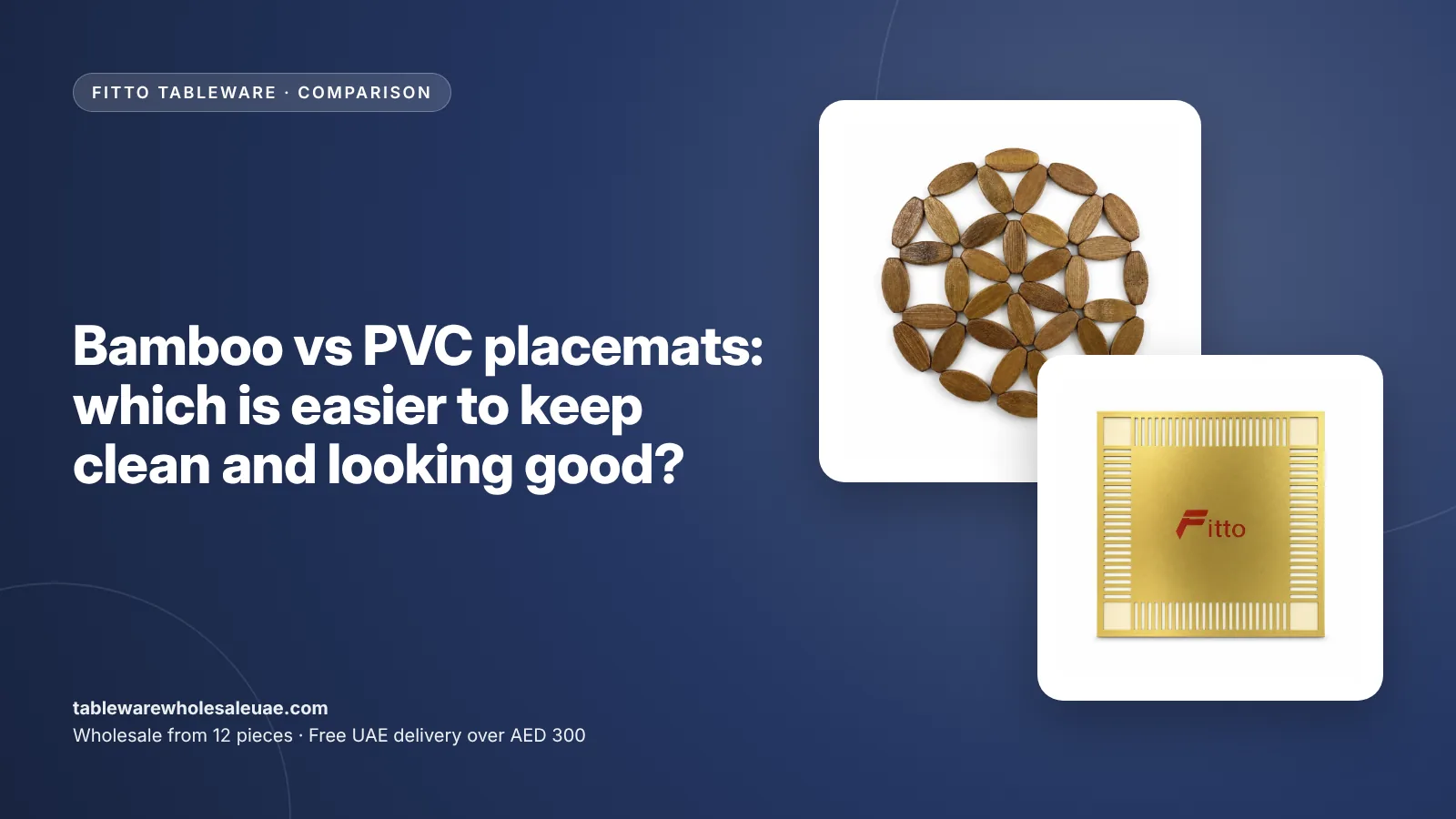
At FITTO Tableware, a wholesale tableware supplier in the UAE, we stock both: compact bamboo lattice mats and a full-size gold-tone PVC mat, so the advice below is grounded in real sizes.
Which is easier to clean, bamboo or PVC placemats?
PVC is easier: wipe it with a cloth and a drop of washing-up liquid, rinse the cloth, wipe again and it is ready. Water does not harm it, so staff can clean mats between covers without waiting for them to dry.
Bamboo needs a damp cloth, not a wet one, followed by drying straight away. Soaking it in a sink or putting it in a dishwasher can make the strips swell, split or come loose at the joins.
Both have one weak spot: openwork. Lattice bamboo and cut-out PVC borders catch crumbs, so shake mats out over a bin or use a soft brush before wiping.
Avoid scouring pads and bleach on either material.
How do bamboo and PVC handle hot dishes?
Bamboo copes better with heat: like wood, it conducts heat slowly, so it suits warm teapots, serving bowls and hotpots. A pan straight from the hob or oven can still scorch bamboo, so use a trivet for anything that has just left the heat.
PVC is a plastic that softens as it heats. A plate of hot food is fine, but a pot straight off the stove can leave a mark or a warped patch.
Our insulated hotpot buying guide covers serving warm food at the table without extra heat sources.
Which looks better for longer?
PVC keeps the same look for longer indoors; bamboo looks better on day one but ages with use. Bamboo darkens slightly, may dull where hands and plates rub, and can show water marks if left wet.
PVC holds its colour and shape well indoors, but its print or gold-tone finish wears faster with abrasive cleaning. Store it flat: mats rolled or left in hot cars can curl.
For style, bamboo reads natural and relaxed, which suits cafés, breakfast tables and majlis tea service. Gold-tone PVC reads polished and festive, which suits formal dinners, Eid lunches and wedding tables.
How does the UAE climate affect bamboo and PVC?
Humidity is bamboo's main risk, and direct sun is a risk for both. In coastal summer humidity, bamboo stored while still damp can grow mould spots within days, so always dry it fully before stacking.
Air-conditioned rooms have the opposite effect: very dry air can make bamboo brittle over time. As a rule of thumb, a light wipe with food-safe mineral oil every few months keeps it from drying out.
On terraces, sun fades both materials and can make PVC brittle. Bring mats inside after outdoor service rather than leaving them on tables through the day.
Bamboo vs PVC placemats: side-by-side comparison
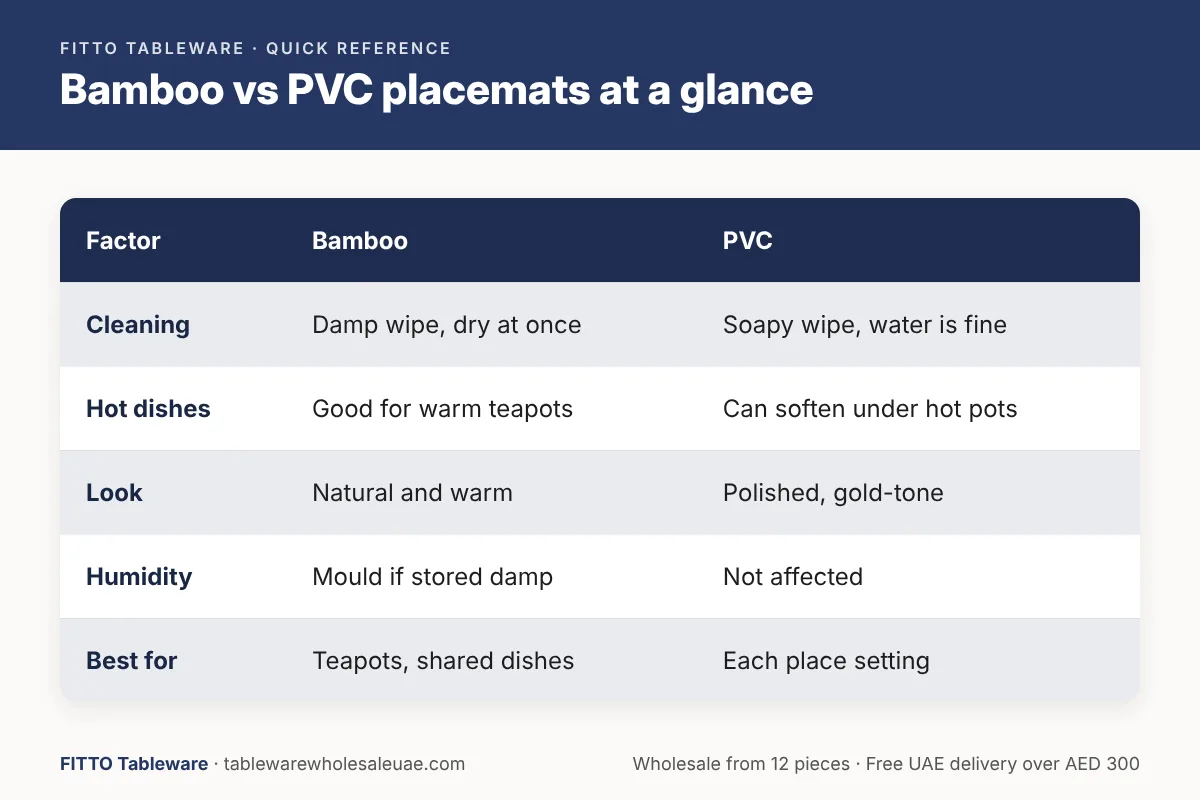
PVC is the low-effort choice; bamboo is the warmer-looking, heat-friendlier choice that asks for more care. The table below compares both on the points that matter in daily use.
| Factor | Bamboo | PVC |
|---|---|---|
| Cleaning | Damp wipe, dry at once; never soak | Soapy wipe; water does no harm |
| Hot dishes | Good for warm pots and teapots | Can soften under very hot pots |
| Look | Natural, warm, relaxed | Polished; gold-tone suits formal tables |
| Humidity | Mould risk if stored damp | Not affected by moisture |
| Sun and heat | Fades and dries out | Can fade, curl or turn brittle |
| FITTO sizes | 16 × 16 cm, 19 × 19 cm, 20 cm round | 38 × 38 cm square |
What size should a placemat be?
A full place-setting mat is usually about 30 × 45 cm rectangular or around 38 cm square or round; small 16–20 cm mats are for single dishes. A 10.5-inch dinner plate is about 27 cm across, so a 38 × 38 cm mat leaves a border around it.
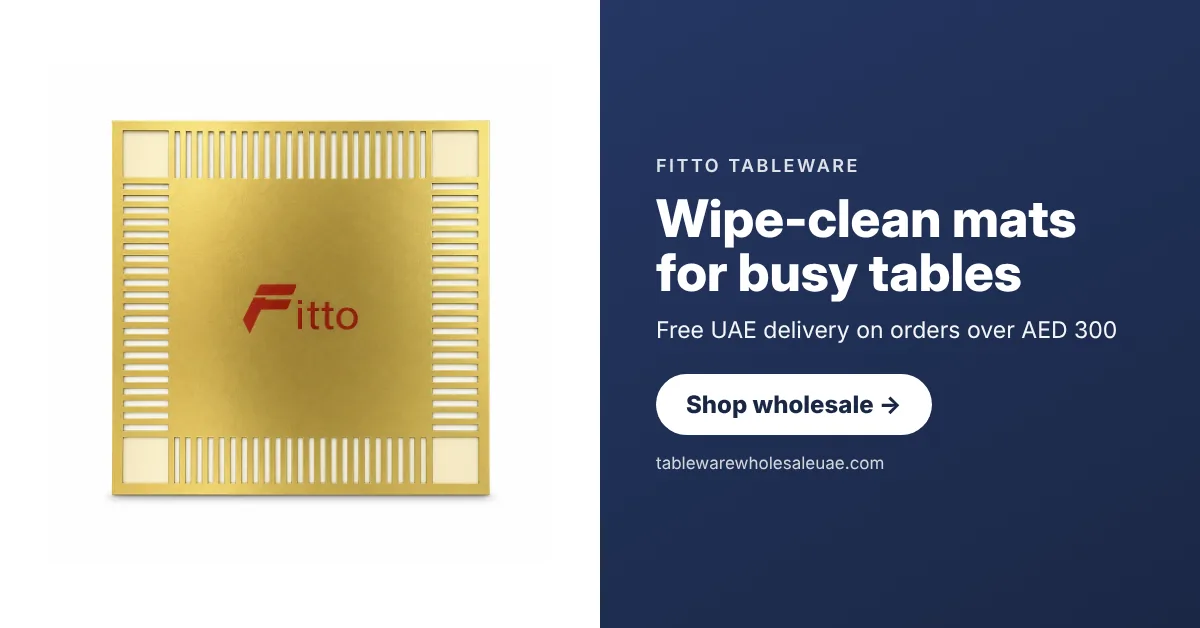
The FITTO bamboo lattice table mats in 16, 19 and 20 cm suit a teapot, a sugar bowl, a bread basket or a hotpot. The gold-tone square PVC table mat, 38 × 38 cm covers a full place.
For more on sizes and layouts, see our placemats buying guide.
Which costs less over time?
Over time, the cheaper mat is the one that survives your cleaning routine. Compare the price per piece on the product pages, then think about how fast each will be replaced in your setting.
In a busy restaurant, bamboo wiped wet every service needs replacing sooner, so PVC usually works out cheaper. At home, where bamboo is dried properly, it lasts well and the gap narrows.
Which should you choose for your setting?
Pick by how often the mats are cleaned and what sits on them. This verdict list covers the most common settings.
- Busy restaurant or café: PVC under each plate; staff can wipe between covers.
- Family dining with young children: PVC; juice and sauce wipe straight off.
- Majlis tea and coffee service: bamboo under the teapot, dallah or cup tray.
- Shared dishes in the centre of the table: bamboo 20 cm round, or the natural coil palm round mat, 22 cm.
- Formal dinners, Eid and weddings: gold-tone PVC with white plates and gold cutlery.
- Small apartment tables: one PVC mat per place and one bamboo mat in the middle. See our table setting ideas for apartments.
FITTO Trade Pick: Mats for every part of the table Pair the 38 × 38 cm gold-tone PVC table mat at each place with the 20 cm round bamboo lattice mat under shared dishes. Orders over AED 300 are delivered free to all seven emirates.
The bottom line
PVC is easier to keep clean and suits busy tables; bamboo looks warmer and is better under warm pots and teapots, as long as it is never soaked. Many tables work best with both.
Browse the full range of table linen and placemats, send your list through request a quote or order samples to see both materials on your own table. Questions? WhatsApp the trade desk on +971 55 672 6947. FITTO Tableware: fit for the way you serve.
FAQ
Can bamboo placemats go in the dishwasher?+
No. Dishwasher heat and long contact with water can make bamboo swell, crack and come apart at the joins, and the detergent dulls the surface. Wipe bamboo mats with a damp cloth and a little washing-up liquid, dry them straight away with a towel and let them air fully before stacking.
Can you put a hot pot on a PVC placemat?+
A plate of hot food is fine, but a pot or pan straight from the stove or oven can soften PVC and leave a mark or a warped patch. Put a trivet, a bamboo mat or a palm mat under very hot cookware, and keep PVC mats for plates, glasses and cutlery.
How do you remove mould spots from bamboo mats?+
Light surface spots may come off with a cloth dampened in diluted white vinegar, followed by thorough drying in a ventilated room. If dark spots return or go deep into the bamboo, replace the mat, especially in a food business.
Which placemats are best for a restaurant?+
For most restaurants, PVC placemats are the practical choice because staff can wipe them between covers and water does not damage them. Use bamboo or palm mats where they add warmth and handle heat, such as under teapots, shared dishes and bread baskets, rather than under every plate.
How do you flatten curled PVC placemats?+
Lay curled mats flat at room temperature and stack something heavy and flat on top, such as a tray of plates, for a day or two. Do not use a hairdryer or iron, which can warp or melt PVC. Store mats flat, away from windows and hot cars.