Placemats wholesale: how to choose the right material and size for restaurants and homes
By FITTO Trade Desk · Last updated 29 October 2026
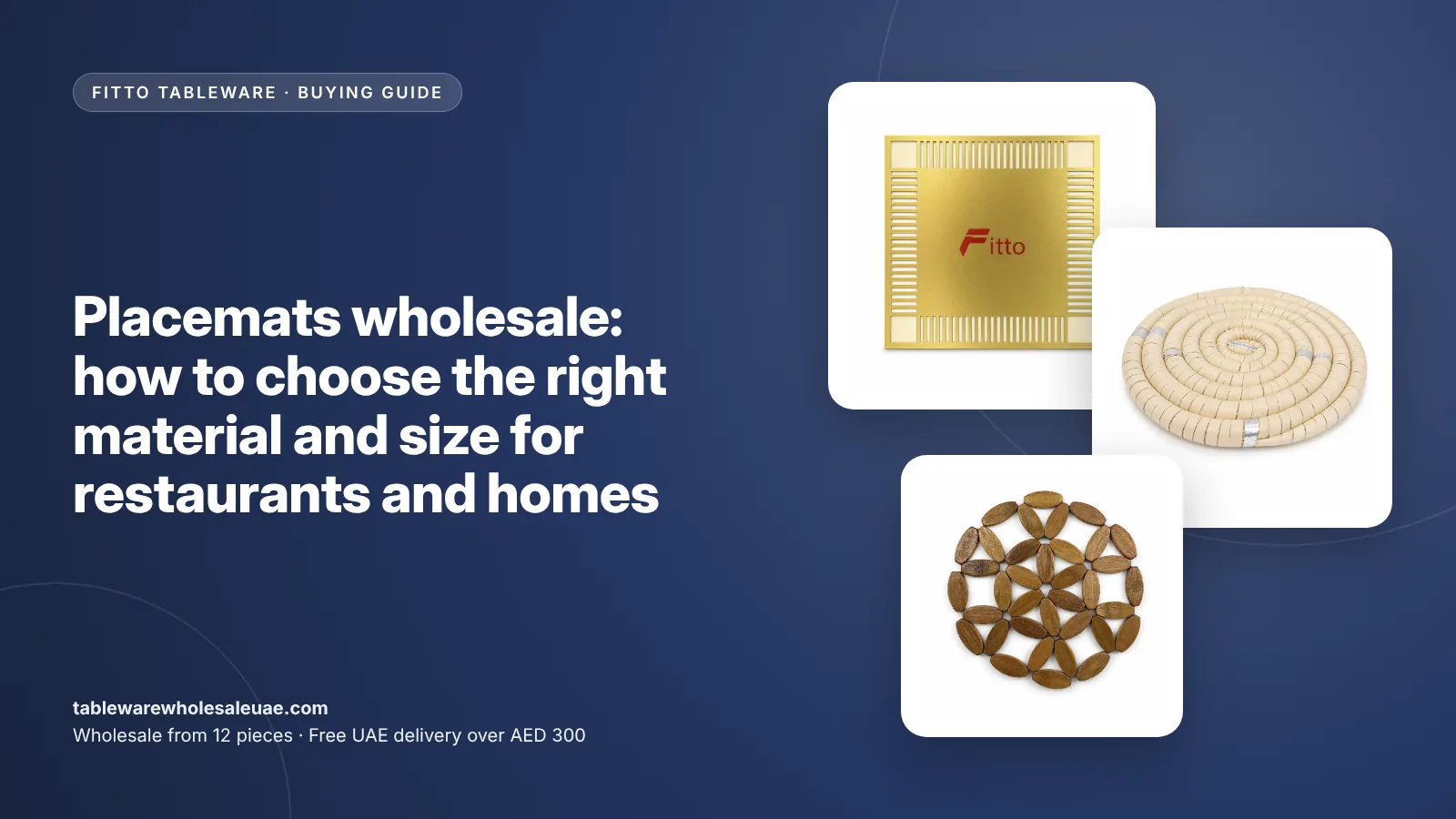
When buying placemats wholesale, match the material to how the table is cleaned and the size to the plate. PVC wipes clean fastest for busy restaurants, bamboo and palm suit warm dishes, and foil-woven mats suit Eid tables. A 45 x 30 cm rectangle or a 38 cm round or square fits a standard dinner plate.
Key takeaways
- A 45 x 30 cm rectangle or a 38 cm square or round mat holds a 26–27 cm dinner plate with cutlery.
- PVC is the quickest to wipe between covers; keep very hot pots off it.
- Bamboo and palm mats look natural and sit well under warm dishes, but must be kept dry.
- Mats of 16–25 cm are trivets and bread mats, not placemats.
- Rule of thumb for restaurants: about 1.5 mats per seat, so a clean set is always ready.
A wrong placemat choice shows fast: curled PVC on a café terrace, mould on bamboo after a humid week, or mats too small for the plates. This guide settles which material and size to buy, how many you need and when to replace them.
It is for restaurant and café managers, households and gift shops. At FITTO Tableware, a wholesale tableware supplier in the UAE, we see the same mistake most often: buying on looks alone and finding out about cleaning later.
What size should a placemat be?
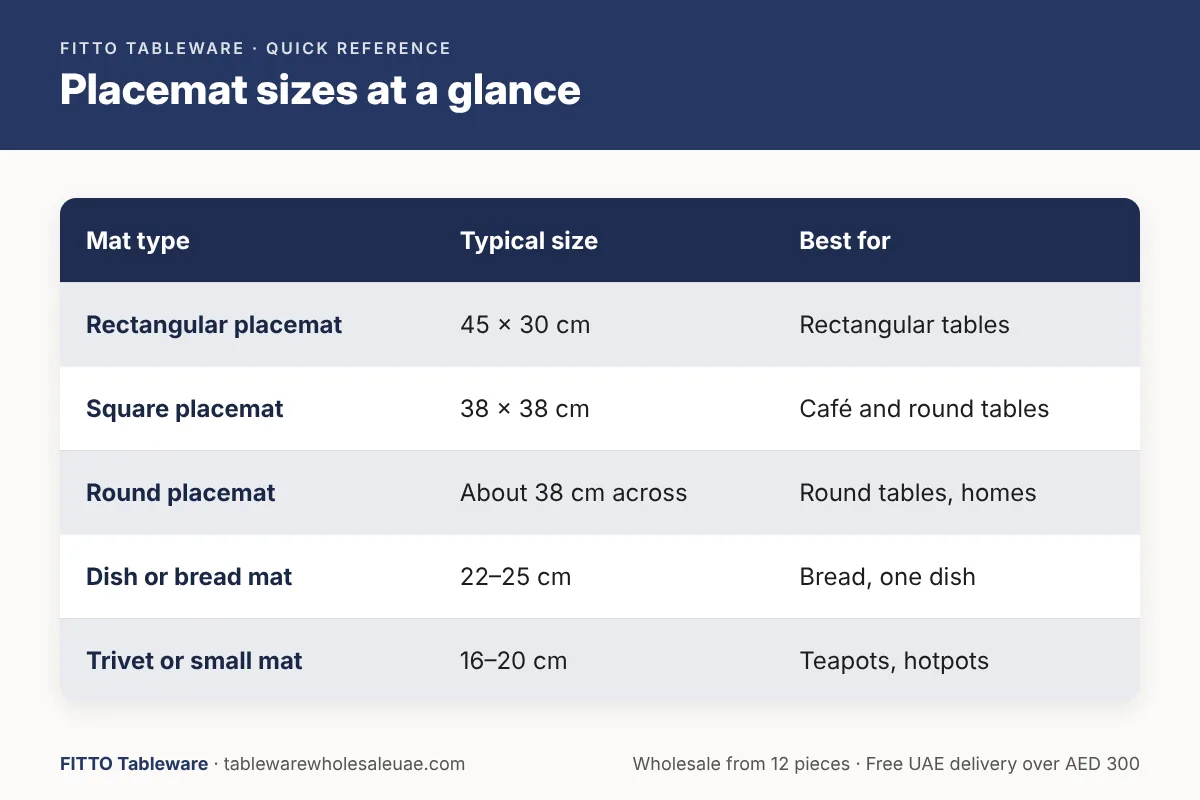
A placemat (مفرش طاولة) should hold the dinner plate plus cutlery on both sides: about 45 x 30 cm for a rectangle, or about 38 cm across for a round or square mat.
Most dinner plates are 26–27 cm (10–10.5 inches) wide; add a knife and fork on each side and you reach the standard sizes below. Anything under 25 cm is a trivet or dish mat.
| Mat type | Typical size | What it holds | Best for |
|---|---|---|---|
| Rectangular placemat | 45 x 30 cm | Dinner plate, cutlery, glass | Rectangular tables, restaurants |
| Square placemat | 38 x 38 cm | Dinner plate and cutlery | Café tables, round tables |
| Round placemat | About 38 cm across | Dinner plate, cutlery tucked in | Round tables, homes |
| Dish or bread mat | 22–25 cm | One serving dish or bread | Sufra spreads, breakfast |
| Trivet or small mat | 16–20 cm | Teapot, hotpot, warm dish | Protecting the table |
As a rule of thumb, allow about 60 cm of table edge per diner. A table 80–90 cm deep fits two 30 cm deep mats facing each other and still leaves room for shared dishes in the middle.
Which placemat material should you choose?
Choose PVC for fast wipe-down service, bamboo for a natural look under warm dishes, woven palm for traditional serving and foil-woven mats for festive tables.
| Material | Cleaning | Heat | Look | Best for |
|---|---|---|---|---|
| PVC | Damp cloth and mild detergent | Warm plates only; trivet under hot pots | Solid colours, metallic finishes | Restaurants, cafés, family dining |
| Bamboo | Wipe and dry fully; never soak | Sits well under warm dishes | Natural, warm | Homes, cafés with wood decor |
| Woven palm | Dry cloth only; keep from water and flame | Good under serving pots | Traditional, rustic | Majlis, sufra, bread |
| Foil-wrapped woven | Dry cloth only; keep from water and flame | Decorative dish mat | Metallic, festive | Ramadan, Eid, gifting |
When is PVC the best choice?
PVC is the best choice wherever mats are wiped between covers, because spills sit on the surface and come off in seconds.
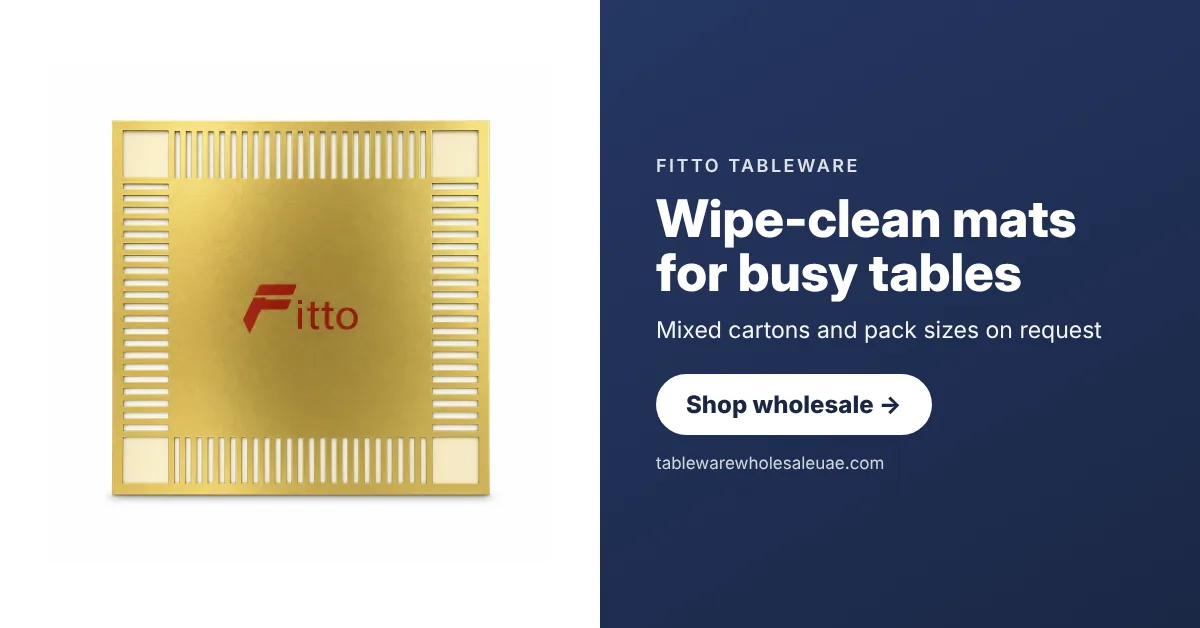
That makes it the default for cafés, food courts and families with young children. A 38 x 38 cm gold-tone PVC mat gives each place a defined, dressed look without a tablecloth. The trade-off is heat: keep pans and freshly filled hotpots off PVC, and do not leave mats baking on a sunny terrace.
When should you pick bamboo?
Pick bamboo when the table should look natural and warm, and when staff can dry mats properly after wiping.
Bamboo lattice mats of 16–20 cm work as trivets under teapots and serving dishes. Their weakness is moisture: soaking, dishwashers and damp storage lead to swelling and mould, so wipe, air-dry and store them flat.
What are woven palm and foil mats for?
Woven palm and foil-wrapped mats are serving mats: they sit under bread, dates or one dish rather than under a full place setting.
A 22 cm natural coil palm mat follows the khoos tradition of woven palm leaf and suits majlis tables and floor sufra spreads. Foil-wrapped woven mats of about 25 x 25 cm add shimmer to iftar, Eid and National Day tables. Both are dry-wipe only. For styling those tables, see our National Day table setting guide.
How many placemats should you buy?
As a rule of thumb, a restaurant needs about 1.5 mats per seat, and a home needs one per seat plus 2 spares.
The extra half-set lets staff swap in clean, dry mats while used ones are wiped or replaced. A 40-seat café therefore orders about 60 placemats. If you also serve hotpots or shared dishes, add one trivet per table; our insulated hotpot guide explains why hot pots need a base. The restaurant tableware checklist covers the rest of the table.
How often do placemats need replacing?
Replace a mat when it stops lying flat, no longer cleans up or looks tired beside new ones. In daily restaurant use that comes far sooner than at home.
- PVC: curling corners, cracks, a sticky film or a faded print.
- Bamboo: split slats, loose joins, dark mould spots or a musty smell.
- Woven palm: unravelling coils, oil stains or broken stitching.
- Foil-woven: lifting foil strips or frayed tassels.
As a rule of thumb, plan to refresh mats in daily restaurant service once or twice a year, and home mats every few years.
How do you clean and store placemats in UAE conditions?
Wipe after each meal, dry fully and store flat in a dry cupboard. Humidity and summer heat cause most early failures.
- Wipe PVC with a damp cloth and mild detergent; skip scouring pads.
- Dry bamboo and palm mats on edge in moving air before storing them.
- Keep PVC out of direct sun and away from hot pots.
- Store mats flat; rolling PVC tightly makes it curl.
- Check stored natural mats monthly in humid months for mould.
FITTO Trade Pick: Mats for every table The gold-tone square PVC table mat, 38 x 38 cm wipes clean between covers, while the natural coil palm round mat, 22 cm and the natural bamboo round lattice mat, 20 cm sit under bread, teapots and serving pots. For Ramadan and Eid tables, add the foil-wrapped woven square mat. Need a mix of styles? We make up mixed cartons and different pack sizes on request.
The bottom line
Size the placemat to the plate first, then choose the material by how the table is cleaned. PVC for speed, bamboo and palm for warmth and warm dishes, foil-woven mats for occasions.
Browse our table linen and placemats range, request a quote for a mixed order, order samples to test cleaning in your own space, or WhatsApp +971 55 672 6947. Prices start from 12 pieces, and delivery is free across the seven emirates over AED 300. FITTO Tableware: fit for the way you serve.
FAQ
What is the standard placemat size?+
The most common rectangular placemat is about 45 x 30 cm (18 x 12 inches). Round and square placemats are usually around 38 cm across. These sizes hold a 26–27 cm dinner plate with a knife and fork on either side. Smaller mats of 16–25 cm are trivets, bread mats or dish mats, used under one serving piece rather than a full place setting.
Are PVC placemats heat resistant?+
PVC handles warm plates and cups in normal service, but very hot items can soften, mark or warp it. Keep pans, freshly filled hotpots and dishes straight from the oven off PVC mats, and put a bamboo or palm trivet underneath instead. Also avoid leaving PVC mats in direct sun on a summer terrace, where the surface heats up quickly.
Can bamboo placemats get wet?+
Bamboo mats can be wiped with a damp cloth, but they should not be soaked or put in a dishwasher. Water trapped between the slats can lead to swelling, loose joins and mould, especially in humid months. Wipe them after use, stand them on edge or lay them flat to air-dry fully, and store them only once they are completely dry.
Placemats or tablecloths: which is better for a restaurant?+
Placemats are faster to reset because staff wipe or swap one mat per cover instead of changing a whole cloth, and they cut laundry. Tablecloths suit formal dining and banquets where a full covered table is expected. Many cafés and casual restaurants use wipe-clean placemats by day and keep tablecloths for events or private bookings.