18/10 vs 18/0 cutlery: which stainless steel grade is worth paying for?
By FITTO Trade Desk · Last updated 29 October 2026
In the 18/10 vs 18/0 cutlery choice, 18/10 contains 18% chromium and 10% nickel, so it keeps its shine and resists rust spots better than 18/0, which has almost no nickel. Pay for 18/10 in hotels, fine dining and homes that want a long-life set. 18/0 is fine for canteens, cafeterias, staff rooms and anywhere cutlery goes missing.
Key takeaways
- The first number is chromium, the second nickel: 18/0 has almost no nickel.
- 18/10 has a brighter, warmer shine and better resistance to rust spots in dishwashers and salty, acidic food.
- 18/0 is magnetic, lighter on the budget and perfectly usable where cutlery is replaced often.
- Table knife blades are usually a harder 13/0 steel, even in 18/10 sets, so a magnetic knife does not mean a fake set.
- Ask for the grade in writing and check for a stamp on the back of the handle before a bulk order.
Cutlery is the item guests touch most, and the one that goes missing fastest. Buy too cheaply and you replace spotty forks every few months; buy too expensively for a canteen and good steel ends up in the bin. This guide settles which grade suits restaurants, hotels, cafés and homes.
At FITTO Tableware, a wholesale tableware supplier in the UAE, our advice is simple: match the grade to how the cutlery will be used, not to the price tag alone.
What do 18/10 and 18/0 mean on cutlery?
The numbers on cutlery (أدوات المائدة) show the percentage of chromium and nickel in the steel. 18/10 is 18% chromium and 10% nickel. 18/0 is 18% chromium with less than 1% nickel.
Chromium forms an invisible surface layer that stops rust; nickel strengthens it and adds a bright lustre.
The grades also have industry codes you may see on a specification sheet:
| Cutlery marking | Industry grade | Nickel | Magnetic? | Typical use |
|---|---|---|---|---|
| 18/10 | 304 family | About 10% | No (or very slightly) | Hotels, fine dining, premium home sets |
| 18/8 | 304 family | About 8% | No (or very slightly) | Mid to premium cutlery |
| 18/0 | 430 | Under 1% | Yes | Canteens, cafeterias, budget sets |
| 13/0 | 410 / 420 | None | Yes | Knife blades that need an edge |
18/8 and 18/10 behave almost the same in daily use.
18/10 vs 18/0 cutlery: how do they compare side by side?
18/10 wins on shine, rust resistance and feel; 18/0 wins on price. Weight and thickness depend on the design, not the grade, so compare those separately.
| Factor | 18/10 | 18/0 |
|---|---|---|
| Shine | Bright, mirror-like, holds polish for years | Slightly greyer; dulls sooner with heavy use |
| Rust and spotting | High resistance | Can spot or pit if left wet, soaked or salted |
| Dishwasher life | Handles daily commercial cycles well | Fine if dried promptly; avoid long wet holds |
| Magnet test | Little or no pull | Clear pull |
| Nickel content | About 10% | Under 1% |
| Price | Higher | Lower |
| Best for | Guest-facing service, gifts, long-life home sets | High-volume, high-loss and budget settings |
A thick 18/0 fork can feel better than a thin 18/10 one, so handle a sample rather than buying on grade alone.
Does 18/0 cutlery rust?
18/0 does not rust in normal use, but it spots and pits more easily than 18/10. Trouble starts when it stays wet, sits in salty or acidic food, or soaks overnight.
UAE kitchens add stress: hard water, salty coastal air and long, steamy dishwasher cycles. There, 18/0 shows small brown spots sooner than 18/10. A few habits keep it looking good:
- Rinse food off before cutlery goes into a soak tray, and keep soaks under 30 minutes.
- Do not leave cutlery in salty water, lemon juice or vinegar-based dressings.
- Unload and dry promptly instead of leaving cutlery in a closed, steamy machine.
- Remove early spots with a paste of baking soda and water, then rinse and dry.
Is 18/10 worth the extra cost?
Yes, where cutlery is seen by paying guests and kept for years; no, where it is lost, binned or replaced often. The real cost is price per year of service, not price per piece.
Imagine an 18/10 fork that costs 50% more than an 18/0 fork (an illustration, not a FITTO price). If it stays presentable twice as long, it is cheaper per year. That only holds if the fork stays in your drawer; in a canteen that loses a large share of its cutlery each year, the cheaper grade wins.
Rule of thumb: if you mostly replace lost pieces, buy 18/0; if you replace dull, spotted ones, buy 18/10.
Which grade suits your business or home?
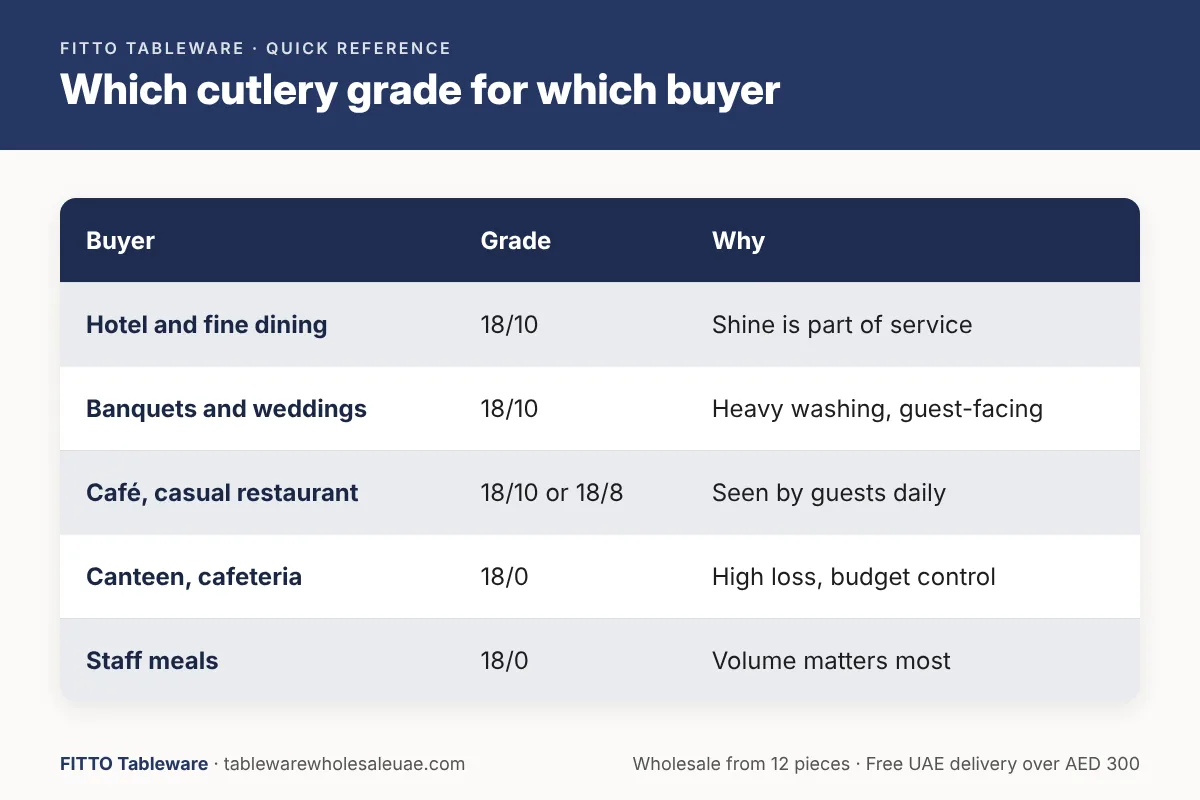
Choose 18/10 for guest-facing and long-life use, and 18/0 for high-volume, high-loss use. Many restaurants run both: 18/10 on the dining floor and 18/0 for staff meals.
| Buyer | Recommended grade | Why |
|---|---|---|
| Hotel restaurant, fine dining | 18/10 | Shine and finish are part of the experience |
| Banquet and wedding hire | 18/10 | Heavy washing and guest-facing service |
| Café, casual restaurant | 18/10 or 18/8 | Seen by guests, washed many times a day |
| Cafeteria, school or university canteen | 18/0 | High loss rate, budget control |
| Staff meals, labour accommodation | 18/0 | Volume and replacement matter most |
| Home everyday set | 18/10 if kept for years | Lasts through daily dishwasher use |
For more on choosing pieces per cover and finishes, read our restaurant cutlery sets guide.
How can you check the grade before you buy?
Check the stamp, use a magnet and ask for the grade in writing. Many listings simply say "stainless steel", so do not assume either grade.
- Look for a stamp on the back of the handle: "18/10", "18/8" or "18/0".
- Use a fridge magnet. It barely sticks to 18/10 or 18/8, and grips 18/0 firmly. Test forks and spoons, not knives.
- Ask for a specification sheet stating the grade before a bulk order.
- Order a sample and run it through your own dishwasher for two weeks, checking for spots and rough edges.
Table knives are the exception. Their blades are usually 13/0 steel, which can be hardened to hold an edge, so they attract a magnet even in an 18/10 set.
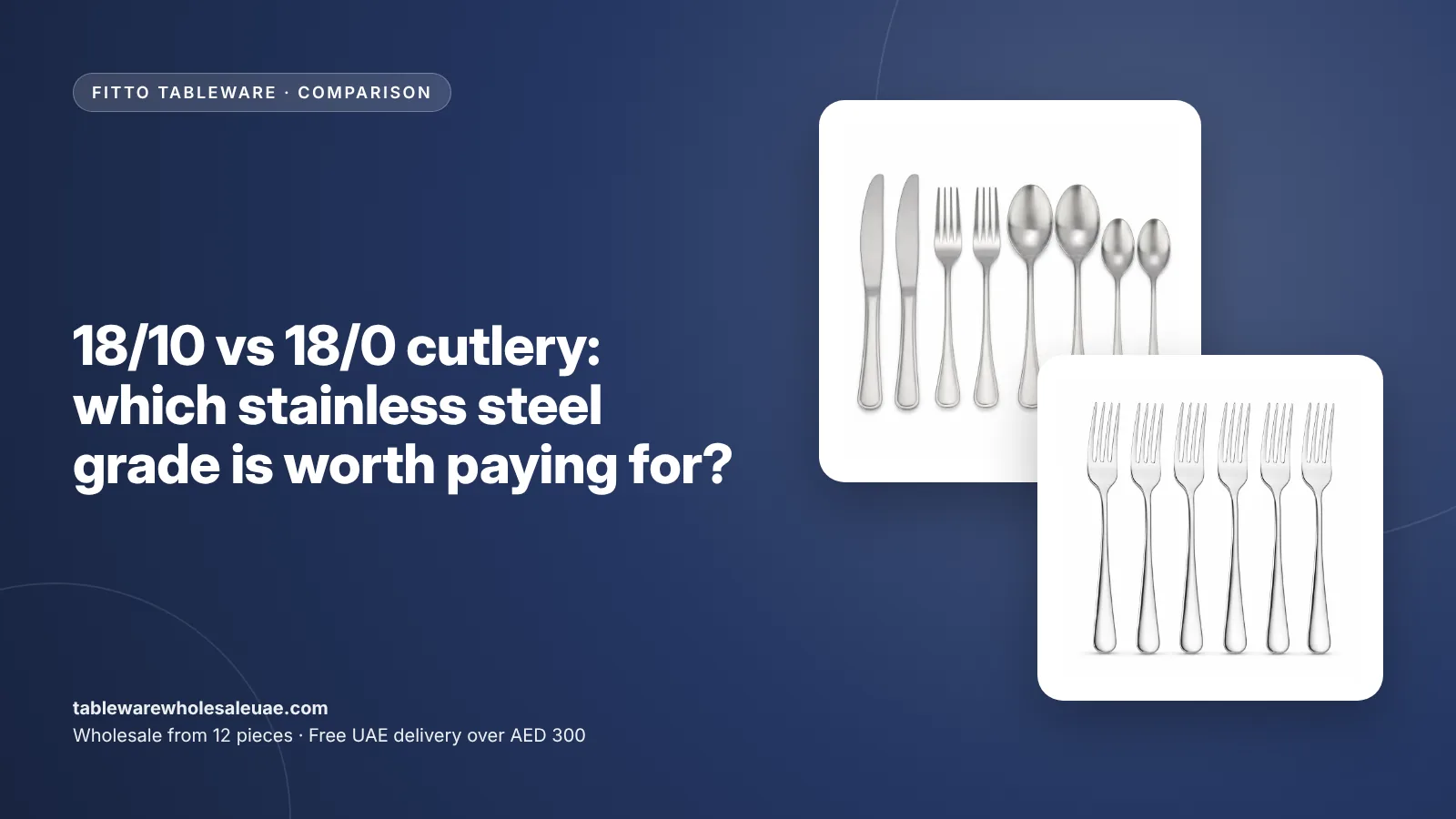
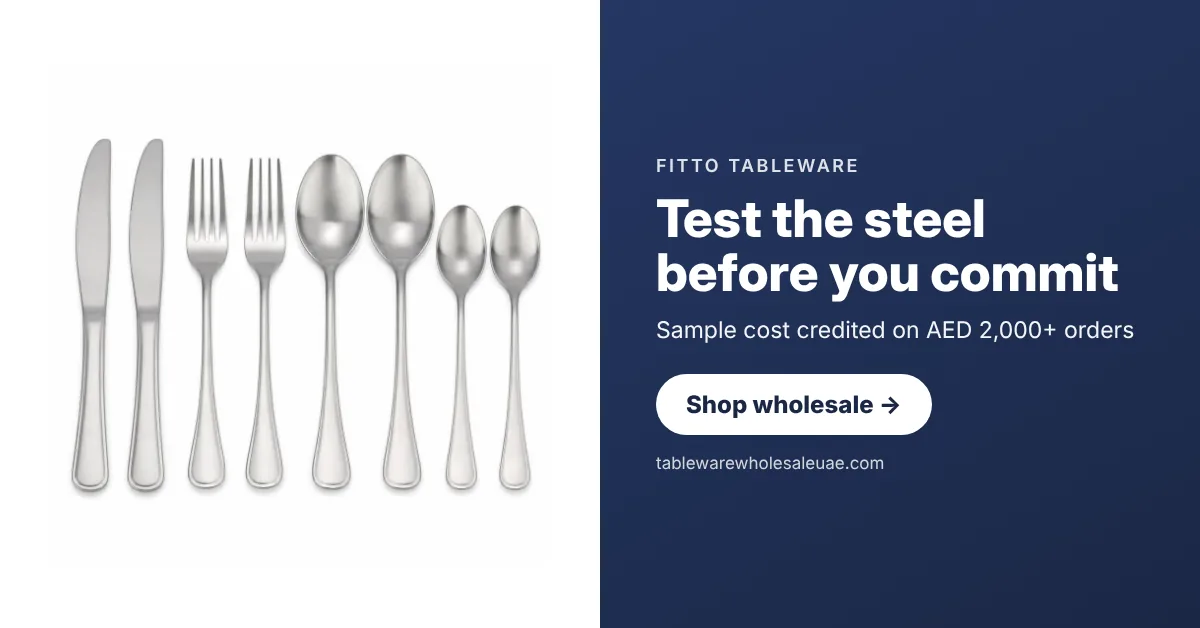
FITTO Trade Pick: Matching steel for every table Start with the 8-piece stainless steel cutlery set in a display tray, add the 6-piece silver table knife set and finish buffets with the 6-piece stainless steel serving spoon set. Order samples first to run the magnet and dishwasher test; the sample cost is credited on a bulk order of AED 2,000+ within 30 days.
The bottom line
18/10 cutlery is worth paying for when guests see it and you keep it for years. 18/0 is the sensible choice for canteens, staff meals and anywhere losses are high.
Browse our cutlery and flatware range, request a quote for a mixed order or order samples to test. Questions about a specific line? WhatsApp the trade desk on +971 55 672 6947. Planning a full opening order? Our restaurant tableware checklist covers cutlery per cover. FITTO Tableware: fit for the way you serve.
FAQ
Is 18/10 the same as 304 stainless steel?+
Yes, in practice. 18/10 and 18/8 both fall within the 304 family of austenitic stainless steels, which contain roughly 18–20% chromium and 8–10.5% nickel. Cutlery makers use "18/10" to show the higher end of the nickel range. Both are widely used for food contact and behave very similarly at the table.
Why does a magnet stick to the knife in my 18/10 set?+
Table knife blades are usually made from 13/0 or a similar hardenable steel, because 18/10 cannot be hardened enough to hold a cutting edge. That steel is magnetic. It is normal for a genuine 18/10 set to have magnetic knives and non-magnetic forks and spoons. Test the fork or spoon instead.
Is 18/0 cutlery better for people with a nickel allergy?+
18/0 contains very little nickel, so some people with a nickel allergy prefer it. Nickel release from 18/10 cutlery during normal meals is generally low, but sensitivity varies from person to person. Anyone with a diagnosed allergy should follow their doctor's or dermatologist's advice on which metals to use.
What does "201 stainless steel" mean on a listing?+
201 is a lower-nickel stainless steel in which some of the nickel is replaced by manganese. It looks similar when new and costs less, but it generally resists corrosion less well than 304 (18/10 or 18/8). It can suit budget, short-life settings. For long-life cutlery in humid, salty conditions, choose the 304 family instead.